Watch The Road (2015) Online Free
A highway is waiting to go through a quiet village in Hunan, a province in central China where Mao was from. Due to the high cost of construction, construction companies and migrant workers who live on road work rush to here like the tide. In the following four years, they root in this strange place for interests, paying sweat and blood, even their lives. With their arrival, local village and peasants are forced to change their lives. Many hidden interest lines and hidden rules about road construction of the nation are unveiled, together with the shocking truth and emerging secrets.
More Like This
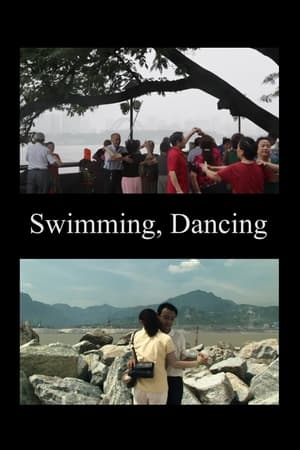
Swimming, Dancing
Swimming, Dancing examines audiovisual representations of the Yangtze (1934–present), from silent film to video art to the contemporary vlog. Inspired by the city symphonies of the 1920s, Swimming, Dancing pieces together a “river symphony”, evoking the images, sounds and contradictions that make up the river’s turbulent history.
2023
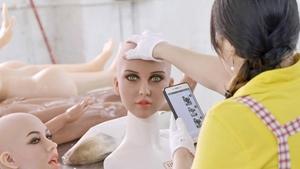
Ascension
The film explores the pursuit of the “Chinese Dream.” Driven by mesmerizing—and sometimes humorous—imagery, this observational documentary presents a contemporary vision of China that prioritizes productivity and innovation above all.
2021
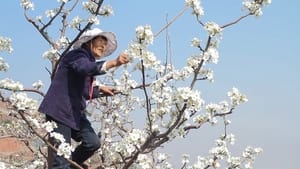
Earth: Muted
Three farming families in Hanyuan, China, strive to give their children a good life in the midst of an ecological crisis, as widespread use of pesticides leads to a dramatic decline in bees and other pollinating insects in the valley.
2021
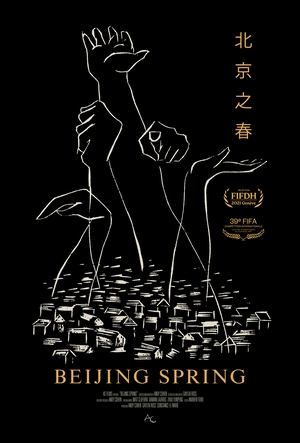
Beijing Spring
The documentary film of the brief window of artistic freedom and democracy movement 1978 - 1982 following China's brutal cultural revolution.
2021

Twenty Two
Follow the lives of the elderly survivors who were forced into sex slavery as “Comfort Women” by the Japanese during World War II. At the time of filming, only 22 of these women were still alive to tell their story. Through their own personal histories and perspectives, they tell a tale that should never be forgotten to generations unaware of the brutalization that occurred.
2017

Maineland
Chinese teenagers from the wealthy elite, with big American dreams, settle into a boarding school in small-town Maine. As their fuzzy visions of the American dream slowly gain more clarity, their relationship to home takes on a poignant new aspect.
2017
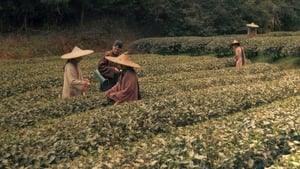
Tea War: The Adventures of Robert Fortune
In the 19th century, China held the monopoly on tea, which was dear and fashionable in the West, and the British Empire exchanged poppies, produced in its Indian colonies and transformed into opium, for Chinese tea. Inundated by the drugs, China was forced to open up its market, and the British consolidated their commercial dominance. In 1839, the Middle Empire introduced prohibition. The Opium War was declared… Great Britain emerged as the winner, but the warning was heeded: it could no longer depend on Chinese tea. The only alternative possible was to produce its own tea. The East India Company therefore entrusted one man with finding the secrets of the precious beverage. His mission was to develop the first plantations in Britain’s Indian colonies. This latter-day James Bond was called Robert Fortune – a botanist. After overcoming innumerable ordeals in the heart of imperial China, he brought back the plants and techniques that gave rise to Darjeeling tea.
2016
Kampf um Tibet
2013
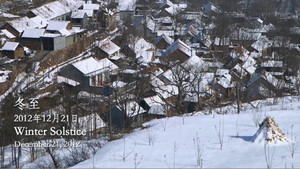
Village Diary
2013
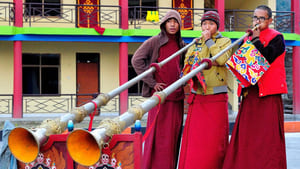
Tibet - Les nourritures terrestres
2011
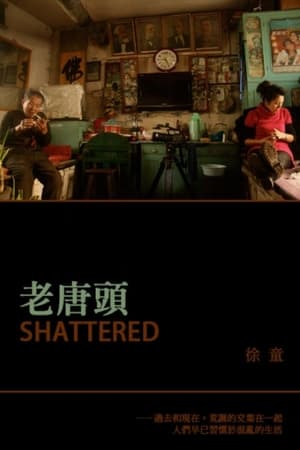
Shattered
A microcosm of China past and present flows through Xu Tong’s intimate docu “Shattered,” in which the maverick indie filmmaker continues to refine his techniques and concerns shown in his previous “Wheat Harvest” and “Fortune Teller.”
2011
Tibet Les nourritures spirituelles
2011
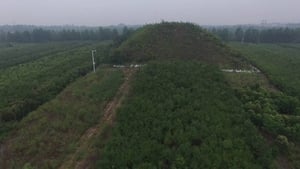
China's Lost Pyramids
In China, there exists an astonishing place. A burial ground to rival Egypt’s Valley of the Kings, where pyramid tombs of stupendous size are full of astonishing riches. In 221 BC, China's first Emperor united warring kingdoms into a nation that still exists today. To memorialise this achievement, he bankrupted the national treasury and oppressed thousands of workers to build one of the world’s biggest mortuary complexes. China's second dynasty, the Han, inherited the daunting challenge of building larger tombs to command respect and establish their right to rule without running the nation into the ground. Although no Han emperor's tomb has been opened, the tombs of lesser Han aristocrats have revealed astonishing things: complete underground palaces (including kitchens and toilets) and at least one corpse so amazingly well-preserved some believe Han tomb-builders knew how to "engineer immortality".
2010
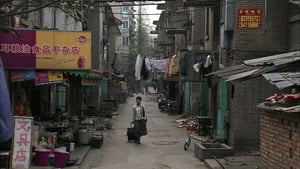
24 City
As a decades-old state-run aeronautics munitions factory in downtown Chengdu, China is being torn down for the construction of the titular luxury apartment complex, director Jia Zhangke interviews various people affiliated with it about their experiences.
2008
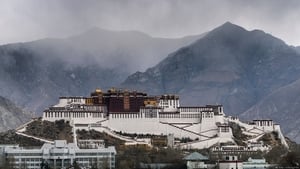
Undercover in Tibet
Undercover in Tibet reveals the regime of terror which dominates daily life and makes freedom of expression an impossibility. Tash meets victims of arbitrary arrests, detention, torture and ‘disappearances’ and uncovers evidence of enforced sterilizations on ethnic Tibetan women. He sees for himself the impact of the enormous military and police presence in the region, the hunger and hardship being endured by many Tibetans and hears warnings of the uprising taking place across the provinces now.
2008
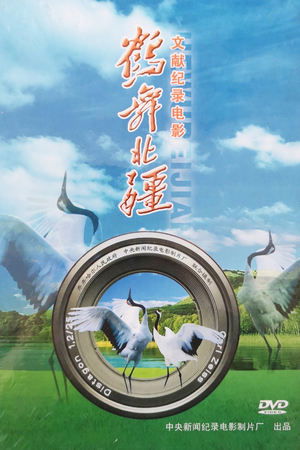
Crane City of the North
Documentary about the history and development of Qiqihar city.
2008

Draussen bleiben
2007
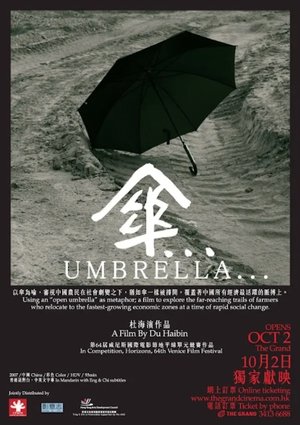
Umbrella
Workers, peasants, soldiers, students and merchants were five groups of Chinese society in the 1950s, after the so-called elimination of the exploited class. Borrowing this concept, the umbrella is taken as the clue to rediscover changes in various social classes after the economic reform, and to analyze the social problems in China. Workers making umbrellas, merchants selling umbrellas, students looking for jobs in the rain. Umbrella is used as a metaphor that can be seen everywhere. As the raindrop, what we see is sometimes clear, sometimes untraceable.
2007
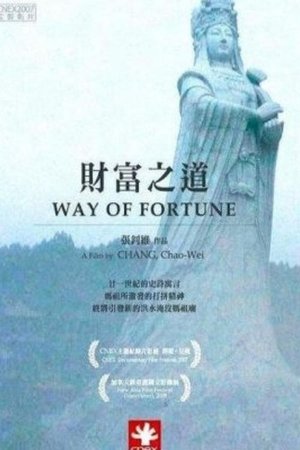
Way of Fortune
"Mazu" or "The Sea God" has been the most important religious belief of ordinary people in my hometown for four hundred years. Along the coast of China and even in the Nanyang region, there is at least one temple dedicated to Mazu in various seaside cities-this geographical and historical distribution coincides with the contemporary economic or industrial area of Chinese society. It is frustrating that rapid economic development has led to global warming. The factories located on the coast of southern China from all over the world will eventually cause flooding and inundate these temples dedicated to Mazu. This is indeed a very ironic discovery for our civilization, "We", not only Chinese or all human beings, now or in the past, how can we Chinese avoid this upcoming tragedy?
2007
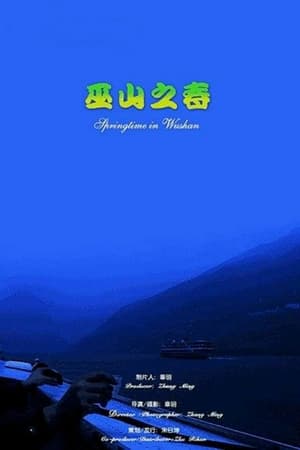
Springtime in Wushan
Zhang Ming went back to his hometown Wushan to record the last images before it being changed forever by the upcoming Three Gorges Dam.
2003