Watch Twenty Two (2017) Online Free
Follow the lives of the elderly survivors who were forced into sex slavery as “Comfort Women” by the Japanese during World War II. At the time of filming, only 22 of these women were still alive to tell their story. Through their own personal histories and perspectives, they tell a tale that should never be forgotten to generations unaware of the brutalization that occurred.
Cast
Wei Shaolan, Luo Shanxue
More Like This

Children of Sea and Salt
In a coastal town along the Pacific known for the intensity of its sea, various men have dedicated decades to voluntary rescue work. What do you do when the vastness of the blue overwhelms you?
2024

Younost, une jeunesse russe
2024

The Choice 2024: Harris vs. Trump
The documentary investigates the lives and characters of Kamala Harris and Donald Trump as they seek the presidency. In a historic election, those who know the candidates best reveal key moments that shape how they would lead America. Award-winning filmmaker Michael Kirk and his team sat down with Trump and Harris’ friends, advisors and critics, as well as authors, journalists and political insiders to present deeply reported narrative arcs of both candidates’ lives, going all the way back to their childhoods. What emerges in FRONTLINE's "The Choice 2024: Harris vs. Trump" is the story of two fighters: One seeking vindication and promising a return to greatness, and the other seeking to move beyond the past and promising a greater future.
2024

Kekaiulu Hula Studio
Kekaiulu Hula Studio follows the Proclaimed Hula Halau of the same name, showcasing their twist on what the real reason for hula is and what life as a dancer in the halau is really like. Something previously unseen in the public eye.
2022

What Will Happen to My Child?
Aging parents of disabled adults, they worry about their child's life after their disappearance. A moving insight into the daily life of a family home in the Vendée region, which offers them the prospect of a peaceful future.
2022
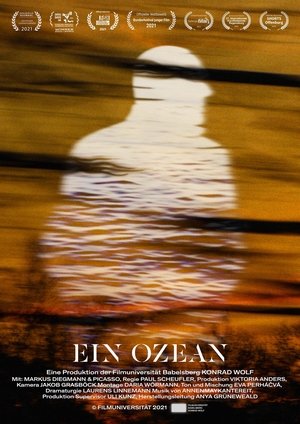
AN OCEAN
The trembling starts in his neck when Markus gets closer to the images that have chased him for 49 years. Now he steers his motor home south, as far away from his past as possible.
2021

Eco-Terrorist: Battle for Our Planet
Eco-Terrorist: The Battle for Our Planet follows the most wanted environmentalist today, Captain Paul Watson. In this unique and groundbreaking film, Brown takes a deeper look into what really goes on behind the scenes in the deep waters of our world. More pranks, the glory of successful missions, and fiercer encounters with some of the most infamous and illegal marine hunters, while stopping at nothing to protect wildlife on a global scale. The film takes the audience right to the frontlines of the modern day environmental movement via those who started it.
2019
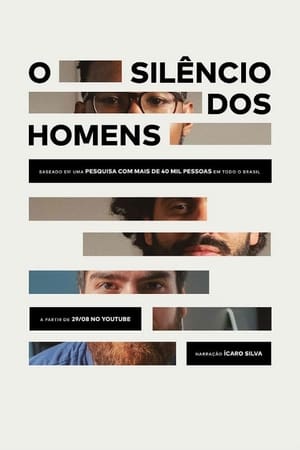
The Silence of Men
This film is part of a project that has listened to over 40,000 people on masculinity issues and has resulted in a documentary and a tool book based on this publicly available study through an agreement with the Social Information Consortium (CIS) of the University of São Paulo.
2019
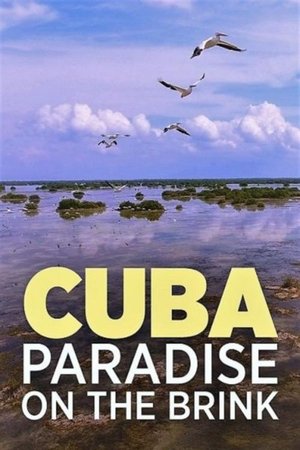
Cuba, A Paradise on the Brink
Will Cubans be able to safeguard their heritage of pristine Nature and preserved ecological treasures under this new era, as they are facing the combined pressure of money and tourism? What policies can be implemented to maintain the island’s spectacular wilderness?
2017
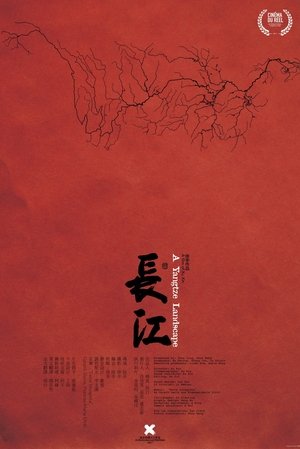
A Yangtze Landscape
A Yangtze Landscape utilizes a non-narrative style, setting off from the Yangtze's marine port Shanghai, filming all the way to the Yangtze River's source, Qinghai/Tibet - filming a total distance of thousands of kilometers. Experimental music and noise recorded live on scene are used in post-production, painstakingly paired with relatively independent visuals, creating a magically realistic atmosphere contrasted with people seeming to be 'decorative figures' right out of traditional Chinese landscape scrolls.
2017

The Aryans
THE ARYANS is Mo Asumang's personal journey into the madness of racism during which she meets German neo-Nazis, the US leading racist, the notorious Tom Metzger and Ku Klux Klan members in the alarming twilight of the Midwest. In The ARYANS Mo questions the completely wrong interpretation of "Aryanism" - a phenomenon of the tall, blond and blue-eyed master race.
2014

Four Years of Night
For four years (1977-1981) Esaias Baitel documented a violent Parisian neo-Nazi gang. Having gained their trust, he was able to get close to them. Living among the gang members, he witnessed horrific events, and while hiding his real identity, he photographed a one-of-a-kind collection of gripping stills. Over thirty years have passed. Esaias Baitel has laid his camera down. He returns to the dark nights he spent in the City of Lights, the city where he lived a double life, going back and forth from the gang to the young family he had just started.
2013
Megalopolis
2008
VH1 Inside Out: Leah Remini's Wedding Special
A look into the life and times of actress Leah Remini as her wedding approaches and afterward they attempt to have a baby.
2003

The Murmuring
Every Wednesday at noon, women who were kidnapped for sexual purpose by the Japanese army during its imperialism and their supporters demonstrate against Japanese government to request official apology and indemnity for their crimes. This documentary portrays sexually abused old women's suppressed story of overcoming of their shame and forced silence.
1995

Senso Daughters
Senso Daughters focuses on the legacy of the Japanese occupation of Papua New Guinea during the Second World War. It is a legacy that arises from rape, starvation and terror. Sekiguchi's documentary lets the residents of Papua New Guinea, especially the women, tell the story of their three years under Japanese Army rule.
1990

China. The Arts – The People
China marks the beginning of the extensive Asian theme in Ottinger’s filmography and is her first travelogue. Her observant eye is interested in anything from Sichuan opera and the Beijing Film Studio to the production of candy and sounds of bicycle bells.
1985
Indian Youth: An Exploration
A documentary on the life of the youth in post-Independence India.
1968
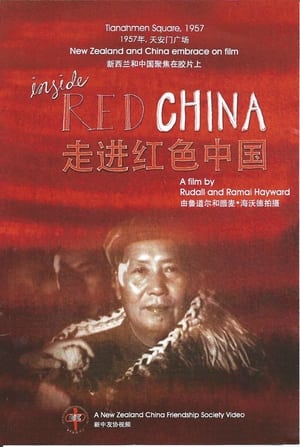
Inside Red China
October 1st, 1957. Dusk descends on Tiananmen Square, Peking. Fireworks crackle light across the night sky, above a city alive with National Day festivities and celebrations. Two intrepid New Zealand film-makers - Rudall and Ramai Te Miha Hayward - are there, documenting the life and times of communist China. The distinction of being the first English speaking foreigners to film unfettered in communist China was significant. The invitation to visit China was facilitated through the New Zealand China Friendship Society. They filmed in Canton, Shanghai, Peking (Beijing) and Wuhan. It was a small window of opportunity for Westerners to gaze on a country that was largely a mystery to the outside world since 1949. The unfortunate irony was that two of the documentaries; “Wonders of China”, and “Inside Red China”, were considered to be communist propaganda, and were not distributed outside of New Zealand.
1958

Voices From The New Jungle
Documentary Film maker, Mark Brown, attempts to discover the damaging effect the over-spilling immigrant population has on the coastal city of Calais, France.