Watch Undercover in Tibet (2008) Online Free
Undercover in Tibet reveals the regime of terror which dominates daily life and makes freedom of expression an impossibility. Tash meets victims of arbitrary arrests, detention, torture and ‘disappearances’ and uncovers evidence of enforced sterilizations on ethnic Tibetan women. He sees for himself the impact of the enormous military and police presence in the region, the hunger and hardship being endured by many Tibetans and hears warnings of the uprising taking place across the provinces now.
Cast
Tash Despa
More Like This
Es gibt kein zurück
The documentary film "There is no turning back" by Stéphane Kleeb tells the story of the Tibetan siblings Losang and Dechen Barshee, who came to Switzerland as refugee children in 1964. After a difficult childhood in various foster families, they return to Tibet with their mother 40 years later. This journey confronts them with the alienation from their mother and their changed homeland. The film addresses homelessness, uprooting and lost dreams.
2024
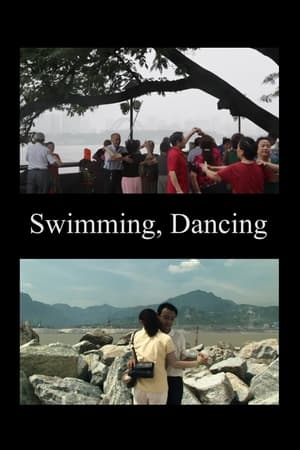
Swimming, Dancing
Swimming, Dancing examines audiovisual representations of the Yangtze (1934–present), from silent film to video art to the contemporary vlog. Inspired by the city symphonies of the 1920s, Swimming, Dancing pieces together a “river symphony”, evoking the images, sounds and contradictions that make up the river’s turbulent history.
2023

Love Factory: The Price of Being a Social Media Star
Livestreaming your life to a devoted audience is big business. What happens when the cameras are off?
2021
Happy Together
2014

China Jam
In their infinite quest for virgin big walls, adventurers Sean Villanueva O’Driscoll, Nicolas Favresse, Stephane Hanssens and Evrard Wendenbaum, head in September 2013 to a remote valley in the westernmost region of China. There, they found a fantastic 1200m vertical pillar, culminating at 5842m. They spent 14 days on the wall facing snow storms and harsh conditions to finally achieve this amazing ascent with some frost bites but never forgetting to have a lot of fun and to play unreal musical sessions.
2014

First Emperor - China's Terracotta Army
Presented by the British Museum this is the story of the most famous army in the world. A triumph of early mass production and craftmanship, they were dreamt up by a man whose face we will never know; a figure who remains a more shadowy presence than that of his constructed warriors. And yet, Qin Shihuangdi was one of the greatest military leaders in history. Based on the latest research and including location photography at key sites in China, this film sheds new light on the achievements, ambitions and legacy of this enigmatic and intriguing ruler - an emperor who wished to reign for all eternity.

Maineland
Chinese teenagers from the wealthy elite, with big American dreams, settle into a boarding school in small-town Maine. As their fuzzy visions of the American dream slowly gain more clarity, their relationship to home takes on a poignant new aspect.
2017
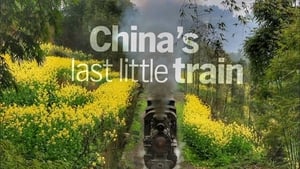
China's Last Little Train
In a mountainous region of Sichuan, best known for pandas and earthquakes, there are no roads, no cars, no buses. But there is … a train. This documentary tells the story of the last working narrow gauge steam railway in China.
2014

Dandara: Enquanto Morar for um Privilégio, Ocupar é um Direito
2013
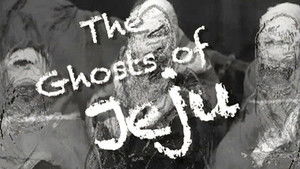
The Ghosts of Jeju
Documentary about the struggle of the people of Jeju Island, South Korea. Set in the context of the U.S. presence in Korea after World War II, the film reveals horrible atrocities at the hands of the U.S. Military Government of Korea.
2013

Orphans of Tibet
Each year, groups of Tibetan children secretly flee their homeland over the Himalayas to reach schools in India founded by the government in exile. Entrusted to smugglers, they are risking their lives by illegally crossing the great Himalayan range, a towering rampart between Tibet and India. The director will take us in the Mussorie school, in North India, where two thousand four hundred children have been rescued. They have left behind their family childhood and are now considered as orphans. We will discover the itineraries of Sonam, aged nine, and Dholma, the little new girl of the school. Here in India, they are taught about Tibetan culture and will find out about the history of their country and their ancestors. Sonam and Dholma's story is that of thousands of Tibetan children. Are they orphans of a lost country or bearers of hope who will save an endangered culture?
2010

Brilliant Moon: Glimpses of Dilgo Khyentse Rinpoche
Brilliant Moon chronicles the life of the writer, poet, and meditation master Khyentse Rinpoche, one of Tibet's most revered 20th-century Buddhist teachers. Spiritual guide to His Holiness the Dalai Lama and the Royal Family of Bhutan, his life and teachings were an inspiration to all who encountered him. Richard Gere and Lou Reed provide the narration for his dangerous journey out of China, the subsequent spread of his influence and the search for his reincarnation after his death.
2010

China vs USA: Empires at War
China keeps claiming sovereignty over Taiwan. The USA believes the Tech industry of the island nation needs to be protected. Prominent international experts from both sides, China vs. USA, Empires At War explores all the issues that could lead to war.
2008

Big Rig
Big Rig (2008) is a documentary film by Doug Pray about long-haul truck drivers. The film consists of a series of interviews with different drivers, focusing on both their personal life stories and also the life and culture of truck drivers in the United States.
2007

How Lucky China
Follows Long Island’s Mary Lamont Band on their groundbreaking 23,000-mile tour in six cities and provinces across mainland China in 2002.
2006

3 cm Less
3 CM LESS (the title comes from projections that the Palestinian children of today will grow up on average three centimeters shorter than their parents, thanks to the deprivations of occupation) is a complex, highly personal look at the impact decades of war has wreaked on families and friendships.
2003
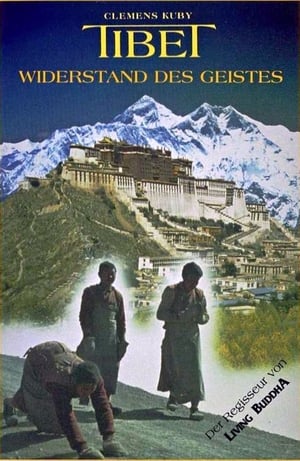
Tibet: The Survival of the Spirit
1989
Kaiserbauten in Fernost
Documentation of a journey along the Great Wall of China to the Ku-Pei-Kuo pass fortress.
1938
Unbekanntes China
Aerial photographs and cityscapes by aviation pioneer Wulf-Dieter Graf zu Castell, who lived in China between 1933 and 1936 and was tasked with setting up an air traffic network for Eurasia.
1937
Chinesische Städte
The short documentary presents the difference between North and South China and also presents footage from several Chinese cities.
1935