Watch The Joy of Logic (2013) Online Free
A sharp, witty, mind-expanding and exuberant foray into the world of logic with Computer Scientist Dave Cliff. Following in the footsteps of the award-winning The Joy of Stats and its sequel, Tails You Win - The Science of Chance, The Joy of Logic takes viewers on a new Wingspan roller-coaster ride through philosophy, maths, science and technology all of which, under the bonnet, run on logic. Wielding the same wit and wisdom, animation and gleeful nerdery as its predecessors, this film journeys from Aristotle to Alice in Wonderland, Sci-Fi to Supercomputers to tell the fascinating story of the quest for certainty and the fundamentals of sound reasoning itself.
Cast
Dave Cliff
More Like This
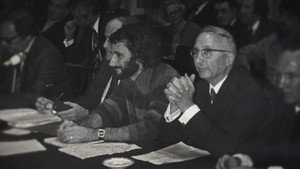
Ces mathématiciens qui firent plier le Kremlin
On January 15, 1972, Leonid Pliouchtch, a Ukrainian mathematician who was unknown at the time, was locked up in a Soviet psychiatric institution and accused of dissidence. His wife, Tatiana, fought for his defense and contacted a committee of French mathematicians to help him. Led by Laurent Schwartz, they launched a three-year campaign to secure his release and succeeded in getting the USSR to back down on the issue.
2025
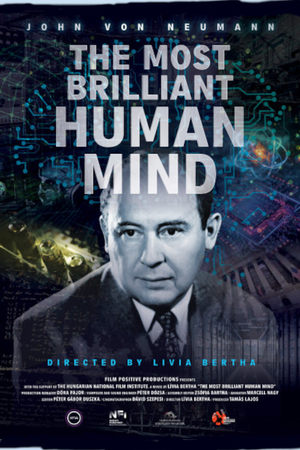
The Most Brilliant Human Mind - John von Neumann
John von Neumann, one of the most incredible Hungarian-born scientists of all time, was named Man of the Century by the Financial Times in 1999. Among other scientific works, Neumann pioneered game theory and, along with Alan Turing and Claude Shannon, was one of the conceptual inventors of the stored-program digital computer. In late 1943 Neumann began to work on the Manhattan Project at the invitation of J. Robert Oppenheimer, and helped to design the first atomic bomb. This biography showcases the famous mathematician's work and legacy from the perspective of his daughter and colleagues. It is based on artefacts and documents from scientific history collections and on the personal memories of Marina von Neumann Whitman, Neumann's daughter. The film's production team has been filming all around the world, from Budapest to Los Alamos and Princeton, with the participation of several Hungarian and American scientists.
2024
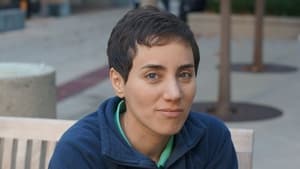
Secrets of the Surface: The Mathematical Vision of Maryam Mirzakhani
Filmed in Canada, Iran, and the United States, Secrets of the Surface: The Mathematical Vision of Maryam Mirzakhani examines the life and mathematical work of Maryam Mirzakhani, an Iranian immigrant to the United States who became a superstar in her field. In 2014, she was both the first woman and the first Iranian to be honored by mathematics' highest prize, the Fields Medal. Mirzakhani's contributions are explained by leading mathematicians and illustrated by animated sequences. Her mathematical colleagues from around the world, as well as former teachers, classmates, and students in Iran today, convey the deep impact of her achievements. The path of her education, success on Iran's Math Olympiad team, and her brilliant work, make Mirzakhani an ideal role model for girls looking toward careers in science and mathematics. Written by George Csicsery
2020

The Joy of Winning
How to have a happier life and a better world all thanks to maths, in this witty, mind-expanding guide to the science of success with Hannah Fry. Following in the footsteps of BBC Four's award-winning maths films The Joy of Stats and The Joy of Data, this latest gleefully nerdy adventure sees mathematician Dr Hannah Fry unlock the essential strategies you'll need to get what you want - to win - more of the time. From how to bag a bargain dinner to how best to stop the kids arguing on a long car journey, maths can give you a winning strategy. And the same rules apply to the world's biggest problems - whether it's avoiding nuclear annihilation or tackling climate change.
2018
Magic Money: The Bitcoin Revolution
What is Bitcoin? With the advent of Bitcoin, the world's first digital currency, for the first time in history money is no longer controlled by banks or governments, but by the people who use it. But where did this currency come from? How does it work? And is it truly the way forward, or just a flash in the pan? Magic Money answers these questions and more as it explores the mysterious origins of Bitcoin, its role in society, and how it could shape the future.
2017
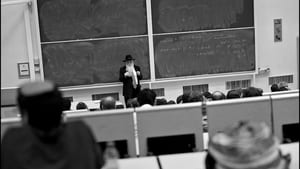
Eliyahu Rips: The Burning
In April 1969 Ilya (Eliyahu) Rips, then a young student of mathematics, tried to burn himself in a public square in Riga, Latvia protesting against the Soviet invasion of Czechoslovakia. He was stopped and eventually sent to a psychiatric hospital for two years. Thanks to international pressure from the mathematical community in 1972 he was allowed to emigrate to Israel. Now he is considered one of the most brilliant mathematicians in the world. At the same time, for most people familiar with his name, Rips is first of all associated with the development of the so called Bible Code – a mathematical program allegedly helping to decipher hidden messages encoded in Torah – the Five Books of Moses. He is attacked by both the scientific and religious community, yet his research continues.
2016
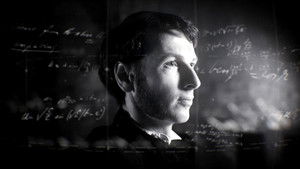
The Genius of George Boole
Narrated by Oscar-winning actor Jeremy Irons, The Genius of George Boole assembles academics and industry leaders from across the globe to explore the life and importance of one of the world’s greatest unsung heroes.
2015

NOVA: The Great Math Mystery
NOVA leads viewers on a mathematical mystery tour -- a provocative exploration of math's astonishing power across the centuries. We discover math's signature in the swirl of a nautilus shell, the whirlpool of a galaxy and the spiral in the center of a sunflower. Math was essential to everything from the first wireless radio transmissions to the prediction and discovery of the Higgs boson and the successful landing of rovers on Mars. But where does math get its power? Astrophysicist and writer Mario Livio, along with a colorful cast of mathematicians, physicists and engineers, follows math from Pythagoras to Einstein and beyond, all leading to the ultimate riddle: Is math an invention or a discovery? Humankind's clever trick or the language of the universe?
2015

Horizon: Defeating the Hackers
Exploring the murky and fast-paced world of the hackers out to steal money and identities and wreak havoc with people's online lives, and the scientists who are joining forces to help defeat them.
2013
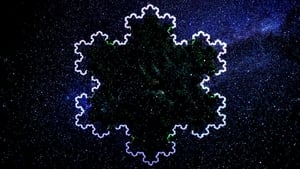
Clouds Are Not Spheres
Until recently geometry was 'cold', incapable of describing the irregular shape of a cloud, the slope of a mountain or the beauty of the human body. With fractal geometry, Benoit Mandelbrot gave us a language for our natural world. In this captivating documentary, the man himself explains this groundbreaking discovery.
2010
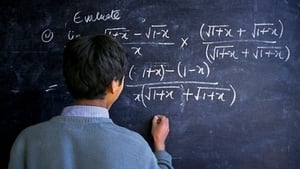
Beautiful Young Minds
This BAFTA nominated documentary tells the story of some of the brightest mathematical brains of a generation. Each year, exceptionally gifted teenagers from over 90 countries compete for medals at the International Mathematical Olympiad. The film follows a group of brilliant teenagers as they battle it out to become the chosen six selected to represent the UK.
2007
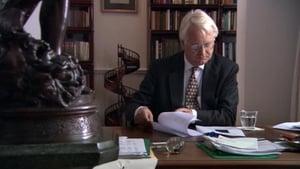
Achieving the Unachievable
M.C. Escher is among the most intriguing of artists. In 1956 he challenged the laws of perspective with his graphic Print Gallery and his uncompleted master-piece quickly became the most puzzling enigma of modern art. Fifty years later, can mathematician Hendrik Lenstra complete it? Should he?
2007
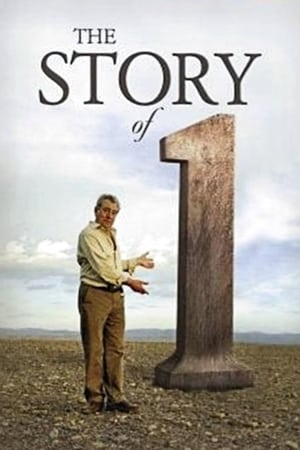
The Story of 1
A humor-inflected history of the of the number one, covering military applications in ancient Rome, the measurement of distances in India, and the decimal system created by Leibnitz.
2005
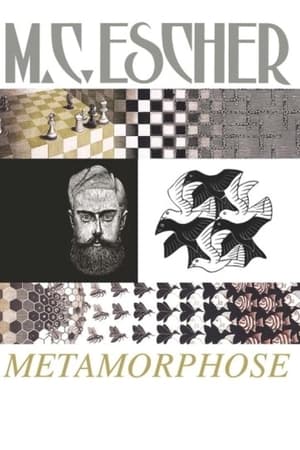
Metamorphose: M.C. Escher, 1898-1972
A documentary about the life and works of the artist M. C. Escher. Maurits Cornelis Escher (1898-1972) usually referred to as M. C. Escher, was a Dutch graphic artist. He is known for his often mathematically inspired woodcuts, lithographs, and mezzotints. These feature impossible constructions, explorations of infinity, architecture, and tessellations.
1999

N is a Number: A Portrait of Paul Erdős
In an age when genius is a mere commodity, it is useful to look at a person who led a rich life without the traditional trappings of success. A man with no home and no job, Paul Erdös was the most prolific mathematician who ever lived. Born in Hungary in 1913, Erdös wrote and co-authored over 1,500 papers and pioneered several fields in theoretical mathematics. At the age of 83 he still spent most of his time on the road, going from math meeting to math meeting, continually working on problems. He died on September 20, 1996 while attending such a meeting in Warsaw, Poland.
1993
Theory of Sets
Made entirely on Roger Wagner's HyperStudio software, Chris Marker explores set theory, using Noah's Ark as an example.
1991
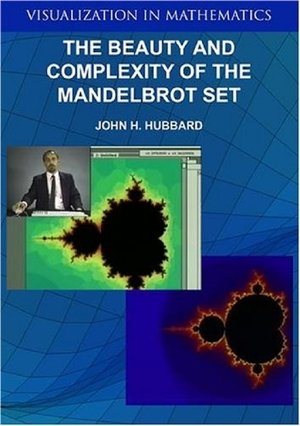
The Beauty and Complexity of the Mandelbrot Set
A video by doctor John Hubbard discussing the origin, characteristics, and applications of the Mandelbrot set and other iterative sets.
1989

El hipercubo
Based on the thesis of Alejandro Rivero and Ernesto Pacheco, this documentary attempts to glimpse, through the senses, the fourth mathematical dimension.
1986

Turning a Sphere Inside Out
This video is about the problem of turning a sphere inside out, by passing the surface through itself, without making any holes or creases. Mathematicians believed the problem to be unsolvable until 1958, when Stephen Smale proved otherwise. The motion of turning a sphere inside out, called a regular homotopy, is extremely difficult to visualize. The homotopy in this film was developed by Bernard Morin, a blind mathematician. The motion is illustrated with a sequence of chicken-wire models, built by Charles Pugh, showing the crucial stages in the motion. Commentary is provided by mathematicians Nelson L. Max, Stephen Smale, and Charles Pugh, and by physicist Judith Bregmann.
1979
2ⁿ: A Story of the Power of Numbers
2ⁿ is a story about the exponential growth of numbers raised to powers. Part of the Mathematica Peep Shows, one of five films made to accompany the Mathematica: A World of Numbers and Beyond exhibition at the California Museum of Science and Industry and the Museum of Science and Industry in Chicago.
1961