Watch Magic Money: The Bitcoin Revolution (2017) Online Free
What is Bitcoin? With the advent of Bitcoin, the world's first digital currency, for the first time in history money is no longer controlled by banks or governments, but by the people who use it. But where did this currency come from? How does it work? And is it truly the way forward, or just a flash in the pan? Magic Money answers these questions and more as it explores the mysterious origins of Bitcoin, its role in society, and how it could shape the future.
Cast
Jeff Berwick, Trace Mayer, Tone Vays, Roger Ver, PAVOL LUPTAK, JONATHAN HOPE, GARRETT DeROSSET, Jose Rodriguez, JERRY CHAN, YUZO KANO, MAX WRIGHT
More Like This
Jean-Claude Darmon - L'argentier : L'homme, le pouvoir, le foot
He never scored a single goal as a professional, but he profoundly transformed soccer. Starting from nothing, Jean-Claude Darmon ushered in a new era for the sport: one of business and spectacle. Sponsorship, marketing, television rights—he designed it all, negotiated it all, and turned it all upside down. Between confidential agreements, daring moves, and ego rivalries, his rise to the top reads like an epic tale.
2025

How I Made £1 Million in 90 Days
Oobah Butler has three months to make a million. Do the get-rich-quick schemes work? A rollercoaster of wins and setbacks follows as Oobah's conscience starts to bite.
2025
BIG FUN in the BIO
Vince Collins tells of his animation history—looking to the past and eventually to AI and beyond.
2025

Tourisme religieux, un marché sacré
2024
Finding the Money
FINDING THE MONEY follows economist Stephanie Kelton on a journey through Modern Money Theory or “MMT”. Kelton provocatively asserts the National Debt Clock that ticks ominously upwards in New York City is not actually a debt for us taxpayers at all, nor a burden for our grandchildren to pay back. Instead, Kelton describes the national debt as simply a historical record of the number of dollars created by the US federal government currently being held in pockets, as assets, by the rest of us. MMT bursts into the media with journalists asking, “Have we been thinking about how the government spends money, all wrong?” But top economists from across the political spectrum condemn the theory as “voodoo economics”, “crazy” and “a crackpot theory”. FINDING THE MONEY traces the conflict all the way back to the story we tell about money, injecting new hope and empowering countries around the world to tackle the biggest challenges of the 21st century: from climate change to inequality.
2024

Bitconned
In this true-crime documentary, three guys exploit the freewheeling cryptocurrency market to scam millions from investors and bankroll lavish lifestyles.
2024

$avvy
$avy investigates the historical, cultural, and societal norms around women and money.
2021

The Bubble
Diving deep into the true causes of the Great Recession, the financial crisis of the 2010s, renowned economists, investors and business leaders explain what America is facing if we don't learn from our past mistakes. Is the economy really improving or are we just blowing up another Bubble?
2018
Saving Capitalism
Former Secretary of Labor Robert Reich meets with Americans from all walks of life as he chronicles a seismic shift in the nation's economy.
2017
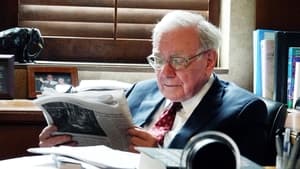
Becoming Warren Buffett
The story of the evolution of a boy from Nebraska who became one of the most respected men in the world, and the heroes who helped guide him along the way. By allowing access to his life and never-before-released home videos, Buffett offers a glimpse into his unique mind to help us understand what is truly important when money no longer has meaning.
2017
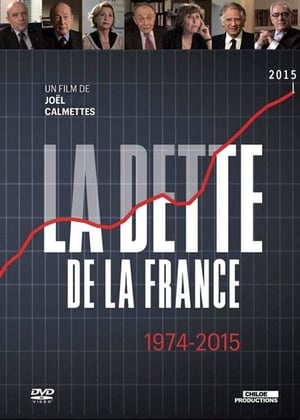
La dette de la France 1974-2015
2016

The Bitcoin Gospel
A devoted group of entrepreneurs and activists believe they see the writing on the wall, and they're determined to add a new chapter.
2015
The Bitcoin Phenomenon
In 2008, an anonymous idealist published a paper under the pseudonym Satoshi Nakamoto which described a digital currency or online payment system; the system was introduced as open-source software in 2009. Four years later, the value of all bitcoins was in the billions of dollars. Bitcoin uses peer-to-peer technology to operate with no central authority or banks; the management of transactions and the issuance of bitcoins is carried out collectively by the network. Because bitcoin is public by design, it is not owned or controlled by any government or bank.
2014
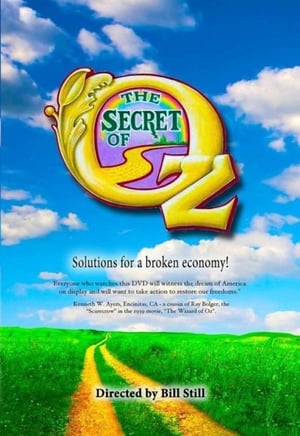
The Secret of Oz
It is well known in economics academia that The Wonderful Wizard of Oz written by L. Frank Baum in 1900 is loaded with powerful symbols of monetary reform which were the core of the Populist movement and the 1896 and 1900 president bid of Democrat William Jennings Bryan. The yellow brick road (gold standard), the emerald city of Oz (greenback money), even Dorothy’s silver slippers (changed to ruby slippers for the movie version) were the symbol of Baum’s and Bryan’s belief that adding silver coinage to gold would provide much needed money to a depression-strapped, 1890s America. We believe Baum’s symbols represent the only solution to relieve the growing economic hardship here in America – and the rest of the world. Practically speaking, 2009 marks the 70th anniversary of the 1939 MGM release of the The Wizard of Oz movie, so interest will be very high. Even Oz websites put up by kids get millions of hits.
2009
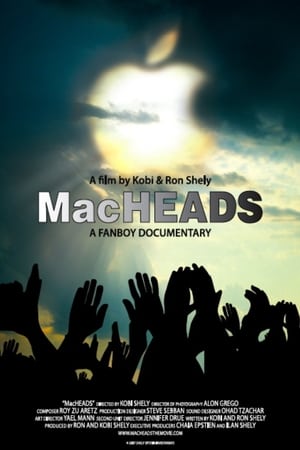
Macheads
A exploration of the fanaticism that surrounds the Apple brand, featuring interviews with Mac evangelists and members of the Mac community.
2009
Beautiful Young Minds
This BAFTA nominated documentary tells the story of some of the brightest mathematical brains of a generation. Each year, exceptionally gifted teenagers from over 90 countries compete for medals at the International Mathematical Olympiad. The film follows a group of brilliant teenagers as they battle it out to become the chosen six selected to represent the UK.
2007
Sicko
A documentary about the corrupt health care system in The United States whose main goal is to make profit even if it means losing people’s lives. "The more people you deny health insurance, the more money we make" is the business model for health care providers in America.
2007
The One Percent
Jamie Johnson takes the exploration of wealth that he began in Born Rich one step further. The One Percent, refers to the tiny percentage of Americans who control nearly half the wealth of the U.S. Johnson's thesis is that this wealth in the hands of so few people is a danger to our very way of life.
2006
Tero Sandin elämä
Tero Sand was attached to a life-support machine for 28 years but managed to get recognition as an expert both in medicine and geology. In this documentary Sand's life is constructed using interviews and archival clips. The film is a sequel to the documentary Haluan vain elää.
1996
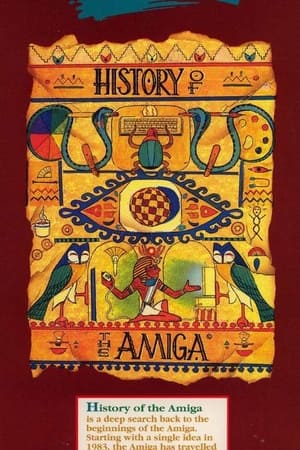
History of the Amiga
Take an intriguing, fun-filled journey through the history of the Amiga computer. From the earliest days, we'll examine the trials, tribulations, and triumphs of today's latest models from Commodore. Listen while Jay Miner, "Father of the Amiga", tells amusing anecdotes of the early days and the first prototype...hear what Commodore has to say about the future of the Amiga...and lots more! Meet the people, view the products and visit the places that have helped make the Amiga and Amiga user unique in the history of computing!
1991