Watch Theory of Sets (1991) Online Free
Made entirely on Roger Wagner's HyperStudio software, Chris Marker explores set theory, using Noah's Ark as an example.
More Like This
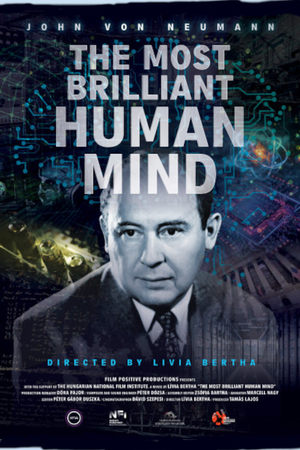
The Most Brilliant Human Mind - John von Neumann
John von Neumann, one of the most incredible Hungarian-born scientists of all time, was named Man of the Century by the Financial Times in 1999. Among other scientific works, Neumann pioneered game theory and, along with Alan Turing and Claude Shannon, was one of the conceptual inventors of the stored-program digital computer. In late 1943 Neumann began to work on the Manhattan Project at the invitation of J. Robert Oppenheimer, and helped to design the first atomic bomb. This biography showcases the famous mathematician's work and legacy from the perspective of his daughter and colleagues. It is based on artefacts and documents from scientific history collections and on the personal memories of Marina von Neumann Whitman, Neumann's daughter. The film's production team has been filming all around the world, from Budapest to Los Alamos and Princeton, with the participation of several Hungarian and American scientists.
2024
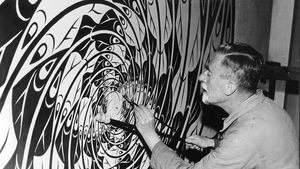
M. C. Escher: Journey to Infinity
A portrait of the visionary Dutch artist M. C. Escher (1898-1972), according to his own words, taken from his diary, his correspondence and the texts of his lectures.
2018
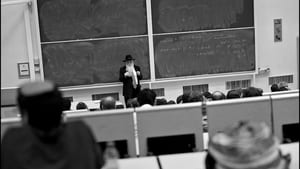
Eliyahu Rips: The Burning
In April 1969 Ilya (Eliyahu) Rips, then a young student of mathematics, tried to burn himself in a public square in Riga, Latvia protesting against the Soviet invasion of Czechoslovakia. He was stopped and eventually sent to a psychiatric hospital for two years. Thanks to international pressure from the mathematical community in 1972 he was allowed to emigrate to Israel. Now he is considered one of the most brilliant mathematicians in the world. At the same time, for most people familiar with his name, Rips is first of all associated with the development of the so called Bible Code – a mathematical program allegedly helping to decipher hidden messages encoded in Torah – the Five Books of Moses. He is attacked by both the scientific and religious community, yet his research continues.
2016
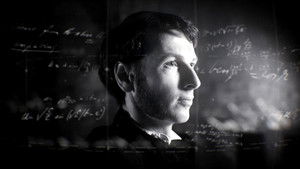
The Genius of George Boole
Narrated by Oscar-winning actor Jeremy Irons, The Genius of George Boole assembles academics and industry leaders from across the globe to explore the life and importance of one of the world’s greatest unsung heroes.
2015

Horizon: Defeating the Hackers
Exploring the murky and fast-paced world of the hackers out to steal money and identities and wreak havoc with people's online lives, and the scientists who are joining forces to help defeat them.
2013
La Costante di Archimede
2012
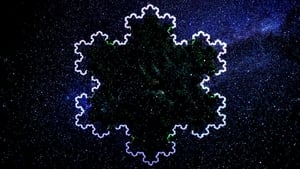
Clouds Are Not Spheres
Until recently geometry was 'cold', incapable of describing the irregular shape of a cloud, the slope of a mountain or the beauty of the human body. With fractal geometry, Benoit Mandelbrot gave us a language for our natural world. In this captivating documentary, the man himself explains this groundbreaking discovery.
2010
Beautiful Young Minds
This BAFTA nominated documentary tells the story of some of the brightest mathematical brains of a generation. Each year, exceptionally gifted teenagers from over 90 countries compete for medals at the International Mathematical Olympiad. The film follows a group of brilliant teenagers as they battle it out to become the chosen six selected to represent the UK.
2007
Achieving the Unachievable
M.C. Escher is among the most intriguing of artists. In 1956 he challenged the laws of perspective with his graphic Print Gallery and his uncompleted master-piece quickly became the most puzzling enigma of modern art. Fifty years later, can mathematician Hendrik Lenstra complete it? Should he?
2007
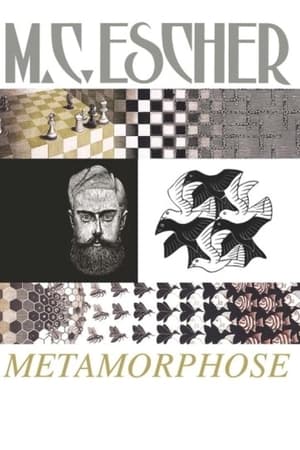
Metamorphose: M.C. Escher, 1898-1972
A documentary about the life and works of the artist M. C. Escher. Maurits Cornelis Escher (1898-1972) usually referred to as M. C. Escher, was a Dutch graphic artist. He is known for his often mathematically inspired woodcuts, lithographs, and mezzotints. These feature impossible constructions, explorations of infinity, architecture, and tessellations.
1999
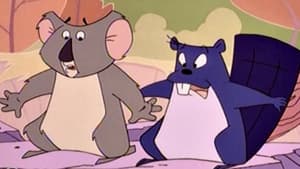
Noah's Magic Ark
Children and parents alike will love this captivating and charming version of the story of Noah's ark and the great flood, uniquely told from the animals' point of view. Vincent, a friendly young koala, tells others about his portentous dream that a dangerous flood is coming. When they only laugh at him in response, we see that in the animal kingdom there is much of the same cruelty and thoughtlessness that plagues humankind. But when Vincent finds Noah building his ark, he discovers new proof that his dream may come true!
1996
The Shape of Space
During the 1995 Summer Institute at The Geometry Center, a team of undergraduates, middle and high school mathematics teachers and Center staff developed curriculum materials supporting The Shape of Space video. The team developed a comprehensive curriculum, covering many areas related to the video. The following materials were selected for distribution based on their direct relevence to understanding the video itself.
1995

Outside In
The computer animation Outside In explains the amazing discovery, made by Steve Smale in 1957, that a sphere can be turned inside out by means of smooth motions and self-intersections. Through a combination of dialogue and exposition accessible to anyone who has some interest in mathematics, Outside In builds up to the grand finale: Bill Thurston's "corrugations" method of turning the sphere inside out.
1994

N is a Number: A Portrait of Paul Erdős
In an age when genius is a mere commodity, it is useful to look at a person who led a rich life without the traditional trappings of success. A man with no home and no job, Paul Erdös was the most prolific mathematician who ever lived. Born in Hungary in 1913, Erdös wrote and co-authored over 1,500 papers and pioneered several fields in theoretical mathematics. At the age of 83 he still spent most of his time on the road, going from math meeting to math meeting, continually working on problems. He died on September 20, 1996 while attending such a meeting in Warsaw, Poland.
1993
The Occult Philosophy
An attempt to visualize a secret knowledge about the nature of man —a philo-clip—, through the use of structures of dissociated geometry and laser beams, with direct references to the Renaissance, Leonardo da Vinci and the work of Agrippa von Nettesheim.
1983

Turning a Sphere Inside Out
This video is about the problem of turning a sphere inside out, by passing the surface through itself, without making any holes or creases. Mathematicians believed the problem to be unsolvable until 1958, when Stephen Smale proved otherwise. The motion of turning a sphere inside out, called a regular homotopy, is extremely difficult to visualize. The homotopy in this film was developed by Bernard Morin, a blind mathematician. The motion is illustrated with a sequence of chicken-wire models, built by Charles Pugh, showing the crucial stages in the motion. Commentary is provided by mathematicians Nelson L. Max, Stephen Smale, and Charles Pugh, and by physicist Judith Bregmann.
1979

The Dot and the Line: A Romance in Lower Mathematics
Animated work detailing the unrequited love that a line has for a dot, and the heartbreak that results due to the dot's feelings for a lively squiggle.
1965
Flatland
A short, animated film based on Edwin Abbott's 1884 satirical novella, Flatland: A Romance of Many Dimensions.
1965

Donald in Mathmagic Land
Disney used animation here to explain through this wonderful adventure of Donald how mathematics can be useful in our real life. Through this journey Donald shows us how mathematics are not just numbers and charts, but magical living things.
1959
The Equation X + X = 0
“If abstract films are really abstract films… they deal exclusively with those abstract relations that can be expressed in terms of shape and motion” wrote Robert Fairthorne in Film Art in 1936. A mathematician and information scientist, Fairthorne saw aesthetic potential in an animation made as a teaching aid by Salt, and proposed this collaboration. (Tate.org.uk)
1936