Watch Horizon: Defeating the Hackers (2013) Online Free
Exploring the murky and fast-paced world of the hackers out to steal money and identities and wreak havoc with people's online lives, and the scientists who are joining forces to help defeat them.
Cast
Eric Chien, Rupert Penry-Jones, Liam O'Murchu, Barnaby Jack
More Like This

Tracing Light
Light is a fascinating phenomenon. Without light, there would be no cinema, no film – and no life. So light is at the origin of everything, and yet it remains invisible to the eye until it hits matter. This moment is – quite literally – the starting point of Thomas Riedelsheimer’s latest work, for the springtime spectacle of rainbow shreds in the cinematographer and documentary filmmaker’s flat became the starting point of a search for the origin of the images we form of this world. For this quest he dived deep into two spheres that seem to follow different laws but always strive to fathom the magical: physics and art.
2025
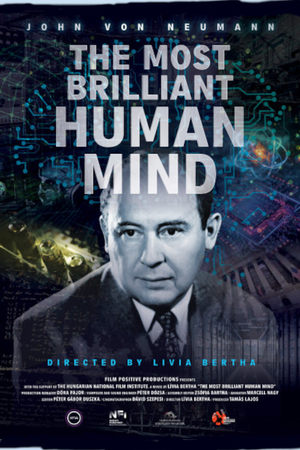
The Most Brilliant Human Mind - John von Neumann
John von Neumann, one of the most incredible Hungarian-born scientists of all time, was named Man of the Century by the Financial Times in 1999. Among other scientific works, Neumann pioneered game theory and, along with Alan Turing and Claude Shannon, was one of the conceptual inventors of the stored-program digital computer. In late 1943 Neumann began to work on the Manhattan Project at the invitation of J. Robert Oppenheimer, and helped to design the first atomic bomb. This biography showcases the famous mathematician's work and legacy from the perspective of his daughter and colleagues. It is based on artefacts and documents from scientific history collections and on the personal memories of Marina von Neumann Whitman, Neumann's daughter. The film's production team has been filming all around the world, from Budapest to Los Alamos and Princeton, with the participation of several Hungarian and American scientists.
2024
Cyberbunker: The Criminal Underworld
This documentary reveals how a group of hackers powered the darkest corners of the internet from a Cold War-era bunker in a quiet German tourist town.
2023

HIPERTEXTO
2022
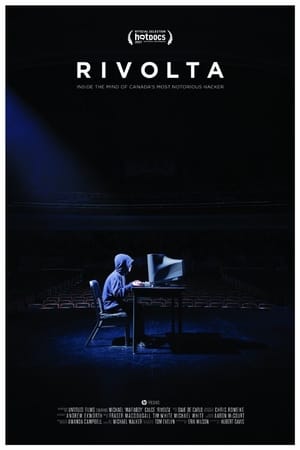
Rivolta
Discover the intoxicating world of hacking through the eyes of Michael “Mafiaboy” Calce, who, at 15, was involved in one of the most egregious and widely covered cybercrimes in North America. As hacking becomes more sophisticated and widespread, and information becomes synonymous with profit, can anyone remain immune to a breach of security?
2017
The Genius of George Boole
Narrated by Oscar-winning actor Jeremy Irons, The Genius of George Boole assembles academics and industry leaders from across the globe to explore the life and importance of one of the world’s greatest unsung heroes.
2015

Another World
A feature documentary about the journey of mankind to discover our true force and who we truly are. It is a quest through science and consciousness, individual and planetary, exploring our relationships with ourselves, the world around us and the universe as a whole.
2014

Clouds Are Not Spheres
Until recently geometry was 'cold', incapable of describing the irregular shape of a cloud, the slope of a mountain or the beauty of the human body. With fractal geometry, Benoit Mandelbrot gave us a language for our natural world. In this captivating documentary, the man himself explains this groundbreaking discovery.
2010
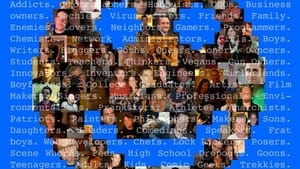
Hackers Are People Too
A portrait of the hacking community. In an effort to challenge preconceived notions and media-driven stereotypes Hackers Are People Too lets hackers speak for themselves and introduce their community to the public.
2008
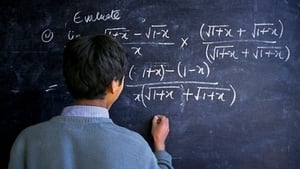
Beautiful Young Minds
This BAFTA nominated documentary tells the story of some of the brightest mathematical brains of a generation. Each year, exceptionally gifted teenagers from over 90 countries compete for medals at the International Mathematical Olympiad. The film follows a group of brilliant teenagers as they battle it out to become the chosen six selected to represent the UK.
2007
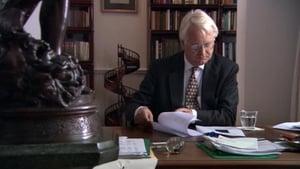
Achieving the Unachievable
M.C. Escher is among the most intriguing of artists. In 1956 he challenged the laws of perspective with his graphic Print Gallery and his uncompleted master-piece quickly became the most puzzling enigma of modern art. Fifty years later, can mathematician Hendrik Lenstra complete it? Should he?
2007

Hacking Democracy
Documentary film investigating allegations of election fraud during the 2004 U.S. presidential election. Electronic voting machines count approximately 90% of America's votes in county, state and federal elections. The technology is also increasingly being used across the world, including in Canada, the United Kingdom, Europe and Latin America. The film uncovers incendiary evidence from the trash cans of Texas to the ballot boxes of Ohio, exposing secrecy, votes in the trash, hackable software and election officials rigging the presidential recount.Ultimately proving our votes can be stolen without a trace "Hacking Democracy" culminates in the famous 'Hursti Hack'; a duel between the Diebold voting machines and a computer hacker from Finland - with America's democracy at stake.
2006
The Sufi and the Scientist
The Sufi and the Scientist is the collective story of Sufi healer Sayyid Arif Hussain, the medieval Sufi Sheikh Haji Ali, and Dr. Thornton Streeter, a scientist working in the realm of human consciousness.
2006
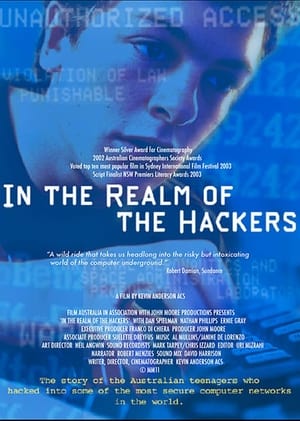
In the Realm of the Hackers
In The Realm of the Hackers is a documentary about the prominent hacker community, centered in Melbourne, Australia in the late 80's to early 1990. The storyline is centered around the Australian teenagers going by the hacker names "Electron" and "Phoenix", who were members of an elite computer hacking group called The Realm and hacked into some of the most secure computer networks in the world, including those of the US Naval Research Laboratory, Lawrence Livermore National Laboratory, a government lab charged with the security of the US nuclear stockpile, and NASA.
2003
Hackers: Computer Outlaws
Pains in the butt, or super heroes of the computer revolution? How about both. The documentary Hackers: Computer Outlaws takes a look at the world of hackers, from Draper to Woz to Mitnick.
2001
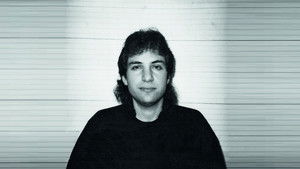
Freedom Downtime
A feature-length documentary about the Free Kevin movement and the hacker world.
2001
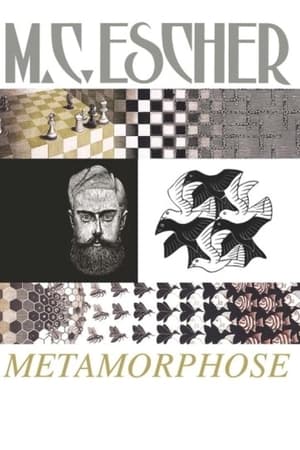
Metamorphose: M.C. Escher, 1898-1972
A documentary about the life and works of the artist M. C. Escher. Maurits Cornelis Escher (1898-1972) usually referred to as M. C. Escher, was a Dutch graphic artist. He is known for his often mathematically inspired woodcuts, lithographs, and mezzotints. These feature impossible constructions, explorations of infinity, architecture, and tessellations.
1999
Theory of Sets
Made entirely on Roger Wagner's HyperStudio software, Chris Marker explores set theory, using Noah's Ark as an example.
1991
The KGB, the Computer and Me
In 1986, astronomer turned computer scientist Clifford Stoll had just started working on a computer system at the Lawrence Berkeley Laboratory when he noticed a 75-cent discrepancy between the charges printed by two accounting programs responsible for charging people for machine use. Intrigued, he deduced that the system was being hacked, and he determined to find the culprit. This is the re-enactment of how he tracked down KGB cracker Markus Hess through the Ethernet to Hannover, Germany.
1990

Turning a Sphere Inside Out
This video is about the problem of turning a sphere inside out, by passing the surface through itself, without making any holes or creases. Mathematicians believed the problem to be unsolvable until 1958, when Stephen Smale proved otherwise. The motion of turning a sphere inside out, called a regular homotopy, is extremely difficult to visualize. The homotopy in this film was developed by Bernard Morin, a blind mathematician. The motion is illustrated with a sequence of chicken-wire models, built by Charles Pugh, showing the crucial stages in the motion. Commentary is provided by mathematicians Nelson L. Max, Stephen Smale, and Charles Pugh, and by physicist Judith Bregmann.
1979