Watch El hipercubo (1986) Online Free
Based on the thesis of Alejandro Rivero and Ernesto Pacheco, this documentary attempts to glimpse, through the senses, the fourth mathematical dimension.
Cast
Andrés Zawrotsky, Fausto González, Alejandro Rivero, Ernesto Pacheco
More Like This
Ces mathématiciens qui firent plier le Kremlin
On January 15, 1972, Leonid Pliouchtch, a Ukrainian mathematician who was unknown at the time, was locked up in a Soviet psychiatric institution and accused of dissidence. His wife, Tatiana, fought for his defense and contacted a committee of French mathematicians to help him. Led by Laurent Schwartz, they launched a three-year campaign to secure his release and succeeded in getting the USSR to back down on the issue.
2025
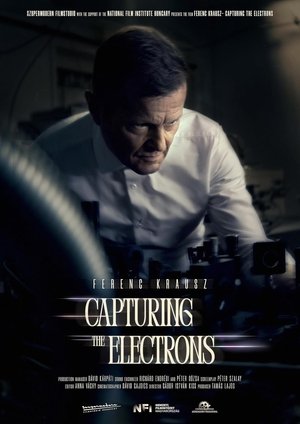
Capturing the Electrons
Capturing the Electrons documents the life and career of Nobel Prize-winning Hungarian physicist Ferenc Krausz. His research team has generated and measured the first attosecond light pulse and used it for capturing electrons' motion inside atoms, marking the birth of attophysics. In 2023, jointly with Pierre Agostini and Anne L'Huillier, he was awarded the Nobel Prize in Physics.
2024
A Trip to Infinity
Does infinity exist? Can we experience the Infinite? In an animated film (created by artists from 10 countries) the world's most cutting-edge scientists and mathematicians go in search of the infinite and its mind-bending implications for the universe. Eminent mathematicians, particle physicists and cosmologists dive into infinity and its mind-bending implications for the universe.
2022

The Hunt for Dark Matter
CERN and the University of California-Santa Barbara are collaborating in the search for the elusive substance that physicists and astronomers believe holds the universe together -- dark matter. Where is this search now in the realm of particle physics and what comes next?
2017
Cern and the Sense of Beauty
An exploration of the link between science and beauty through the work of scientists at CERN, in Geneva.
2017
Magic Money: The Bitcoin Revolution
What is Bitcoin? With the advent of Bitcoin, the world's first digital currency, for the first time in history money is no longer controlled by banks or governments, but by the people who use it. But where did this currency come from? How does it work? And is it truly the way forward, or just a flash in the pan? Magic Money answers these questions and more as it explores the mysterious origins of Bitcoin, its role in society, and how it could shape the future.
2017
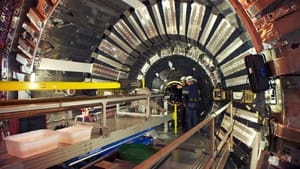
CERN
CERN in Switzerland is a research center where they try to recreate the big bang. Nikolaus Geyrhalter follows the center's infrastructure and meets the people who created the "Large Hadron Collider".
2013
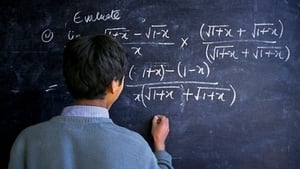
Beautiful Young Minds
This BAFTA nominated documentary tells the story of some of the brightest mathematical brains of a generation. Each year, exceptionally gifted teenagers from over 90 countries compete for medals at the International Mathematical Olympiad. The film follows a group of brilliant teenagers as they battle it out to become the chosen six selected to represent the UK.
2007
Achieving the Unachievable
M.C. Escher is among the most intriguing of artists. In 1956 he challenged the laws of perspective with his graphic Print Gallery and his uncompleted master-piece quickly became the most puzzling enigma of modern art. Fifty years later, can mathematician Hendrik Lenstra complete it? Should he?
2007
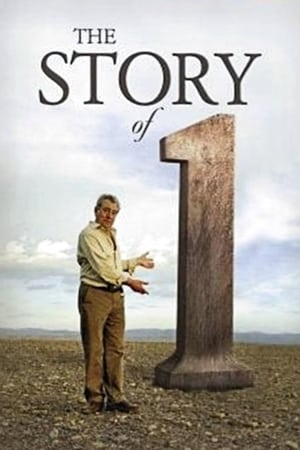
The Story of 1
A humor-inflected history of the of the number one, covering military applications in ancient Rome, the measurement of distances in India, and the decimal system created by Leibnitz.
2005
Gravitation - Urkraft des Universums
2003
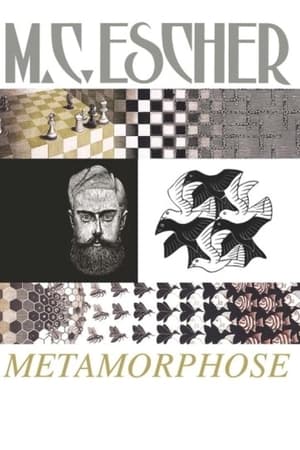
Metamorphose: M.C. Escher, 1898-1972
A documentary about the life and works of the artist M. C. Escher. Maurits Cornelis Escher (1898-1972) usually referred to as M. C. Escher, was a Dutch graphic artist. He is known for his often mathematically inspired woodcuts, lithographs, and mezzotints. These feature impossible constructions, explorations of infinity, architecture, and tessellations.
1999

A Brief History of Time
This shows physicist Stephen Hawking's life as he deals with the ALS that renders him immobile and unable to speak without the use of a computer. Hawking's friends, family, classmates, and peers are interviewed not only about his theories but the man himself.
1991
Theory of Sets
Made entirely on Roger Wagner's HyperStudio software, Chris Marker explores set theory, using Noah's Ark as an example.
1991
The Conquest of Light
The film discusses the evolution and potential of using light waves, particularly coherent light, for communication. It highlights the development of lasers at Bell Telephone Laboratories, explaining how they produce a highly controlled and intense beam of light that could revolutionize communication. The film emphasizes the vast possibilities of lasers, including applications in telecommunications, surgery, and exploring the universe, suggesting that this technology represents a significant step in humanity's understanding and use of light.
1960

Donald in Mathmagic Land
Disney used animation here to explain through this wonderful adventure of Donald how mathematics can be useful in our real life. Through this journey Donald shows us how mathematics are not just numbers and charts, but magical living things.
1959
Polarograf
1952
Proměny energie
1952
The Equation X + X = 0
“If abstract films are really abstract films… they deal exclusively with those abstract relations that can be expressed in terms of shape and motion” wrote Robert Fairthorne in Film Art in 1936. A mathematician and information scientist, Fairthorne saw aesthetic potential in an animation made as a teaching aid by Salt, and proposed this collaboration. (Tate.org.uk)
1936

Fantastical Revelations of Art, Math, and Romance
A short mathematical romance about two flat beings who bond over their shared fascination of the hypothetical third-dimension.