Watch Para recordar a Lord Cobra (2000) Online Free
Documentary about calypso signer Lord Cobra.
Cast
Lord Cobra, Leslie George, Gloria de Berry, Xiomara Berry, Pedrito Altamiranda
More Like This

Banda Calypso: Ao Vivo No Distrito Federal
"Ao Vivo no Distrito Federal" is the seventh DVD of the Brazilian musical group Banda Calypso. It was recorded in Ceilândia, Distrito Federal, on August 8, 2013, in "Maior São João do Cerrado", for an audience of over 100 thousand people. Being released by Radar Records, on November 15 of the same year.
2013

Banda Calypso: Ao Vivo em Angola
"Ao Vivo em Angola" is the sixth DVD of the Brazilian musical group Banda Calypso. It was recorded in September 2011 during the "International Music Festival of Sumbe" in Angola. Despite the logistical difficulties, the band wanted to record the DVD during performances at the Festival as a way of paying tribute to the people of that country. It was released on May 8, 2012 by Radar Records and features 18 songs that show different stages of the band's career.
2012
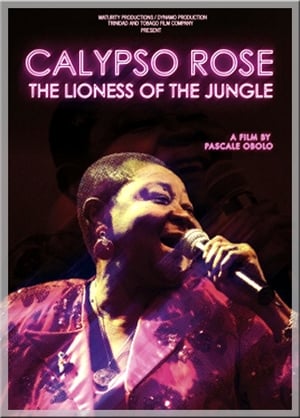
Calypso Rose: The Lioness of the Jungle
2011

Banda Calypso: 10 Anos
"10 Anos" is the fifth DVD of the Brazilian musical group Banda Calypso, in celebration of the ten years of the band's career. It was recorded on November 6, 2009, at Chevrolet Hall in Recife / PE, being released on March 14, 2010 by Som Livre. It featured the special appearances of Fagner, Bruno & Marrone, Maestro Spok and the gospel band Voz da Verdade. It was released on DVD, with all 27 tracks, and two CDs sold separately.
2010

Banda Calypso: Ao Vivo em Caruaru
"Ao Vivo Em Caruaru" is a promotional album by Banda Calypso recorded during the first part of the 10 Anos Tour, recorded in the city of Caruaru, in Pernambuco. The album was only sold at shows, but it was produced with a repertoire full of the band's hits over the nearly 10 years on the road, including songs from the band's recently released album, "Amor Sem Fim".
2009

Banda Calypso: Ao Vivo em Goiânia
"Ao Vivo em Goiânia" is the fourth DVD of the Brazilian musical group Banda Calypso, recorded in Goiânia on October 5th and 6th, 2007, it brings a show full of new songs, with only 4 songs already known. It was released in November of the same year. It brought a different show full of musical influences, and a participation of the duo of composers, Edu & Maraial (Edú Luppa and Marquinhos Maraial).
2007

Banda Calypso: 100%
100% is a series consisting of compilations of various artists released by Som Livre. The compilation featuring the hit songs of the Brazilian musical band Banda Calypso up to that point was released on May 9, 2007, and brings together hits from their first three video albums: Ao Vivo, Banda Calypso na Amazônia, and Banda Calypso Pelo Brasil. The band's 100% achieved good commercial performance, receiving platinum disc certifications for DVD sales and gold disc certifications for CD sales, in addition to appearing on the list of best-selling DVDs in 2007, according to the Brazilian Association of Record Producers (ABPD), currently Pro-Música Brasil (PMB).
2007
Montserrat: Emerald of the Caribbean
In the late 1990s, massive volcanic eruptions destroyed Montserrat’s infrastructure and leveled the island’s capital, Plymouth. Today, Montserrat’s 4,000 citizens are still coming to terms with this traumatic event. "Montserrat: Emerald of the Caribbean" explores how shared values—community, hope, faith—and traditions serve as sources of strength and identity for Montserratians as they rebuild their lives together. The film culminates in a portrayal of the sights and sounds of Montserrat’s annual St. Patrick’s Day Festival, a commemoration of African slaves who rebelled against their Irish slave masters on Saint Patrick’s Day, 1768. A unique blend of African, Caribbean, and Irish traditions, the Saint Patrick’s Day Festival represents the past, present, and future of a resilient people.
2007

Banda Calypso: Pelo Brasil
"Pelo Brasil" is the third DVD of the Brazilian musical group Banda Calypso, released in September 2006. The band invests in a major project for a tour in 5 capitals and for each one to make a stretch for a CD / DVD. The capitals chosen were Brasília, Recife, Salvador, Rio de Janeiro and Belém. In each show of the project, a section of the show would be recorded, with a musical block chosen for each city and after the block was closed, they would continue with the show for the public gift.
2006

Banda Calypso: Na Amazônia
"Na Amazônia" is the second DVD of the Brazilian musical group Banda Calypso. It was released in February 2005, through its independent label in CD and DVD formats. The album is still one of the most popular of the band's career to date, surpassing the mark of 1 million copies sold.
2005

Banda Calypso: Ao Vivo em São Paulo
"Ao Vivo" is the first DVD of the Brazilian musical group Banda Calypso, released in February 2004, through the label Calypso Produções (belonging to the band itself). The project, released in the format of CD / DVD, presents a show made by the band in the second semester of 2003 in the house of shows Patativa Clube, in São Paulo. The DVD was certified twice as a diamond disc.
2004

Driven: A Short Film about Panamanian Passion
Colorful portrait of a subculture on the verge of disappearing: the hot, uncomfortable school buses that for decades served as Panama’s primary form of public transportation, seen through the eyes of one of their drivers. The British filmmakers themselves gave the film its Spanish title, La fama.
1991

My Name is Panama
An ironic portrayal of the days of the U.S. blockade of Panama, set during the dictatorship of Manuel Antonio Noriega, just months before the country was invaded by U.S. troops.
1988
¡Aquí hay coraje!
The Nicaraguan revolutionaries, determined to overthrow the bloody dictatorship of Anastasio Somoza, enjoyed the semi-clandestine support of the Panamanian government and popular organizations from 1974 onward. Following the Sandinista Front's victory, which toppled a dynasty that had ruled for over 45 years, General Omar Torrijos visited that sister nation to strengthen ties between the two peoples.
1982
Una bomba a punto de estallar
Panama’s strategic geographic position has long been its greatest economic asset, with the Canal serving as the cornerstone of its development. Yet for decades, control of this vital waterway remained in the hands of a foreign power. Through interviews with residents of Panama City, Una bomba a punto de estallar (1977) captures the hopes, doubts and political sentiments surrounding the negotiation of the new treaties between Panama and the United States, offering a vivid portrait of a nation debating its sovereignty and future.
1977
La canción de nosotros
A musical group of young people from Viejo Veranillo perform protest songs in favor of the sovereignty of Panama. Set in 1976, a year before the signing of the Torrijos-Carter Treaties, the members of the group led by “Chirri”, vocalist and ukulele player, tell of their experiences in the neighborhood and their disagreements with the US military on the border that divided its community with the old Canal Zone.
1976
Soberanía
For the first time, a painting contest is organized whose theme is the fight for Panamanian sovereignty over the Panama Canal. A primordial experience in the country, its executors, popular artists born in the bowels of the countryside and the city, provide an enriching testimony of their lived experiences in the face of colonialism.
1975
Los 505
As part of the process of political and social transformations undertaken by the military government, a new political model based on the election of corregimiento representatives (505 in total) popularly chosen and that will replace the former Assembly of Deputies controlled by political parties by political parties traditional The majority of the members of this new political experiment are peasants, indigenous, workers and community leaders.
1973
Un año después
One year after the creation of the National Assembly of Community Representatives (1972), a new power structure established by the government, significant changes had taken place throughout the country. This documentary records the most important of these transformations, as well as the working methods of the Assembly. It follows the consultation tours organized by the Legislative Council, during which basic forms of grassroots organization are discussed at the community level. The film also draws a parallel between life in the countryside and in the city.
1973
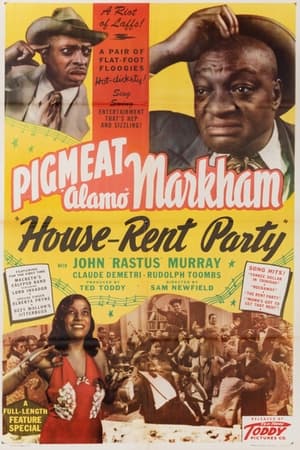
House-Rent Party
Summaries Shorty's wife throws him out of the house for lying around reading detective thrillers and letting his boss Pigmeat get away with not paying him for the work he does at Pigmeat's barber shop in Harlem. He runs into Pigmeat on the street and asks for the money he's owed, but Pigmeat winds up convincing him that not only does he not owe Shorty any salary, but he actually overpays Shorty $1.25 a week. Later, Shorty reads about a jewel thief on the loose in Harlem and that there's a reward of $1,000 for his capture. He convinces Pigmeat that the two of them can catch this guy, collect the reward and then become famous detectives. Complications ensue.
1946