Watch Driven: A Short Film about Panamanian Passion (1991) Online Free
Colorful portrait of a subculture on the verge of disappearing: the hot, uncomfortable school buses that for decades served as Panama’s primary form of public transportation, seen through the eyes of one of their drivers. The British filmmakers themselves gave the film its Spanish title, La fama.
Cast
Fifo Brígido
More Like This

Dude, Where's My Bus?
Filmmaker Gio Petti takes an in-depth look at the city's troublesome transit system in his documentary, Dude, Where's My Bus?. His nearly 2 year-long independent investigation delves into the frustrations of daily commuters in Ottawa and more deeply explores the systemic issues plaguing OC Transpo and their effects on the community. Beginning in the South End Suburbs of Ottawa, Dude, Where's My Bus? peels back layers leading to a broader investigation into issues plaguing the once model transit system. From late buses in neglected areas of the city, sprawl and the greenbelt, to the ever more controversial Confederation Line and the P3 system that built it, Petti aims to explore the impact of policy missteps and broken promises on Ottawa's transit users, with an optimistic look to the future.
2024

Soviet Bus Stops
“There’s a bus stop I want to photograph.” This may sound like a parody of an esoteric festival film, but Canadian Christopher Herwig’s photography project is entirely in earnest, and likely you will be won over by his passion for this unusual subject within the first five minutes. Soviet architecture of the 1960s and 70s was by and large utilitarian, regimented, and mass-produced. Yet the bus stops Herwig discovers on his journeys criss-crossing the vast former Soviet Bloc are something else entirely: whimsical, eccentric, flamboyantly artistic, audacious, colourful. They speak of individualism and locality, concepts anathema to the Communist doctrine. Herwig wants to know how this came to pass and tracks down some of the original unsung designers, but above all he wants to capture these exceptional roadside way stations on film before they disappear.
2024
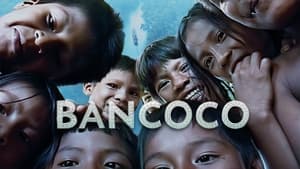
Bancoco
A New Yorker journeys to the jungle in the Darien Gap of Panama to reconnect with an indigenous tribe he met and photographed 20 years ago. Their reunion highlights the profound power of photos and the human connection that transcends cultural barriers.
2023
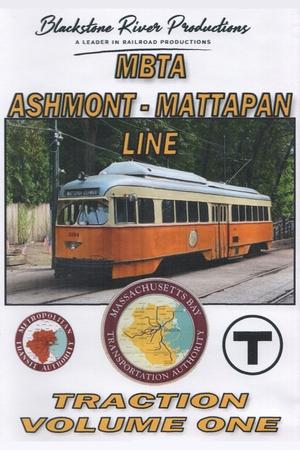
MBTA Ashmont - Mattapan Line: Traction Volume One
The Ashmont-Mattapan High Speed Line operates 2.6 miles of track from Ashmont Station to Mattapan Station just south of Boston. We capture this neat little commuter operation in the state of Massachusetts. They operate with all PCC trolley cars! This operation offers a vital link to commuters to get to Boston easily from the suburbs of Boston! It is a landlocked line that connects with the Red Line at Ashmont Station! Filmed in 2022 & 2023 at 7 of the 8 stations.
2023
Panamá, Tírate un Free
A small community of lovers of freestyle rap begins to grow in the parks and squares of Panama. From rapping on buses to on stage, the love of Hip-Hop abounds in their hearts.
2022
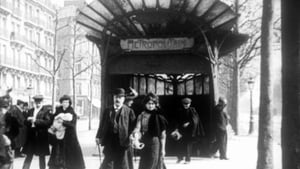
Dans les coulisses du métro de Paris
2016
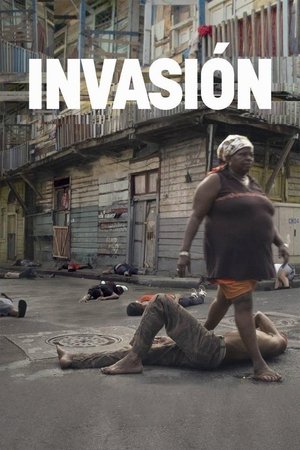
Invasion
INVASION is a documentary about the collective memory of a country. The invasion of Panama by the U.S in 1989 serves as an excuse to explore how a people remember, transform, and often forget their past in order to re-define their identity and become who they are today.
2014
The End of Suburbia: Oil Depletion and the Collapse of the American Dream
Since World War II North Americans have invested much of their newfound wealth in suburbia. It has promised a sense of space, affordability, family life and upward mobility. As the population of suburban sprawl has exploded in the past 50 years Suburbia, and all it promises, has become the American Dream. But as we enter the 21st century, serious questions are beginning to emerge...
2004
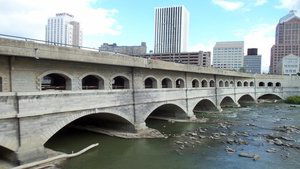
The End Of The Line: Rochester's Subway
"The End of the Line - Rochester's Subway" tells the little-known story of the rail line that operated in a former section of the Erie Canal from 1927 until its abandonment in 1956. Produced in 1994 by filmmakers Fredrick Armstrong and James P. Harte, the forty-five minute documentary recounts the tale of an American city's bumpy ride through the Twentieth Century, from the perspective of a little engine that could, but didn't. The film has since been rereleased (2005) and now contains the main feature with special portions that were added as part of the rereleased version. These include a look at the only surviving subway car from the lines and a Phantom tun through the tunnels in their abandoned state, among others, for a total of 90 minutes of unique and well preserved historical information.
1995
My Name is Panama
An ironic portrayal of the days of the U.S. blockade of Panama, set during the dictatorship of Manuel Antonio Noriega, just months before the country was invaded by U.S. troops.
1988
The Penny War
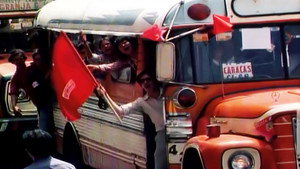
In Bogotá, urban public transport drivers do not receive a fixed salary. This has triggered a daily war marked by an anguishing and dangerous routine that only benefits large business owners and leaves the State as an indifferent bystander.
1985
¡Aquí hay coraje!
The Nicaraguan revolutionaries, determined to overthrow the bloody dictatorship of Anastasio Somoza, enjoyed the semi-clandestine support of the Panamanian government and popular organizations from 1974 onward. Following the Sandinista Front's victory, which toppled a dynasty that had ruled for over 45 years, General Omar Torrijos visited that sister nation to strengthen ties between the two peoples.
1982
La canción de nosotros
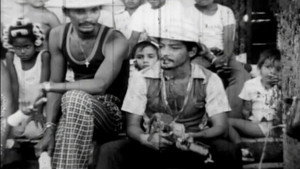
A musical group of young people from Viejo Veranillo perform protest songs in favor of the sovereignty of Panama. Set in 1976, a year before the signing of the Torrijos-Carter Treaties, the members of the group led by “Chirri”, vocalist and ukulele player, tell of their experiences in the neighborhood and their disagreements with the US military on the border that divided its community with the old Canal Zone.
1976
Soberanía
For the first time, a painting contest is organized whose theme is the fight for Panamanian sovereignty over the Panama Canal. A primordial experience in the country, its executors, popular artists born in the bowels of the countryside and the city, provide an enriching testimony of their lived experiences in the face of colonialism.
1975
Los 505
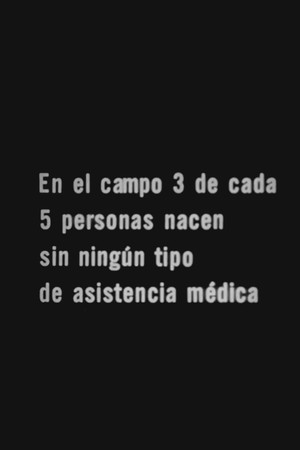
As part of the process of political and social transformations undertaken by the military government, a new political model based on the election of corregimiento representatives (505 in total) popularly chosen and that will replace the former Assembly of Deputies controlled by political parties by political parties traditional The majority of the members of this new political experiment are peasants, indigenous, workers and community leaders.
1973
Ahora ya no estamos solos
In March 1973, the United Nations Security Council met in Panama City to debate the Panamanian claim for a new treaty that would end the colonial presence of the United States in its territory. The majority of the participating states of the Council recognize the justice of Panama's cause and give it their support, but the United States vetoes the resolution.
1973
Canto a la patria que ahora nace
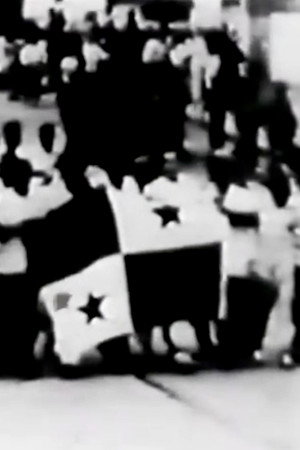
Based on a poem and archive images, the military aggression of the US army stationed in the Canal Zone against the Panamanian people who demand to raise their flag in the territory occupied since the beginning of the 20th century is reconstructed and denounced. The aggression that occurred between January 9 and 11, 1964 left a balance of 21 patriots.
1972
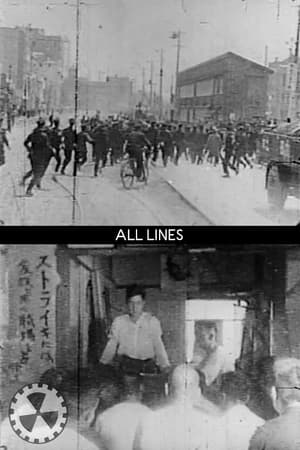
All Lines
This was a news film with elements of reenactment. From December 1927 to 1932, 2,000 bus and train drivers were fired, provoking a strike. This film was edited out of footage shot from that strike over a long period.
1932
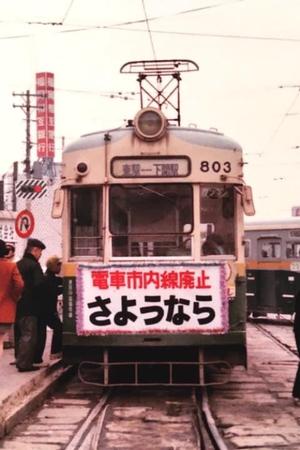
T-rail
Sanyo Electric Tramway carried 586 million people through Shimonoseki City over the 45 years of operation, from 1926 to 1971. Based on colour footage and photographs taken by former city employee Seiichiro Tomura using an 8 mm camera on the last day of operation, and featuring rare audio recordings of the train interior and the farewell ceremony, this documentary is a nostalgic look at the history of the city.
Quando a Porta Fecha
A short documentary that follows a day at work for 3 wagon rhymers.