Watch La canción de nosotros (1976) Online Free
A musical group of young people from Viejo Veranillo perform protest songs in favor of the sovereignty of Panama. Set in 1976, a year before the signing of the Torrijos-Carter Treaties, the members of the group led by “Chirri”, vocalist and ukulele player, tell of their experiences in the neighborhood and their disagreements with the US military on the border that divided its community with the old Canal Zone.
Cast
Epiménides García "Chirri"
More Like This
La Guerre, Donald Trump et nous : 2025, l'année de tous les dangers
2025, the year of the intensification of a total and deadly war, which nothing and no one seems able to stop, targeting military personnel and civilians, and which has now claimed more than 1.5 million lives or left that many wounded on both sides. But 2025 is also the year of our break with Donald Trump's America, an America with violent and unpredictable reactions, which risks abandoning the old continent, its most loyal ally for 80 years, for Vladimir Putin. How can we stop this bloodshed on our doorstep? How can we contain the master of the Kremlin, a dictator whose predatory logic threatens to spread beyond Ukraine? Sabotage, ghost ships, interference operations, and drone flights: he is already waging a hybrid war against the rest of Europe. Is armed conflict between Europe and Russia now a possibility?
2026

Trump's America - Power, Change, Resistance
With his ultra-conservative policies, US President Donald Trump is disrupting the global order as well as US institutions and society. Filmed less than one year after the start of his second mandate, this documentary analyses the concrete impact of his policies on the American people.
2026
Groenland, annexe-moi si tu peux
Greenland, a semi-autonomous territory of Denmark, is currently at the center of international covetousness and tensions. In his rivalry with China for technological supremacy, Donald Trump has made the acquisition of this Arctic territory a priority in order to secure American control over rare earth elements, of which Greenland is believed to hold one of the world's largest reserves.
2025
Racismo: Uma Descolonização Em Curso
2025
Earth's Greatest Enemy
In Abby Martin's second feature documentary, Earth’s Greatest Enemy reveals a hidden truth behind the climate crisis: the role of the U.S. military as the world’s largest institutional polluter. Drawing on powerful testimonies from veterans, scientists, and frontline communities, it uncovers how military operations poison ecosystems, accelerate global warming, and sacrifice the future for endless expansion. From Alaska’s melting glaciers to contaminated bases across the U.S. and toxic battlefields abroad, Earth’s Greatest Enemy delivers a provocative and unflinching examination of the untouchable institution playing an outsized role in the climate crisis.
2025

Intercepted
A journey through Ukraine that reveals the banality of evil behind the Russian invasion with the shocking juxtaposition of two realities: the Ukrainians who have been suffering and resisting the war violence, and the Russian military, and civilians, who have been perpetrating it.
2025

Le Baron et l'Empereur : Japon, la voie de la guerre
2023
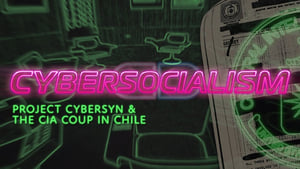
Cybersocialism: Project Cybersyn & The CIA Coup in Chile
A documentary on the rise and fall of Project Cybersyn, an attempt at a computer-managed centralized economy undertaken in Chile during the presidency of Salvador Allende.
2021

De Gaulle, l'homme à abattre
2020
Un-Documented: Unlearning Imperial Plunder
Un-Documented argues against Alain Resnais and Chris Marker’s film Statues Also Die (1963). Focusing on plundered objects in European museums and listening to the call of asylum seekers to enter European countries, their former colonizing powers, the film defends the idea that their rights are inscribed in these objects that were kept well documented all these years.
2019

The Faces of North Korea
This is a 25-minutes piece about the DPRK (North Korea), a country Vltchek visited and fell in love with. Vltchek goes against the hegemonic western propaganda that is perpetuated towards DPRK and their people, showing the beauty that resides in the country.
2018
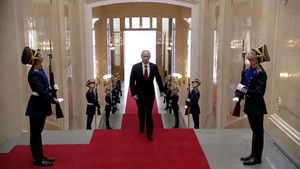
La vengeance de Poutine
2018
Una identidad en absurdo Vol. 1
Guillermo Gómez Álvarez explores the identity politics of Puerto Rico via archival footage from various sources that clash with nine original songs from local independent musicians and a thematic analysis from a psychoanalyst and a historian. From the juxtaposition the absurd becomes coherent and the coherent becomes absurd as Puerto Rican identity is defined and rejected almost simultaneously.
2011
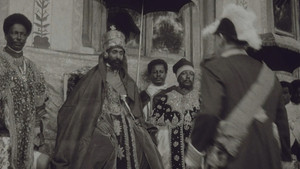
Etiopia 1936: alla conquista dell'impero
By means of a chronological arrangement of historical video material from the Istituto Luce archives, it tells the story of Fascist Italy's ambitions in Africa and the role they played in shaping fascist ideology and the stance of the fascist regime in the Western world at the height of the age of colonialism and aggressive European expansionism.
2004
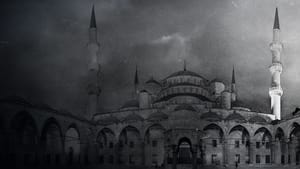
Promises & Betrayals: Britain and the Struggle for the Holy Land
A documentary on how British double-dealing during the First World War ignited the conflict between Arab and Jew in the Middle East. The bitter struggle between Arab and Jew for control of the Holy Land has caused untold suffering in the Middle East for generations. It is often claimed that the crisis originated with Jewish emigration to Palestine and the foundation of the state of Israel. Yet the roots of the conflict are to be found much earlier – in British double-dealing during the First World War. This is a story of intrigue among rival empires; of misguided strategies; and of how conflicting promises to Arab and Jew created a legacy of bloodshed which determined the fate of the Middle East.
2002
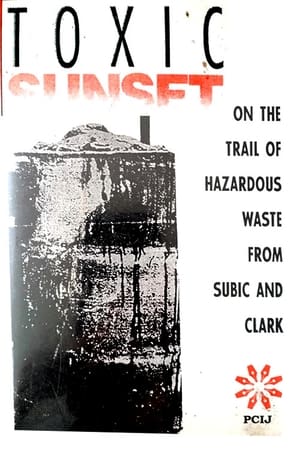
Toxic Sunset
In 1991 and 1992, the United States closed down two of their largest military bases in Asia. After almost 100 years, our American guests were gone. But we discovered that our guests forgot to clean up. Toxic Sunset probes the issue of toxic wastes in US Military bases in the Philippines.
1993
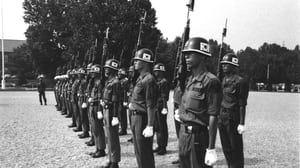
Homes Apart: Korea
They speak the same language, share a similar culture and once belonged to a single nation. When the Korean War ended in 1953, ten million families were torn apart. By the early 90s, as the rest of the world celebrated the end of the Cold War, Koreans remain separated between North and South, fearing the threat of mutual destruction. Beginning with one man's journey to reunite with his sister in North Korea, filmmakers Takagi and Choy reveal the personal, social and political dimensions of one of the last divided nations on earth. The film was also the first US project to get permission to film in both South & North Korea.
1991

The Empire Visits Us Once More
In Portobelo, two friends go to a Congo dance and witness an invasion of demons, while Panama is invaded by Americans troops in 1989: this turns into an account of what happened in the cities of Colón and Panamá.
1990

My Name is Panama
An ironic portrayal of the days of the U.S. blockade of Panama, set during the dictatorship of Manuel Antonio Noriega, just months before the country was invaded by U.S. troops.
1988
¡Aquí hay coraje!
The Nicaraguan revolutionaries, determined to overthrow the bloody dictatorship of Anastasio Somoza, enjoyed the semi-clandestine support of the Panamanian government and popular organizations from 1974 onward. Following the Sandinista Front's victory, which toppled a dynasty that had ruled for over 45 years, General Omar Torrijos visited that sister nation to strengthen ties between the two peoples.
1982