Watch There is the Metro! (1935) Online Free
Early documentary about the Moscow metro: the early project, the development and the people working on it.
More Like This
When the Water Stops Flowing
Jonathan Stavleu explores, in a stream-of-consciousness video essay, the relationship people have with water and what happens when access to it is taken away. For this work, he examines anecdotal histories he has heard from Estonians, as well as stories from his own family history in the Netherlands, weaving them together into a journal-like narrative.
2026
Father, Developed
After she discovers canisters of undeveloped film shot by her late father, Elene sets out on a journey to collaborate with him on a special project. Between the earth and the land of the dead, a darkroom becomes the only dimension where the paths of a father and a daughter can cross.
2024

Chernobyl: The Last Battle of the USSR
Three decades after the nuclear explosion, almost everything has been said about this ecological and sanitary disaster that made Pripiat a part of History. How did the greatest industrial disaster change the course of History, disrupt global geopolitics and, directly or indirectly, redistribute the balances and power relations of the twentieth century? The world will never be the same again. By retracing the incredible battle waged by the Soviet Union against radiation, this film proposes to retrace and enlighten an extraordinary story, while exploring the historical stakes in the medium and long-term…
2021
Icons - Oľga Ondreičková
Oľga Ondreičková is one of the exceptional figures of the first generation of Slovak architects. Her work is characterized by pragmatism, simplicity, and monumentality. Her husband is architect Pavel Ondreička, with whom she collaborated on several projects, as well as on the design of furniture, interiors, and artistic decorations. At the height of her career, Oľga Ondreičková led her own project team, which was rare for a woman at that time.
2019
Andrey Tarkovsky. A Cinema Prayer
An account of the life and work of Russian filmmaker Andrey Tarkovsky (1932-86) in his own words: his memories, his vision of art and his reflections on the fate of the artist and the meaning of human existence; through extremely rare audio recordings that allow a complete understanding of his inner life and the mysterious world existing behind his complex cinematic imagery.
2019
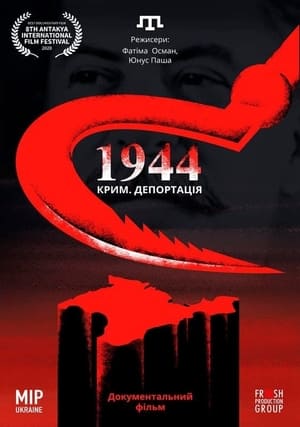
1944. Deportation
In 1944 Crimean Tatars has suffered a long road in exile. It was accompanied by famine, illness and loss. In the first years of exile, almost half of deported Crimean Tatars died. But those, who survived, dreamed of only one thing - to return to Crimea. The documentary 1944 tells about the tragedy of all Crimean Tatars through several separate life stories. They are cherished by each Crimean Tatar family and must be remembered by all generations to come.
2019
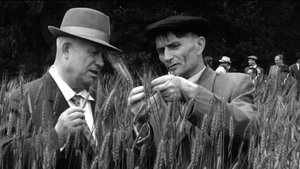
The Scientist, The Imposter and Stalin: How to Feed the People
The documentary tells two very different human fates in the 1920s Soviet Union. Nikolai Vavilov was a botanical genius, Trofim Lyssenko was an agronomist who made great promises and fake inventions. Each of them tried to solve the country's nutritional problem, but only one succeeded.
2018
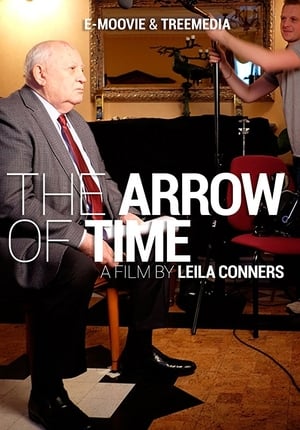
The Arrow of Time
President Mikhail Gorbachev recounts the end of the Cold War and the reduction of nuclear arms.
2017
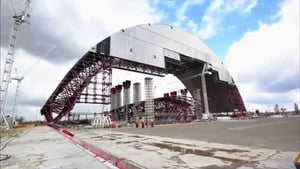
Chernobyl 30 Years On: Nuclear Heritage
Thirty years after the Chernobyl disaster, which occurred on the night of April 26, 1986, its causes and consequences are examined. In addition, a report on efforts to strengthen the structures covering the core of the nuclear plant in order to better protect the population and the environment is offered.
2015
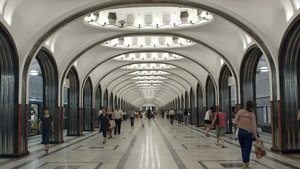
How we built the Moscow metro
In the 1930’s, the workers of the underground, headed by brigades of writers, are in charge to write in real time "the history of the Moscow Metro". Based on their narratives, partially unpublished, the film recounts the first lines construction of the most beautifiul underground in the world, in the light of this "big literary Utopia", stoped by the purges of 1937-38.
2014
Michael Jackson: Moscow Case 1993
The Moscow Case is a 52 minute documentary with never-before-seen footage of Michael Jackson in Moscow during the "Dangerous" tour. This film tells the behind the scenes story of Jackson's ill fated concert in September 1993. It includes unique archival footage showing Michael close up and personal while meeting fans and playing with orphan children.
2011
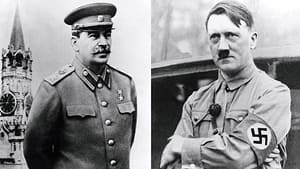
Hitler & Stalin: Portrait of Hostility
A double portrait of two dictators who were thousands of miles apart but were constantly fixated on each other.
2009
The Living
Tells the story of the tragic events in Ukraine in 1932-33, the genocidal Great Famine or the Holodomor, and one Welshman's attempts to tell the world what was happening.
2009
Charlie Marx and the Chocolate Factory
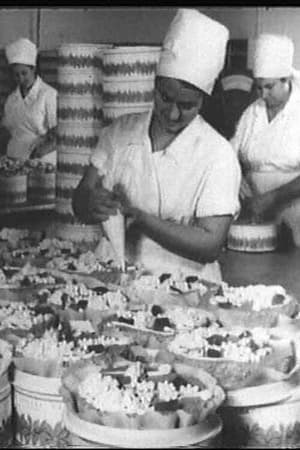
Charlie Marx and the Chocolate Factory started as an investigation of the link between politics and chocolate, at the Karl Marx Confectionary Factory in Kiev, Ukraine. Since access to the factory was denied, the project had to be re-considered, re-invented or re-enacted. Mostly made of archival footage and re-enacted performances based on the company's website, the film merges what was left of the initial idea with what has been collected and realized instead. It borrows from the genres of video art, 'Man on the street' interview, direct address, corporate film, essay, and music video, without legitimately belonging to any of them. The film unravels as a reflection on its own failure, and yet keeps on investigating what has always been at stake: the shift from public to private property (and from analog to digital technology), dialectics of permanence and change, language as a mirror of ideology, and post-Soviet oligarchy culture.
2009
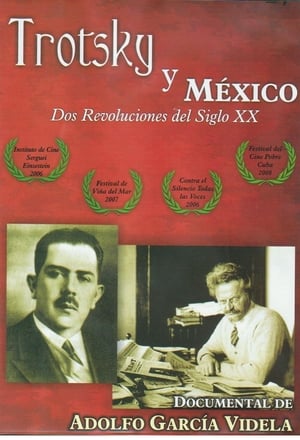
Trotsky y México. Dos revoluciones del siglo XX
"Trotsky and Mexico, two revolutions of the twentieth century" tells us of the famous Russian revolutionary asylum by President Lazaro Cardenas in Mexico.
2006
Once in the XX Century
The disintegration of the Soviet Union and the failure of Communism has been symbolically documented by many tv reportages of removals of monumental public sculptures, but the citizens of Vilnius in Lithuania did the unexpected!
2004
The Russian German War
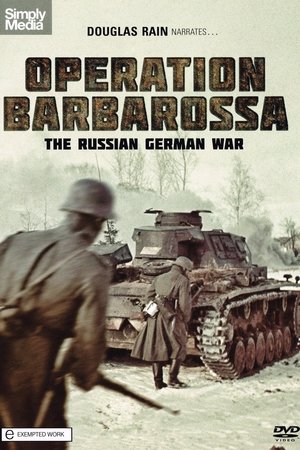
This is a rare look at one of the worst horror stories in the long infamous history of warfare. This series features captured German and Russian film footage, much of which has never been seen before. For decades the Cold War prevented us from looking closely at what really happened between the Russians and the Germans on the Eastern Front during World War II. More than a struggle between nations, it pitted maniacal tyrant against maniacal tyrant, evil ideology against evil ideology. The lives of tens of millions of human beings were consumed by its raging hatreds and appalling indignities. One in every ten Russians died. One in every four Poles died. Whole divisions of Italians, Romanians, Hungarians disappeared with barely a trace. An average of 17,800 people died on every single day and this, the war on the Russian German Front, lasted for 1,400 days. This series features captured German and Russian film footage, much of which has never been seen before.
1995
MIGNOR
Showing Sergei Parajanov at the end of his life, the film depicts the suffering of a genius against the backdrop of general anxiety and carelessness.
1990
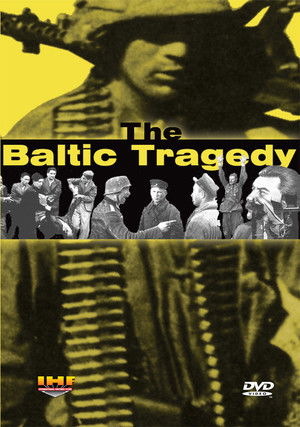
The Baltic Tragedy
Special care has been taken by International Historic Films to assemble this monumental documentary, which tells the story of what is left for a people after its land has been ravaged by war. Situated between the powerful antagonists Germany and the Soviet Union, the Baltic nations of Latvia, Lithuania, and Estonia bore witness to some of the most ferocious land battles of the Second World War.
1985
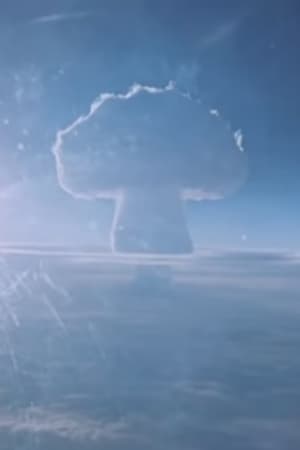
Test of a clean hydrogen bomb with a yield of 50 megatons
Documentary movie about testing of the largest nuclear weapon in history, the Tsar Bomba. Declassified and made available to the public in 2020.
1961