Watch Chernobyl 30 Years On: Nuclear Heritage (2015) Online Free
Thirty years after the Chernobyl disaster, which occurred on the night of April 26, 1986, its causes and consequences are examined. In addition, a report on efforts to strengthen the structures covering the core of the nuclear plant in order to better protect the population and the environment is offered.
Cast
Vladimir Usatenko, Alexander Syrota
More Like This
INSIDE THE MIND OF VLADIMIR PUTIN
As Russia continues to horrify the world with its brutal attacks on Ukraine, and its crush of dissent at home, CNN’s Fareed Zakaria takes viewers inside the mind of the man behind the ruthless conflict, Vladimir Putin. Throughout his rise to power and political career, Vladimir Putin has been an autocratic enigma. He was reared in Soviet poverty, served as a KGB intelligence agent in East Germany, and through a series of cunning maneuvers, rose from deputy mayor of St. Petersburg to the presidency of post-Soviet Russia. Zakaria gets answers to the many questions that surround Putin that have confounded leaders around the world, including at least four U.S. presidents: how did Putin’s mindset move from pro-global harmony, to isolation, fear, and loathing of the West.
2022
Andrey Tarkovsky. A Cinema Prayer
An account of the life and work of Russian filmmaker Andrey Tarkovsky (1932-86) in his own words: his memories, his vision of art and his reflections on the fate of the artist and the meaning of human existence; through extremely rare audio recordings that allow a complete understanding of his inner life and the mysterious world existing behind his complex cinematic imagery.
2019

Once More Unto the Breach
July, 1941. After the beginning of the German invasion, an Italian soldier, a veteran of the colonial wars, is sent to the Soviet front. As he remembers the fairy tales his Russian mother used to tell him, the train he is travelling in crosses Europe on its way to the vast Ukrainian plains, where the enemy and a cruel winter await him… (Based on the experiences of several Italian soldiers.)
2019
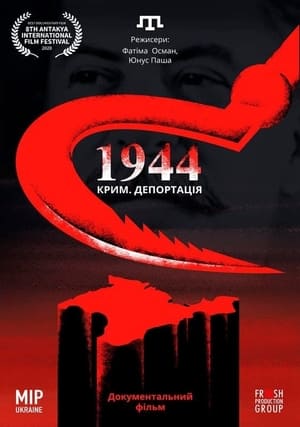
1944. Deportation
In 1944 Crimean Tatars has suffered a long road in exile. It was accompanied by famine, illness and loss. In the first years of exile, almost half of deported Crimean Tatars died. But those, who survived, dreamed of only one thing - to return to Crimea. The documentary 1944 tells about the tragedy of all Crimean Tatars through several separate life stories. They are cherished by each Crimean Tatar family and must be remembered by all generations to come.
2019
Revealing Ukraine
A sequel of Oliver Stone-produced conspiracy film "Ukraine on Fire", analyzing the current political backstage and its supposed dangerous potential for the world.
2019
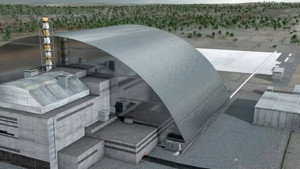
Inside Chernobyl's Mega Tomb
Documentary which follows the construction of a trailblazing 36,000-tonne steel structure to entomb the ruins of the nuclear power plant destroyed in the 1986 Chernobyl disaster.
2016

Charlie Marx and the Chocolate Factory
Charlie Marx and the Chocolate Factory started as an investigation of the link between politics and chocolate, at the Karl Marx Confectionary Factory in Kiev, Ukraine. Since access to the factory was denied, the project had to be re-considered, re-invented or re-enacted. Mostly made of archival footage and re-enacted performances based on the company's website, the film merges what was left of the initial idea with what has been collected and realized instead. It borrows from the genres of video art, 'Man on the street' interview, direct address, corporate film, essay, and music video, without legitimately belonging to any of them. The film unravels as a reflection on its own failure, and yet keeps on investigating what has always been at stake: the shift from public to private property (and from analog to digital technology), dialectics of permanence and change, language as a mirror of ideology, and post-Soviet oligarchy culture.
2009
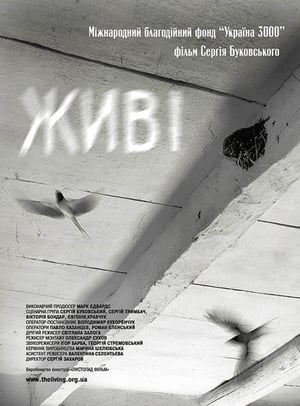
The Living
Tells the story of the tragic events in Ukraine in 1932-33, the genocidal Great Famine or the Holodomor, and one Welshman's attempts to tell the world what was happening.
2009
Pripyat: Ghost City Chronicles
The word Chernobyl became known worldwide shortly after the 1986 blast. The small town Pripyat, situated just 3 km from the Chernobyl nuclear power plant, up to this day serves to remind about the extent of the tragedy. Pripyat used to be a lively little town, both a powerful nuclear centre and a conveniently planned city with schools and urban apartments. It is now a dead, lifeless stretch of land littered with scraps of the past.
2008
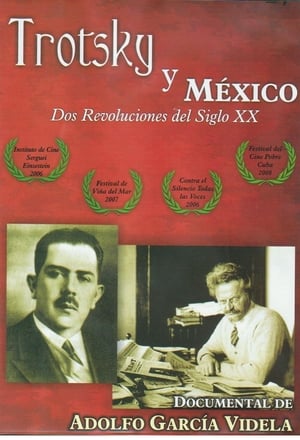
Trotsky y México. Dos revoluciones del siglo XX
"Trotsky and Mexico, two revolutions of the twentieth century" tells us of the famous Russian revolutionary asylum by President Lazaro Cardenas in Mexico.
2006
Scorcher
The only hope for humanity to survive a natural disaster is to detonate a nuclear bomb in Los Angeles.
2002
K-19: The Widowmaker
When Russia's first nuclear submarine malfunctions on its maiden voyage, the crew must race to save the ship and prevent a nuclear disaster.
2002

Hostile Waters
Based on true events, an American submarine collides into a Soviet sub of the coast of America and an ensuing standoff occurs that could lead to total annihilation.
1997
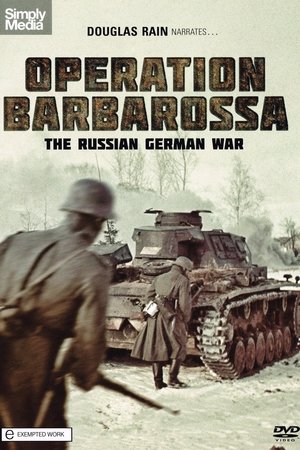
The Russian German War
This is a rare look at one of the worst horror stories in the long infamous history of warfare. This series features captured German and Russian film footage, much of which has never been seen before. For decades the Cold War prevented us from looking closely at what really happened between the Russians and the Germans on the Eastern Front during World War II. More than a struggle between nations, it pitted maniacal tyrant against maniacal tyrant, evil ideology against evil ideology. The lives of tens of millions of human beings were consumed by its raging hatreds and appalling indignities. One in every ten Russians died. One in every four Poles died. Whole divisions of Italians, Romanians, Hungarians disappeared with barely a trace. An average of 17,800 people died on every single day and this, the war on the Russian German Front, lasted for 1,400 days. This series features captured German and Russian film footage, much of which has never been seen before.
1995
Koyaanisqatsi
Takes us to locations all around the US and shows us the heavy toll that modern technology is having on humans and the earth. The visual tone poem contains neither dialogue nor a vocalized narration: its tone is set by the juxtaposition of images and the exceptional music by Philip Glass.
1983
Mirror
A dying man in his forties recalls his childhood, his mother, the war and personal moments that tell of and juxtapose pivotal moments in Soviet history with daily life.
1975
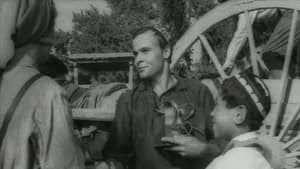
Hasan Arbakesh
A story about the clash of two cultures, two worlds - traditional Tajik culture and the new, invading and imperialist in its nature, Soviet culture, about the formation of self-awareness of the Tajik dekhkanin in the 1920s-1930s.... Poor Hasan thinks and experiences a lot before he is able to comprehend the changes in his life, to realize that old traditions and customs are no longer valued. Bent by need and disenfranchisement, he finds the strength to stand up against the Basmachi.
1966

Alas for the One through Whom the Umbrage Comes
Propaganda document of the communist regime about the so-called Číhošť miracle.
1950
Láska
Montage of documentary footage from the liberation and building of the republic as a tribute to JV Stalin on his seventieth birthday.
1950
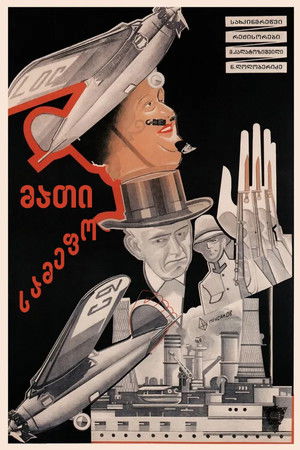
Their Kingdom
The documentary Their Kingdom, co-directed in 1928 by Nutsa Gogoberidze and Mikhail Kalatozishvili (Kalatozov) for Soviet Georgia’s Cinema Trust, was considered lost until 2008, when there appeared a possibility that this important film – Georgia’s first documentary feature and Kalatozov’s directorial debut – had not disappeared irretrievably.
1928