Watch How we built the Moscow metro (2014) Online Free
In the 1930’s, the workers of the underground, headed by brigades of writers, are in charge to write in real time "the history of the Moscow Metro". Based on their narratives, partially unpublished, the film recounts the first lines construction of the most beautifiul underground in the world, in the light of this "big literary Utopia", stoped by the purges of 1937-38.
Cast
Arnaud Arbessier, Jochen Hägele, Franck Lorrain, Céline Mauge, Gilles Padovani, Céline Ronté, Joseph Stalin
More Like This

Romy and Magda Schneider: Mother - Daughter - Rivals?
New light is shed on the complex relationship between Romy Schneider and her mother Magda, a German film star of the 1930s admired by Hitler - who welcomed her and her daughter to his chalet in Berchtesgaden.
2025
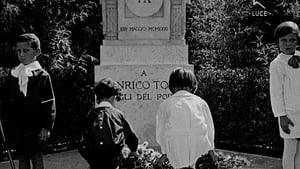
The Imperial Lullaby
The armies of Fascist Italy conquered Addis Ababa, capital of Abyssinia, in May 1936, thus culminating the African colonial adventure of the ruthless dictator Benito Mussolini, by then lord of Libya, Eritrea and Somalia; a bloody and tragic story told through the naive drawings of Pietro Dall'Igna, an Italian schoolboy born in 1925.
2020
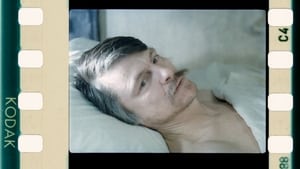
Andrey Tarkovsky. A Cinema Prayer
An account of the life and work of Russian filmmaker Andrey Tarkovsky (1932-86) in his own words: his memories, his vision of art and his reflections on the fate of the artist and the meaning of human existence; through extremely rare audio recordings that allow a complete understanding of his inner life and the mysterious world existing behind his complex cinematic imagery.
2019
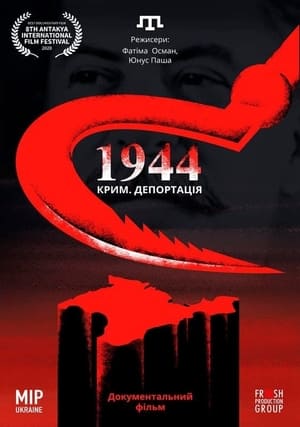
1944. Deportation
In 1944 Crimean Tatars has suffered a long road in exile. It was accompanied by famine, illness and loss. In the first years of exile, almost half of deported Crimean Tatars died. But those, who survived, dreamed of only one thing - to return to Crimea. The documentary 1944 tells about the tragedy of all Crimean Tatars through several separate life stories. They are cherished by each Crimean Tatar family and must be remembered by all generations to come.
2019
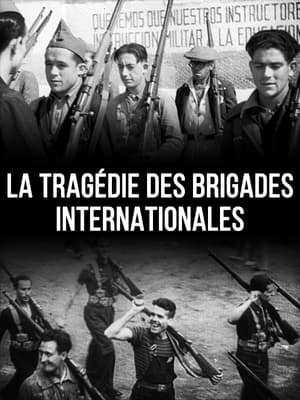
La Tragédie des Brigades Internationales
2016
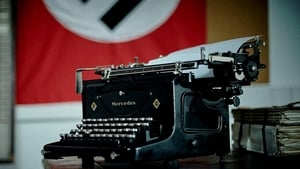
I Betrayed Hitler
During the worst days of World War II, the British government asks the mathematician Alan Turing to unravel the mysteries of the German Enigma encryption machine, an impossible task to accomplish without the invaluable information that Hans-Thilo Schmidt, a disenchanted but greedy German citizen, had been handing over to the French secret services since 1931.
2016
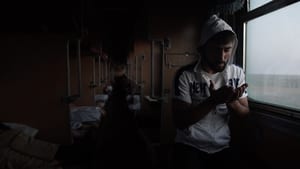
Not My Job
The documentary follows the life of Farroukh, a young Tajik immigrant who lives in Moscow outskirts with his family and does odd jobs in dreams of becoming an actor.
2015
Walter Mittelholzer - Eine Schweizer Pioniergeschichte
2015
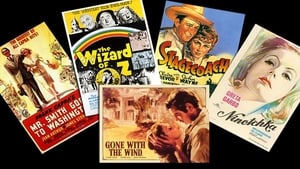
1939: Hollywood's Greatest Year
This documentary focuses on 1939, considered to be Hollywood's greatest year, with film clips and insight into what made the year so special.
2009
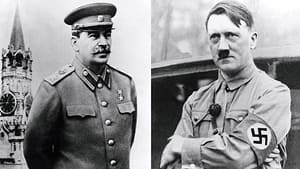
Hitler & Stalin: Portrait of Hostility
A double portrait of two dictators who were thousands of miles apart but were constantly fixated on each other.
2009
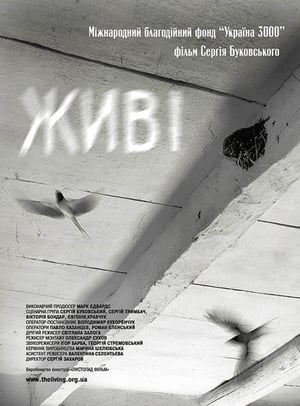
The Living
Tells the story of the tragic events in Ukraine in 1932-33, the genocidal Great Famine or the Holodomor, and one Welshman's attempts to tell the world what was happening.
2009
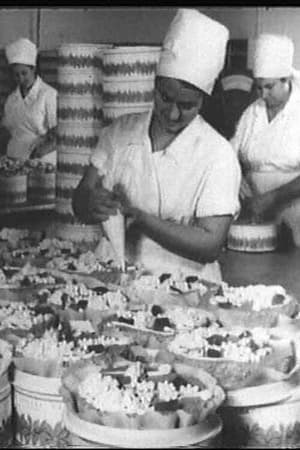
Charlie Marx and the Chocolate Factory
Charlie Marx and the Chocolate Factory started as an investigation of the link between politics and chocolate, at the Karl Marx Confectionary Factory in Kiev, Ukraine. Since access to the factory was denied, the project had to be re-considered, re-invented or re-enacted. Mostly made of archival footage and re-enacted performances based on the company's website, the film merges what was left of the initial idea with what has been collected and realized instead. It borrows from the genres of video art, 'Man on the street' interview, direct address, corporate film, essay, and music video, without legitimately belonging to any of them. The film unravels as a reflection on its own failure, and yet keeps on investigating what has always been at stake: the shift from public to private property (and from analog to digital technology), dialectics of permanence and change, language as a mirror of ideology, and post-Soviet oligarchy culture.
2009
Bin nur ein Jonny
2008
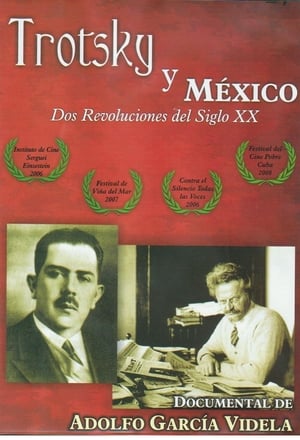
Trotsky y México. Dos revoluciones del siglo XX
"Trotsky and Mexico, two revolutions of the twentieth century" tells us of the famous Russian revolutionary asylum by President Lazaro Cardenas in Mexico.
2006
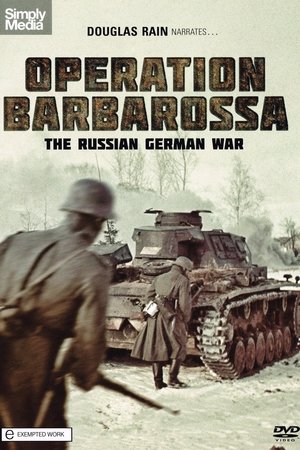
The Russian German War
This is a rare look at one of the worst horror stories in the long infamous history of warfare. This series features captured German and Russian film footage, much of which has never been seen before. For decades the Cold War prevented us from looking closely at what really happened between the Russians and the Germans on the Eastern Front during World War II. More than a struggle between nations, it pitted maniacal tyrant against maniacal tyrant, evil ideology against evil ideology. The lives of tens of millions of human beings were consumed by its raging hatreds and appalling indignities. One in every ten Russians died. One in every four Poles died. Whole divisions of Italians, Romanians, Hungarians disappeared with barely a trace. An average of 17,800 people died on every single day and this, the war on the Russian German Front, lasted for 1,400 days. This series features captured German and Russian film footage, much of which has never been seen before.
1995
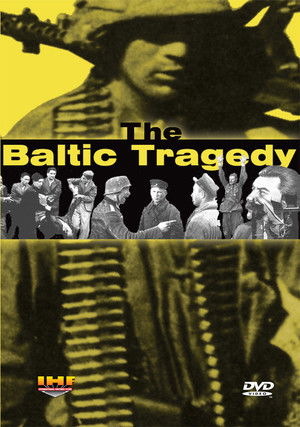
The Baltic Tragedy
Special care has been taken by International Historic Films to assemble this monumental documentary, which tells the story of what is left for a people after its land has been ravaged by war. Situated between the powerful antagonists Germany and the Soviet Union, the Baltic nations of Latvia, Lithuania, and Estonia bore witness to some of the most ferocious land battles of the Second World War.
1985
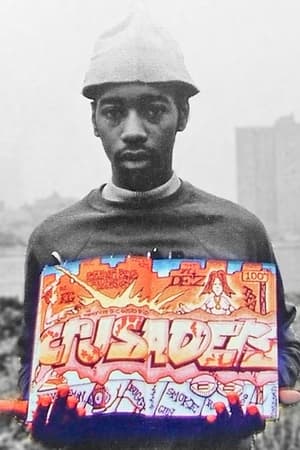
Rocking '83 - Bear's Jam
An incredible historic document showcasing the roots of Old School Hip Hop movement with all its disciplines involved: Djing, Mcing, Breakdancing, and Graffiti. Featured in the "NYC: Urban Image" show at MoMA PS1 1983.
1983
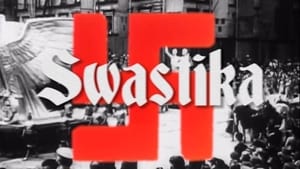
Swastika
Comprised of footage shot during the Nazi regime, including propaganda, newsreels, broadcasts and even some of Eva Braun's colorized personal home movies, we explore the way in which the Third Reich infiltrated the lives of the German population, from 1933 to 1945.
1974
La ruta de don Quijote
A poetic journey through the paths and places of old Castile that were traveled and visited by the melancholic knight Don Quixote of La Mancha and his judicious squire Sancho Panza, the immortal characters of Miguel de Cervantes, which offers a candid depiction of rural life in Spain in the early 1930s and illustrates the first sentence of the first article of the Spanish Constitution of 1931, which proclaims that Spain is a democratic republic of workers of all kind.
1934
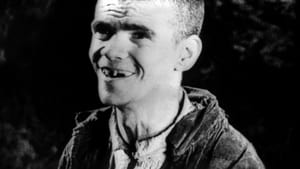
Land Without Bread
An exploration —manipulated and staged— of life in Las Hurdes, in the province of Cáceres, in Extremadura, Spain, as it was in 1932. Insalubrity, misery and lack of opportunities provoke the emigration of young people and the solitude of those who remain in the desolation of one of the poorest and least developed Spanish regions at that time.
1933