Watch The World of Buckminster Fuller (1974) Online Free
Architect, engineer, geometrician, cartographer, philosopher, futurist, inventor of the famous geodesic dome and one of the most brilliant thinkers of his time. Fuller was renowned for his comprehensive perspective on the world's problems. For more than five decades he developed pioneering solutions reflecting his commitment to the potential of innovative design to create technology that does "more with less" and thereby improve human lives. He spent much of his life traveling the world lecturing and discussing his ideas with thousands of audiences. Now more relevant than ever, this film captures Fuller's ideas and thinking told in his own words.
Cast
Buckminster Fuller, Indira Gandhi
More Like This
Nothing Remains Nothing Disappears
A Berlin street corner is slowly changing: an aging supermarket turns into a construction site and finally a new building. People restock shelves, demolish walls, take breaks and count money. Those who work here participate in the making and unmaking of the place. How does it shape the conditions of their labor? Between supermarket aisles, construction scaffolding and exposed concrete, different versions begin to overlap. Repetitions appear like echoes between worlds, both playful and eerie.
2026
Cutting Corners
With building collapses happening around the country, activists band together to confront the real estate developers and hold them accountable for the construction destruction, lives they have destroyed, and deaths they have caused.
2021
Fading City
A docu-art film about Kyiv and the contemporary problems of the capital. The film raises the issue of the dilapidated state of Kyiv's old buildings and the search for effective mechanisms to preserve the city's architectural heritage.
2020
Chun
A short documentary about Chun, who lives in Vienna.
2020
State Funeral
The enigma of the personality cult is revealed in the grand spectacle of Stalin’s funeral. The film is based on unique archive footage, shot in the USSR on March 5 - 9, 1953, when the country mourned and buried Joseph Stalin.
2019
Necessary Amendments
Commissioned by MK Gallery, this film combines contemporary footage of public artworks in Milton Keynes with archive footage from the Open University, cartoons from the Milton Keynes Development Corporation's internal newspaper and accounts from early residents, juxtaposing several perspectives on England's most ambitious 'new town'.
2019
Zensur: Die organisierte Manipulation der Wikipedia und anderer Medien
2017
World War Two: A Timewatch Guide
Professor Saul David uses the BBC archive to chart the history of the world's most destructive war, by chronicling how the story of the battle has changed. As new information has come to light, and forgotten stories are remembered, the history of World War Two evolves. The BBC has followed that evolution, and this programme examines the most important stories, and how our understanding of them has been re-defined since the war ended over 70 years ago.
2016
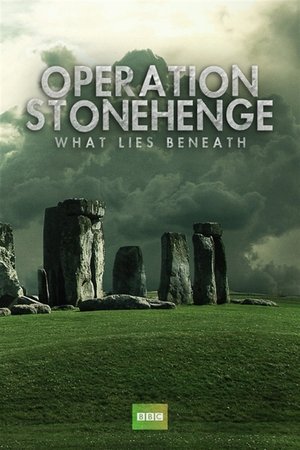
Operation Stonehenge: What Lies Beneath
Stonehenge is an icon of prehistoric British culture, an enigma that has seduced archaeologists and tourists for centuries. Why is it here? What is its significance? And which forces inspired its creators? Now a group of international archaeologists led by the University of Birmingham and the Ludwig Boltzman Institute in Vienna believe that a new state-of-the-art approach is the key to unlocking Stonehenge's secrets. For four years the team have surveyed and mapped every monument, both visible and invisible, across ten square kilometres of the sacred landscape to create the most complete digital picture of Stonehenge and the surrounding area over millennia. Operation Stonehenge takes the viewer on a prehistoric journey from 8000BC to 2500BC as the scientists uncover the very origins of Stonehenge, learning why this landscape is sacred, preserved and has been revered by following generations.
2014

Planet Food: Spice Trails
In this remarkable journey, Planet Food travels the world to see how control of the spice trails, over the last five millennia, has made great cities and destroyed ancient civilizations. Our guides travel from the Molucca Islands of Indonesia, the original home of cloves and nutmeg, to the Indian province of Kerala, with its native pepper and cardamom. Additional stops include Venice, Beirut, Cairo and other significant places in the spice trade that created and toppled empires.
2012
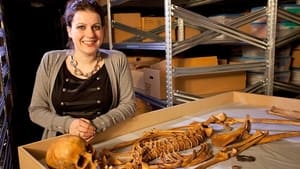
The Viking Sagas
Dr Janina Ramirez travels across glaciers and through the lava fields of Iceland to find out about one of the most compelling of the great Viking stories - the Laxdaela Saga. This hour-long film explores how the unique literary achievements of the Saga writers were possible at a time of such immense cultural, political and religious upheaval.
2011
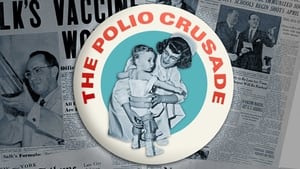
The Polio Crusade
The film interweaves the personal accounts of polio survivors with the story of an ardent crusader who tirelessly fought on their behalf while scientists raced to eradicate this dreaded disease. Based in part on the Pulitzer Prize-winning book Polio: An American Story by David Oshinsky, Features interviews with historians, scientists, polio survivors, and the only surviving scientist from the core research team that developed the Salk vaccine, Julius Youngner.
2009
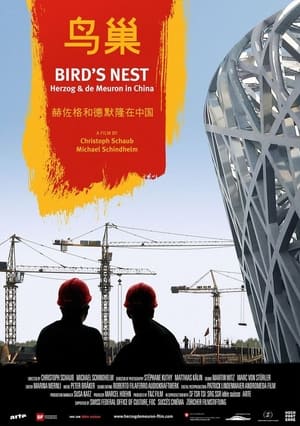
Bird's Nest - Herzog & de Meuron in China
Schaub and Schindelm’s documentary follows two Swiss star architects, Jacques Herzog and Pierre de Meuron, on two very different projects: the national stadium for the Olympic summer games in Peking 2008 and a city area in the provincial town of Jinhua, China.
2008

Ottoman Empire: The War Machine
This History Channel documentary traces the Ottoman Empire from its beginnings in the 14th century to its incarnation as one of the largest empires in history, spanning three continents.
2006
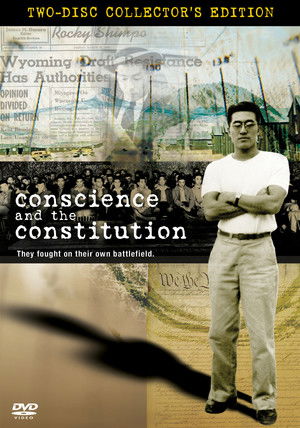
Conscience and the Constitution
Americans refused to be drafted from the concentration camp at Heart Mountain, Wyoming. Ready to fight, but not before their rights as U.S. citizens were restored and families released.
2000
Asaltar los cielos
Documentary about the killer of Trotsky
1996
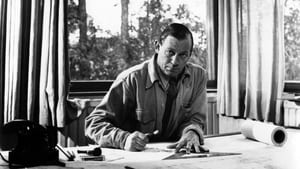
Alvar Aalto: Technology and Nature
The Finnish architect Alvar Aalto (1898–1976) is one of the great figures of modern architecture, ranked alongside Gropius, Le Corbusier and Mies van der Rohe. This film analyses Aalto’s uniquely successful resolution of the demands and possibilities created by new technology and construction materials with the need to make his buildings sympathetic both to their users and to their natural surroundings. His inventive use of timber in particular represents both a reference to the forest landscape of Finland and a building material that is ‘warm’ and extremely adaptable. Filmed in Finland, Italy, Germany and the USA, this documentary shows how the Finnish natural environment and art traditions were essential elements in Aalto’s pioneering harmonization of technology and nature.
1987

Brasilia, Contradictions of a New City
In 1967, de Andrade was invited by the Italian company Olivetti to produce a documentary on the new Brazilian capital city of Brasília. Constructed during the latter half of the 1950s and founded in 1960, the city was part of an effort to populate Brazil’s vast interior region and was to be the embodiment of democratic urban planning, free from the class divisions and inequalities that characterize so many metropolises. Unsurprisingly, Brasília, Contradições de uma Cidade Nova (Brasília, Contradictions of a New City, 1968) revealed Brasília to be utopic only for the wealthy, replicating the same social problems present in every Brazilian city. (Senses of Cinema)
1968
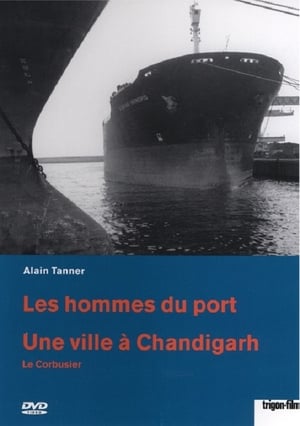
A City at Chandigarh
Documentary on the construction of Chandigarh, the new capital of the Indian Punjab region, planned by Albert Mayer and Swiss architect Le Corbusier.
1966
Gaudi, Catalunya
In 1959 Hiroshi Teshigahara shot the following 16 mm footage of he and his father’s first trip to Barcelona and the outlying Catalonian countryside, including a visit to the home of Salvador Dali in Port Lligat. The footage was recorded without sound.
1959