Watch Bird's Nest - Herzog & de Meuron in China (2008) Online Free
Schaub and Schindelm’s documentary follows two Swiss star architects, Jacques Herzog and Pierre de Meuron, on two very different projects: the national stadium for the Olympic summer games in Peking 2008 and a city area in the provincial town of Jinhua, China.
Cast
Pierre De Meuron, Jacques Herzog
More Like This

Notre-Dame Résurrection
2024
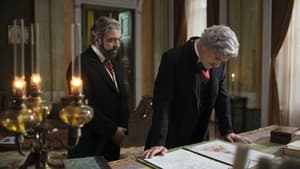
Eiffel's Race to the Top
Behind the iconic Eiffel Tower lies the story of an incredible challenge to erect a thousand-foot tower that went far beyond a design competition, and marked a major turning point in engineering history. It was the beginning of radical transformation where iron was pitted against stone, engineering against architecture, and modern design against ancients. Press campaigns, lobbying, public conferences, denigration of opposing projects, bragging about big names - all participants engaged in a fierce battle without concession. Using 3D recreations, official sources (reports, letters, drawings...) and intimate archives obtained from their descendants, this film will bring to life this vertical race through a fresh and visual way to mark the centenary of Eiffel death.
2023

Fernand Pouillon, du point du jour à l’éclipse
2023
Under Tomorrow's Sky
Winy Maas, co-founder of MVRDV architects, always has 100 projects going at once. Documentary filmmaker Jan Louter followed him for two years to make "Under Tomorrow's Sky", a candid and open-hearted look at the highs and lows of the architecture profession.
2021
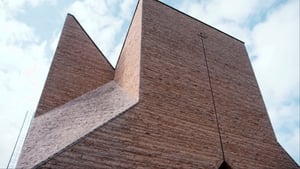
Mario Botta. Architecture and Memory
The film arose from an encounter with Mario Botta during the 2013 Architecture and Memory exhibit held at the Charlotte, North Carolina Bechtler Museum of Modern Art which was designed by the architect. The exhibit gathered and then proposed to the public the Swiss architect’s most significant projects spanning the gamut from his first single-family homes, original expressions of the School of Ticino, to his large public buildings, libraries, theatres, museums, churches and synagogues which have been built across the globe and features more than 90 works. The film is a dialogue on the themes which characterize Mario Botta’s vision and practice: his relationship with history and the territory, the designing of collective spaces, encounters with the leading protagonists of the 20th century. The interview, conducted in Mario Botta’s studio in Mendrisio, is replete with photographic materials, designs and sketches which document his “spaces of memory”.
2020
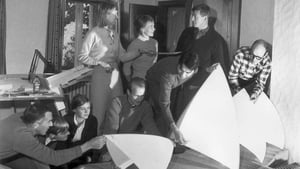
Jørn Utzon: The Man & the Architect
The documentary tells the story of Sydney Opera House architect Jørn Utzon's unique gift, brought to the world with the unending support of Lis, the love of his life. His story is told by the people who were closest to him: his children, close colleagues and friends, who share their open, honest anecdotes, and experiences of him as an architect and a man. The film is a portrait of a devoted humanitarian and a sensitive and loving soul.
2018
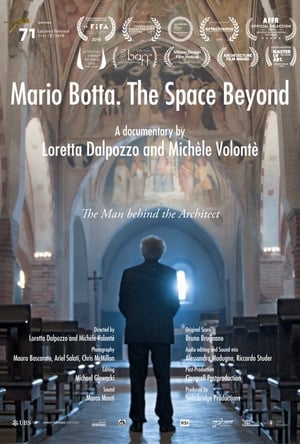
Mario Botta. The Space Beyond
A rare, in-depth artistic journey into the work of internationally acclaimed Swiss architect Mario Botta. The film explores Botta's ever growing curiosity and reflections on the contractions of society through his sacred spaces, a subject very dear to him. Why does globalized society feel the urge to build such spaces? The directors traveled to China, South Korea, Israel, Italy, and Switzerland to discover a passionate and tireless artist, his buildings, and part of his creative process. Botta is one of the few architects who has built places of prayer for three main monotheistic religions. After building many churches, chapels, and synagogue, he is now working on a mosque in China. Through his thoughts and his interaction with artists, colleagues, clients, and family members, the viewers have a glimpse of the man behind the Architect.
2018
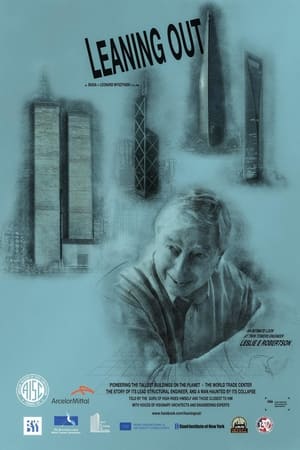
Leaning Out - An Intimate Look at Twin Towers Engineer Leslie E Robertson
A man with a perspective like no other on the planet. The leading structural engineer of the World Trade Center oversees its construction, haunted by its fall ever since. A guru in high-rise design. Driven by his values as a pacifist and activist and the woman engineer who emboldened, expanded and ultimately saved the man she loved. About fulfillment, fragility, and a fighting spirit.
2018
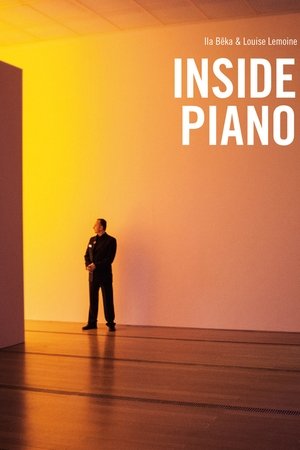
Inside Piano
The fifth project of the Living Architectures series, Inside Piano is composed of three films on three symbolic buildings of Renzo Piano's career. A visit throughout the prototype-building of the Centre Pompidou. An immersion in the soundproof world of a submarine floating in the depths of the Parisian underground. A journey aboard a luminous magic carpet of a highly sophisticated architectural machine. A humorous, caustic and quirky point of view.
2013
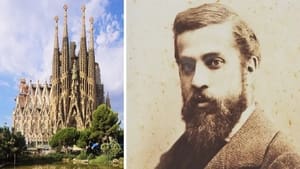
Gaudi, Le dernier bâtisseur
2010
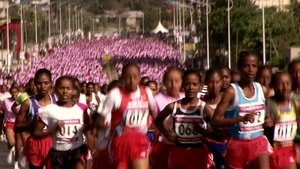
The Everlasting Flame
A documentary covering the 2008 Olympic Games in Beijing.
2009
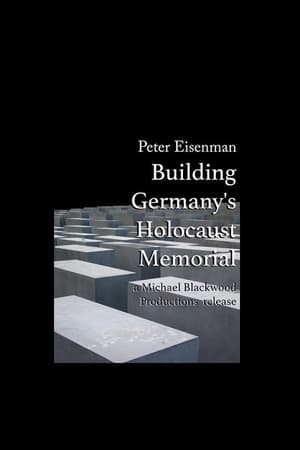
Peter Eisenman: Building Germany's Holocaust Memorial
This documentary explores the creation of the Holocaust Memorial in Berlin as designed by architect Peter Eisenman. Reaction of the German public to the completed memorial is also shown.
2009
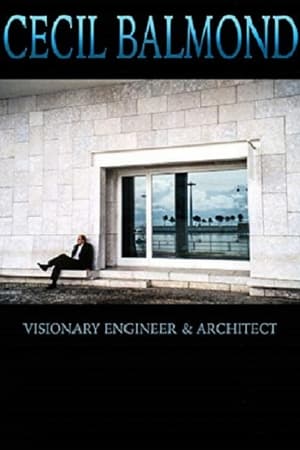
Cecil Balmond: Visionary Engineer and Architect
"Cecil Balmond: Visionary Engineer and Architect" is a compelling documentation of a unique thinker and practitioner at the height of his architectural career. Through his conversation with architecture theorist and critic, Sanford Kwinter, Balmond reveals his vision and talent while the two tour his retrospective exhibition at the Graham Foundation in Chicago. Since the early 1980s Balmond has collaborated with many of today's important contemporary architects such as Toyo Ito, Rem Koolhaas and Daniel Libeskind. With his astounding aesthetic algorithms, Balmond has introduced innovative structural concepts that have resulted in some of the most challenging buildings in the canon of contemporary architecture.
2009
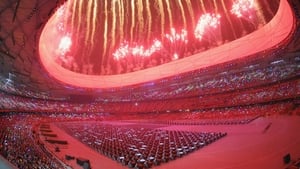
Beijing 2008 Olympic Opening Ceremony
The 2008 Summer Olympics opening ceremony was held at the Beijing National Stadium, also known as the Bird's Nest. It began at 8:00 p.m. China Standard Time (UTC+8) on August 8, 2008, as 8 is considered to be a lucky number in Chinese culture. Featuring more than 15,000 performers, the ceremony lasted over four hours and cost over $100 million USD to produce.
2008
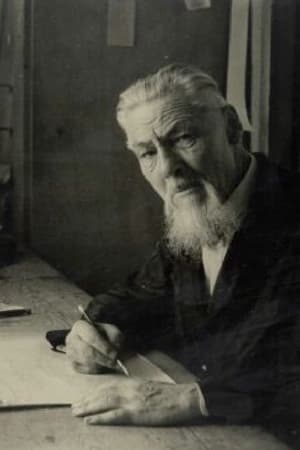
Architect Joze Plecnik: 1872-1957
Plečnik in photographs, Plečnik's house, Trnovo bridge, Trnovo port, Ljubljana castle, shoemaking bridge, triple bridge, market, lock, church of St. Jožef, church in Šiška, Church of Cyril and Methodius in Bežigrad, football stadion, baptistery of the church in Črnuče, church at Barje, NUK, Roman wall, Križanke, Vegova, Peglezen, Tivoli, Chamber of Crafts, mutual insurance company, Žale.
2008
Antonio Gaudi, portrait d'artiste
2005

Wrigley Field: Beyond the Ivy
Actor William Petersen narrates this documentary about Chicago's venerable baseball stadium, Wrigley Field, focusing on a variety of quirky fans who've spent so much time there that they've become part of the stadium experience. These colorful Cubs enthusiasts tell their stories and discuss how both baseball and Wrigley Field have become an integral part of their lives. A bonus feature on Comiskey Park -- home of the rival White Sox -- is included.
2001
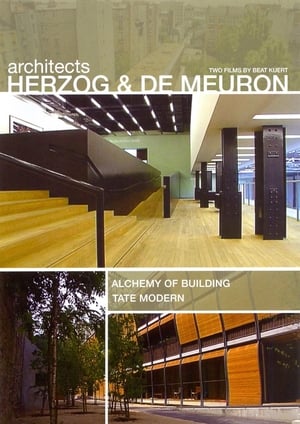
Architects Herzog and deMeuron: The Alchemy of Building & The Tate Modern
Visiting examples of Herzog and de Meurons ground-breaking style, this film reflects their capacity to astonish and explore the way in which they transform what might otherwise be ordinary through new treatments and techniques.
2001
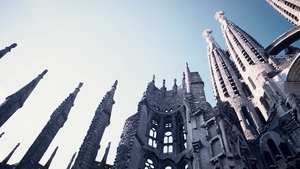
Antonio Gaudí
Catalan architect Antonio Gaudí (1852-1926) designed some of the world's most astonishing buildings, interiors, and parks; Japanese director Hiroshi Teshigahara constructed some of the most aesthetically audacious films ever made. With camera work as bold and sensual as the curves of his subject's organic structures, Teshigahara immortalizes Gaudí on film.
1984
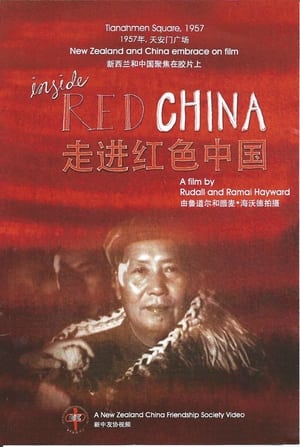
Inside Red China
October 1st, 1957. Dusk descends on Tiananmen Square, Peking. Fireworks crackle light across the night sky, above a city alive with National Day festivities and celebrations. Two intrepid New Zealand film-makers - Rudall and Ramai Te Miha Hayward - are there, documenting the life and times of communist China. The distinction of being the first English speaking foreigners to film unfettered in communist China was significant. The invitation to visit China was facilitated through the New Zealand China Friendship Society. They filmed in Canton, Shanghai, Peking (Beijing) and Wuhan. It was a small window of opportunity for Westerners to gaze on a country that was largely a mystery to the outside world since 1949. The unfortunate irony was that two of the documentaries; “Wonders of China”, and “Inside Red China”, were considered to be communist propaganda, and were not distributed outside of New Zealand.
1958