Watch Necessary Amendments (2019) Online Free
Commissioned by MK Gallery, this film combines contemporary footage of public artworks in Milton Keynes with archive footage from the Open University, cartoons from the Milton Keynes Development Corporation's internal newspaper and accounts from early residents, juxtaposing several perspectives on England's most ambitious 'new town'.
More Like This
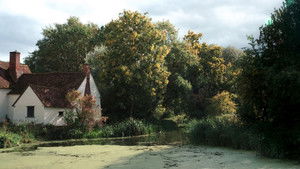
Turner & Constable
Celebrating the 250th anniversary of their births, this unmissable new documentary explores Turner and Constable’s intertwined lives and legacies alongside the groundbreaking Tate exhibition. Two of Britain’s greatest painters, J.M.W. Turner and John Constable were also the greatest of rivals. Born within a year of each other, both used landscape painting to reflect the changing world around them. Tate Britain is bringing these two greats together for a groundbreaking exhibition, in London from November 2025 to April 2026, and Exhibition on Screen once again has exclusive and privileged access to bring their extraordinary art and remarkable stories to the big screen in February so that you can enjoy both film and exhibition together. Discover unexpected sides to both artists with intimate views of sketchbooks and personal items and insights from leading experts.
2026
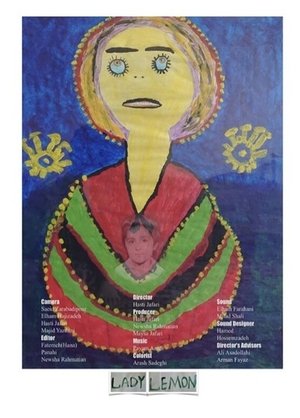
Lady Lemon
A woman named Limoo, a self-taught painter who starts painting after her son's death - continuously and non-stop - wants to continue his son's legacy. It looks like the son has been reincarnated in the mother's body. Limoo wishes to hang all her paintings on the walls of her home but the landlord doesn't give her permission!
2025
De originele Karina Beumer
How much of your identity can you outsource? In an attempt to escape her workaholism, visual artist Karina Beumer hires multiple substitutes for herself. What do the substitutes gain from assuming someone else's identity? And what does it cost Karina? It's about losing control and finding yourself.
2025

Bruin Jackson Superstar
Bruin has a new mission: to become a superstar, just like his idol Michael Jackson. Although singing is not his greatest talent, he starts - supported by friends and colleagues - to build a music career.
2024

Free Space
Under pressure from activist groups, art is increasingly being cancelled for ideological reasons, because of 'cultural appropriation' or because of the desire for a 'safe space'. The colour and gender of the artist seem to be all-determining in this. How do you relate to this as an artist? Is this a disturbing development or a sign of emancipation? And what does it mean for freedom of expression? Director Karin Junger investigates this with Anne-Fay Kops, Ted van Lieshout, Angel-Rose Oedit Doebé, Raymi Sambo, Boris van Berkum, Marian Markelo, Stephan Sanders and Thomas Chatterton Williams.
2024
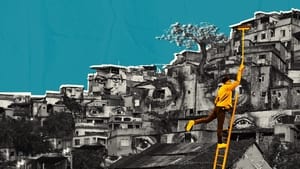
Paper & Glue
A documentary following JR's artwork giving a global voice to everyday people.
2021

Moriyama-San
One week in the extraordinary-ordinary life of Mr. Moriyama, a Japanese art, architecture and music enlighted amateur who lives in one of the most famous contemporary Japanese architecture, the Moriyama house, built in Tokyo in 2005 by Pritzker-prize winner Ryue Nishizawa (SANAA). Introduced in the intimacy of this experimental microcosm which redefines completely the common sense of domestic life, Ila Bêka recounts in a very spontaneous and personal way the unique personality of the owner: a urban hermit living in a small archipelago of peace and contemplation in the heart of Tokyo. From noise music to experimental movies, the film let us enter into the ramification of the Mr. Moriyama's free spirit. Moriyama-San, the first film about noise music, acrobatic reading, silent movies, fireworks and Japanese architecture!
2017
Post New Bills: The Story of Green Patriot Posters
A short documentary illustrating how art can influence public perception towards environmental issues. Green Patriot Posters is a highly acclaimed multimedia design campaign that challenges artists to deepen public understanding and ignite collective action in the fight against climate change. So far, it has reached five million people through print media, public space and digital culture. The film features interviews with key Green Patriot Posters contributors (Shepard Fairey, Michael Bierut, DJ Spooky, Mathilde Fallot) and its founders (The Canary Project, Dmitri Siegel).
2014
Jumalainen valo - Leonardo da Vilhu
A portrait of an artist Risto Vilhunen.
2013
Inside Piano
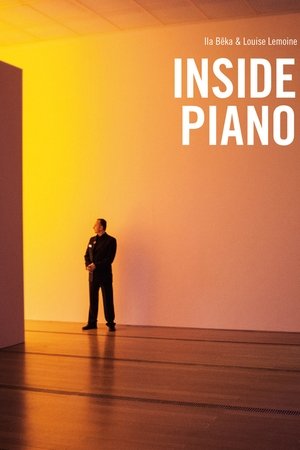
The fifth project of the Living Architectures series, Inside Piano is composed of three films on three symbolic buildings of Renzo Piano's career. A visit throughout the prototype-building of the Centre Pompidou. An immersion in the soundproof world of a submarine floating in the depths of the Parisian underground. A journey aboard a luminous magic carpet of a highly sophisticated architectural machine. A humorous, caustic and quirky point of view.
2013
Fold Crumple Crush: The Art of El Anatsui
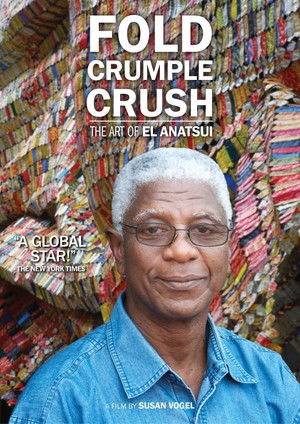
A powerful portrait of Africa's most widely acclaimed contemporary artist El Anatsui. It gives an insider's view of the artist's practice, the ingenious steps and thousands of hours of labor that convert used bottle tops into huge, opulent wall hangings.
2010
Ekodomy aneb Život v rovnováze
2008

Back To Africa
An Austrian director followed five successful African music and dance artists with his camera and followed their lives for a year. The artists, from villages in Ghana, Gambia and Congo, were the subjects of Africa! Africa! touring across Europe, but they have unbreakable roots to their homeland and their families. Schmiderer lovingly portrays his heroes, who tell their stories about themselves, their art and what it means to them to be African with captivating honesty. The interviews are interwoven with dance scenes and colourful vignettes set to authentic music.
2008
Turner at Tate
The artist J.M.W. Turner is widely recognised as England’s greatest painter. Tate has the world’s finest and most extensive collection of his work. Turner at Tate explores Turner’s art through many of his best-known canvases and exquisite sketches and watercolours, all newly and exceptionally filmed in HDTV from the original artworks. Incorporating the landscapes and places that inspired the works, the film provides an overview of Turner’s life and - in an accessible and engrossing way - of critical approaches to his art. The film’s focus is Turner and England, and his work is considered against the radical social and political changes of the early nineteenth century. Turner at Tate is a film about ideas and history and landscape, a film about colour and light. Contributors include Tate curators Ian Warrell and David Blayney Brown, and art historians Sam Smiles and Barry Venning. Also featured on the DVD are ten additional short films, each of which considers in detail a major work.
2006
Eclectic Shorts by Eric Leiser
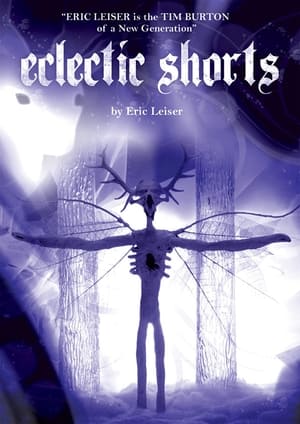
Eric Leiser displays his boundless creativity in this short collection; A stunning compilation of works presented with a mixture of live action, stop motion animation, puppetry and pixilation techniques, produced between 2001 and 2006.
2006
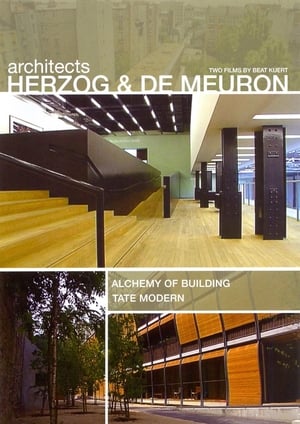
Architects Herzog and deMeuron: The Alchemy of Building & The Tate Modern
Visiting examples of Herzog and de Meurons ground-breaking style, this film reflects their capacity to astonish and explore the way in which they transform what might otherwise be ordinary through new treatments and techniques.
2001
Lyhyt muisti
The artist Upi Kärri is trying to find one of his works after a decade it went missing.
1996
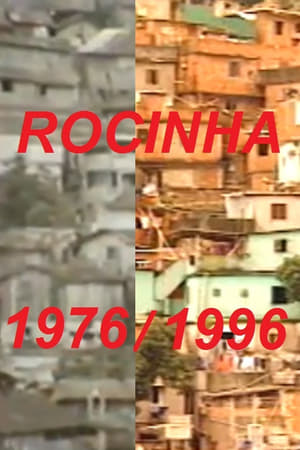
Rocinha 76/96
The camera goes back through the alleys and alleys of the community, leading the viewer to compare, with simultaneous shots of 76 and 96, the little or almost nothing that was accomplished, the neglect of the State, the abandonment over the 20 years. Finishing with a virtual image of the colored facades, as part of the proposed urbanization.
1996
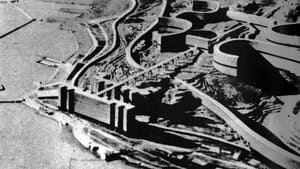
Le Corbusier
Making a documentary on Le Corbusier is not easy, because he is undoubtedly the architect most familiar to the general public but also the most unknown. If most people know his great achievements, such as the Cité radieuse of Marseille, the pavilions of the Cité universitaire de Paris or the Tourettes convent, many are unaware of his works in Moscow, Rio de Janeiro or Chandigarh. Roy Oppenheim pays a vibrant tribute to Corbusier, dismissing the criticisms and darker facets of the character. It presents the career of this pioneering architect, as well as his thinking, the essential principle of which was aimed at the development of human beings and the balance of society. Light, space and greenery are integrated into his large futuristic cities, because according to him the eyes of the inhabitants should be drawn into the distance and not into their neighbor's bathroom.
1967
Electronic Poem
Poème Électronique is an 8-minute piece of electronic music by composer Edgard Varèse, written for the Philips Pavilion at the 1958 Brussels World’s Fair. The Philips corporation commissioned Le Corbusier to design the pavilion, which was intended as a showcase of their engineering progress. The pavilion was shaped like a stomach, with a narrow entrance and exit on either side of a large central space. As the audience entered and exited the pavilion, the electronic composition Concret PH by Iannis Xenakis (who also acted as Le Corbusier's architectural assistant for the pavilion's design) was heard. Poème électronique was synchronized to a film of black and white photographs selected by Le Corbusier which touched on vague themes of human existence.
1958