Watch Sittwe (2017) Online Free
Sittwe is about two teenagers separated by conflict and segregation in Burma's Rakhine state, Phyu Phyu Than, a Rohingya girl and Aung San Myint, a Buddhist boy. Both youth saw their homes burned down during communal violence in 2012. Phyu Phyu Than is confined in an apartheid-style camp and has no chance to go to school or travel to her home just a few miles away. Aung San Myint's family struggles to survive and support his high school studies to fulfill his dream to go to medical school. Interviews filmed over two years with the teenagers reveal their ideas about each other's communities and the hope of reconciliation.
Cast
Phyu Phyu Than, Aung San Myint
More Like This
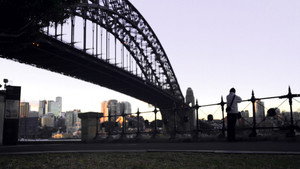
Shadow of Hope
Far from home, a young Burmese man struggles to escape the weight of a brutal and unforgiving military coup, threatening both his nation’s freedom and its very survival. Now, in Australia and unable to return home, he’s doing everything he can to stay connected to his people.
2026
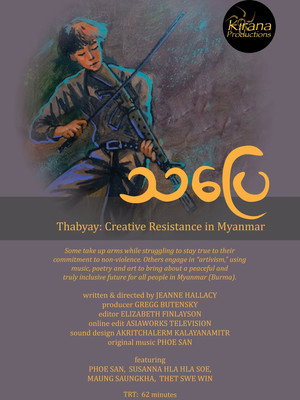
Thabyay: Creative Resistance in Myanmar
What happens when non-violent leaders are pushed to support armed struggle against a brutal regime in a forgotten war? Thabyay: Creative Resistance in Myanmar follows four democracy revolutionaries who are finding creative means to fight against the military junta. Some take up arms while struggling to stay true to their commitment to non-violence, while others engage in “artivism,” using music, poetry and art to bring about a peaceful, free, democratic and truly inclusive future for all people in Myanmar.
2025

Beyond Now, Nyein
Choi Jinbae from Korea and Nyein Thazin from Myanmar are an international couple. They married seven years ago in Mandalay and, after a ceremony in Korea, planned to return. But COVID-19 left them stranded in Seoul. One day, a photo arrives from Myanmar showing a village destroyed by the coup. Urged by fellow Myanmar people to share their country's reality with the world, Choi picks up a camera. An ordinary family's life is suddenly thrust into questions of pain, solidarity, and the ethics of bearing witness.
2025

EXILED Rohingya
The silence behind the genocide of the Rohingyas in Burma.
2019
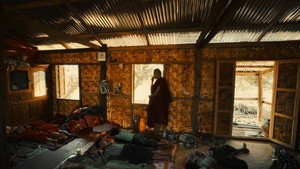
14 Apples
Wang Shin-hong is suffering from insomnia. A fortune teller advises the Mandalay businessman, whose car and bulging wallet suggest that business is going pretty well, to spend 14 days in a monastery, living life as a monk and eating an apple a day. Such a thing is possible in Burma today. Wang Shin-hong arrives at the rural monastery, has his head shaved and dons a red robe, in which he instantly becomes an authority. During the welcome procession, the village women, their poverty clear from their clothing and the huts in the background, put more than they have in his alms bowl. During his fleeting role as their advisor, Wang Shin-hong soon learns of the villagers’ attempts to survive and make a living as legal or illegal migrants in China, Thailand or Malaysia. He also finds out how the other monks try to generate profit and additional income.
2018
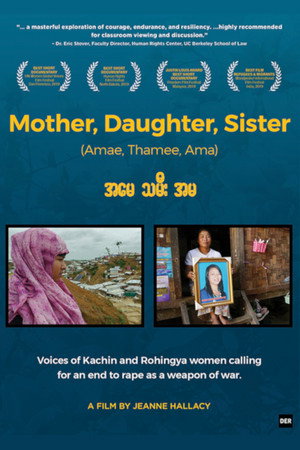
Mother, Daughter, Sister
Mother, Daughter, Sister (Amae, Thamee, Ama) exposes the Burmese military’s practice of using rape as a weapon of war and gives voice to Kachin and Rohingya women activists calling for justice for these crimes. Mother, Daughter, Sister revolves around the stories of four women: Shamima, a volunteer counselor working with survivors of military rape in the Rohingya refugee camp in Bangladesh, Dil Kayas, a teenage survivor, and San Lung and Lu Ra, sister and mother of two Kachin school teachers brutally raped and killed in 2015, allegedly by the Burmese military. Powerful testimonies from survivors, witnesses, and activists explore the far-reaching impact of sexual violence and trauma upon these communities, and together, the women call for justice and an end to the army's impunity.
2018
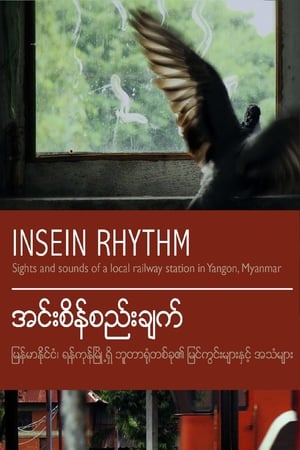
Insein Rhythm
Insein Rhythm portrays the sights, sounds and rhythms of Yangon’s Insein train station which is also a stone’s throw away from the country’s infamous Insein prison.
2016
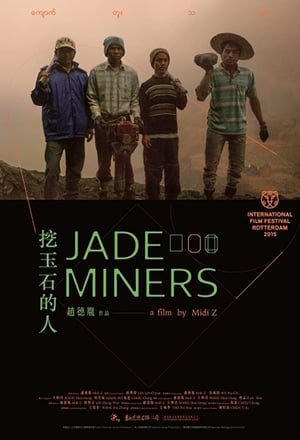
Jade Miners
A fascinating documentary, shot in the mountainous north of Burma. No filmmaker is welcome there, because, against the background of a civil war, the jade miners enter the deserted mines illegally. With the aid of filming locals, however, Midi Z was able to compile this portrait. Getting rich quick turns out to be hard and risky work Jade has always been a valuable commodity in Asia. In the mountains in the north of Burma there are valuable deposits of jade. The area forms part of Kachin State, inhabited by many ethnic groups which found themselves embroiled in the Civil War in 2010 with the Burmese government. Jade mining was halted because of the conflict. Thousands of workers, however, went to the war zone in order to dig for illegal jade. It turned the region into a no-go area and the filmmaker Midi Z, who had so far made feature films in Burma, saw no opportunity to go and film there. It was far too dangerous. © iffr.com
2015
Top Gear: The Burma Special
In this special Clarkson, Hammond and May don’t just buy three knackered old lorries and drive miles through the beautiful landscapes of Burma. Oh dear no. They actually have to use their lorries to do something useful. They have to build a real, use able bridge over the River Kwai. On their way to the river they almost bring down Burma’s power supply, encounter the world’s least relaxing truck stop, race around the streets of a deserted capital, saddle up a trio of unhelpful horses and attend a completely deranged party.
2014
Fists of Pride
Fists of Pride follows Little Tiger and his fellow fighters as their Thai coaches prepare them for the annual Water Festival competition. In a boxing camp on the Thai-Burmese border the children of mostly illegal migrant workers fleeing Burma live and train for prize fights. In a region where combat sports have always been a matter of honor and money, the film reveals their daily struggles. Bets are open and as the hope of prize money rizes, the young boxers contemplate what it could mean for them and their families
2011
Under the Radar: Burma
While traveling undercover throughout Burma, Henry Rollins exposes the country's repressive military dictatorship.
2010
Burma's Saffron Revolution
Ashin Yevata, a humble monk from Burma (Myanmar), helped lead the massive protests that spread throughout the country calling for change. Burma is one of the poorest countries in the world, strangled by its own despotic government. Forced labor, torture and systematic genocide are practiced by the ruthless Junta. Ashin was able to escape to the Burma-Thai border, where thousands of Burmese refugees live in fear of deportation and at the will of a corrupt police. He gathered footage from what he and his friends had as well as what he could find on the news.
2008

Testimonies of a Massacre: Tula Toli
Filmed along the Myanmar-Bangladesh border and within Rohingya refugee camps, Shafiur Rahman’s documentary on the 2017 Tula Toli massacre exposes chilling interviews and evidence of Myanmar military’s premeditated atrocities. The film documents mass killings, sexual violence, and the systematic destruction of the village of Tula Toli, highlighting a humanitarian crisis that forced over half a million people—many of them children—to flee in an exodus of historic scale.
Dictator: One Crazy Job
They’ve become the human face of inhuman barbarity. Leaders like Hitler, Idi Amin Dada, Stalin, Kim Jong Il, Saddam Hussein, Nicolae Ceausescu, Bokassa, Muammar Kadhafi, Khomeini, Mussolini and Franco governed their countries completely cut off from reality. These paranoid leaders were driven to abuse their power by the pathology of power itself. Dictators are driven by a relentless, thought-out determination to impose themselves as infallible, all-knowing and all-powerful beings. But they are also men ruled by their caprices, uncontrollable impulses, and reckless fits of frenzy, which paradoxically render them as human as anyone else. The abuses they committed were clearly atrocious, yet some of them were as outlandish as the characters portrayed in the film The Dictator. They sunk to depths worthy of Kafka: so incredibly absurd, they are outrageously funny.
2013
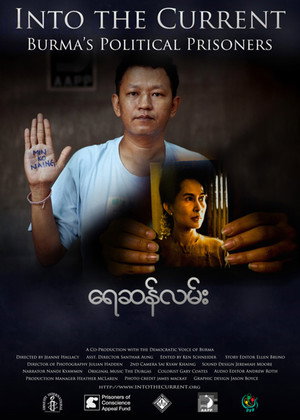
Into the Current: Burma's Political Prisoners
Into the Current: Burma’s Political Prisoners is about Bo Kyi, a former political prisoner who works to free his colleagues in Burma against the backdrop of the country’s non-violent political movement.
2012
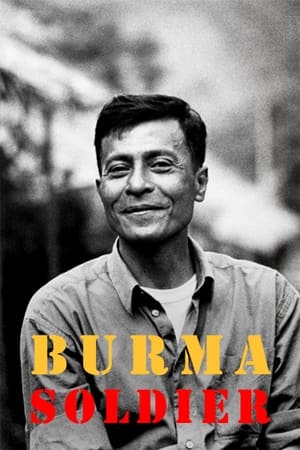
Burma Soldier
The story of Myo Myint, a political prisoner, who made the transformation from being a soldier in Burma's junta to a pro-democracy activist.
2010
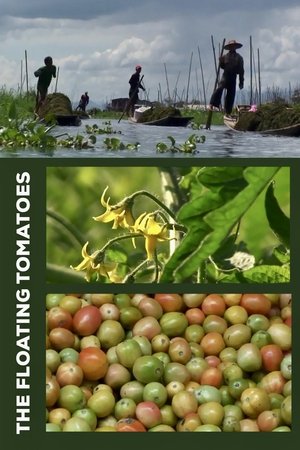
The Floating Tomatoes
When one thinks of Inle Lake, the first thought that comes to mind is that of the Intha leg rowing. The Intha people and the leg rowing they practice are unique to Inle Lake Myanmar. Tomatoes are the primary cash crop of Inle's floating gardens and are known as Inn Thee in Myanmar.
2010
The Rise of Disaster Capitalism
In this revealing program, noted author and economic activist Naomi Klein offers a lecture and a candid interview in which she expounds on the ideas at the heart of her best-selling book.
2009

Voice Over the Bridge
For the first time, traditional Burmese singers Khing Zin Shwe and Shwe Shwe Khaing are recording an album that introduces people around the world to the Maha Gita (Great Songs), which have been sung in South Asia for 700 years. They also introduce viewers to life in Myanmar, a Buddhist country of great beauty.
2009
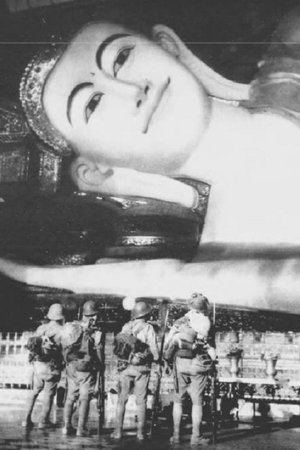
Burma War Record
This film records the Japanese military's efforts to capture the Burma Road,one of the major supply lines to China, from the British beginning in December 1941. The film ends with the fall of Mandalay in May 1942.
1942