Watch 14 Apples (2018) Online Free
Wang Shin-hong is suffering from insomnia. A fortune teller advises the Mandalay businessman, whose car and bulging wallet suggest that business is going pretty well, to spend 14 days in a monastery, living life as a monk and eating an apple a day. Such a thing is possible in Burma today. Wang Shin-hong arrives at the rural monastery, has his head shaved and dons a red robe, in which he instantly becomes an authority. During the welcome procession, the village women, their poverty clear from their clothing and the huts in the background, put more than they have in his alms bowl. During his fleeting role as their advisor, Wang Shin-hong soon learns of the villagers’ attempts to survive and make a living as legal or illegal migrants in China, Thailand or Malaysia. He also finds out how the other monks try to generate profit and additional income.
Cast
Wang Shin-hong
More Like This
43 Days That Shook the World
2023
How to Cook Your Life
A Zen priest in San Francisco and cookbook author use Zen Buddhism and cooking to relate to everyday life.
2007
Fried Shoes Cooked Diamonds
After World War II a group of young writers, outsiders and friends who were disillusioned by the pursuit of the American dream met in New York City. Associated through mutual friendships, these cultural dissidents looked for new ways and means to express themselves. Soon their writings found an audience and the American media took notice, dubbing them the Beat Generation. Members of this group included writers Jack Kerouac, William Burroughs, Allen Ginsberg. a trinity that would ultimately influence the works of others during that era, including the "hippie" movement of the '60s. In this 55-minute video narrated by Allen Ginsberg, members of the Beat Generation (including the aforementioned Burroughs, Anne Waldman, Peter Orlovsky, Amiri Baraka, Diane Di Prima, and Timothy Leary) are reunited at Naropa University in Boulder, CO during the late 1970's to share their works and influence a new generation of young American bohemians.
1979
Des moines en laboratoire

THE QUEST: Everest
THE QUEST: Everest is a journey to deeper understand and climb the most iconic mountain in the world, Mt. Everest, and to reveal its amazing history and culture. From experiencing Everest like never before to witnessing unique stories about one of the most remarkable places on earth, THE QUEST: Everest is a one-of-a-kind cinematic tribute to the human spirit of adventure that lives inside us all.
2024
Becoming Who I Was
Angdu is no ordinary boy. Indeed, in a past life he was a venerated Buddhist master. His village already treats him like a saint as a result. The village doctor, who has taken the boy under his wing, prepares him to be able to pass on his wisdom. Alas, Tibet, Angdu’s former homeland and the centre of his faith, lies far away from his current home in the highlands of Northern India. On top of that, the conflict between China and Tibet makes the prospect of a trip there even more daunting. Undeterred by these harsh facts, the duo set off for their destination on foot, accompanied by questions of friendship and the nature of life. With its narrative approach steeped in a serene sense of concentration, this documentary film, composed over a period of eight years, stands as a fundamental experience in its own right.
2017

Sittwe
Sittwe is about two teenagers separated by conflict and segregation in Burma's Rakhine state, Phyu Phyu Than, a Rohingya girl and Aung San Myint, a Buddhist boy. Both youth saw their homes burned down during communal violence in 2012. Phyu Phyu Than is confined in an apartheid-style camp and has no chance to go to school or travel to her home just a few miles away. Aung San Myint's family struggles to survive and support his high school studies to fulfill his dream to go to medical school. Interviews filmed over two years with the teenagers reveal their ideas about each other's communities and the hope of reconciliation.
2017
Walk with Me
Narrated by Benedict Cumberbatch, Walk With Me is a cinematic journey into the world of a monastic community who practice the art of mindfulness with Zen Buddhist master Thich Nhat Hanh.
2017
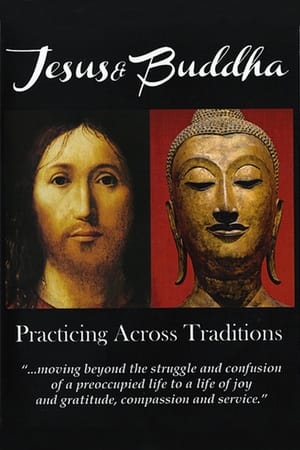
Jesus & Buddha: Practicing Across Traditions
Three leading figures in today's Buddhist-Christian dialogue share their personal journeys in the new documentary Jesus and Buddha: Practicing Across Traditions. We learn how following the path of the Buddha has informed and deepened their understanding of who Jesus was and what he taught. Their experience and insight bring these two liberating archetypes alive in a way that can help guide us through our own confusion and struggle toward lives filled with joy and gratitude, compassion and service.
2014
The Buddha
This documentary for PBS by award-winning filmmaker David Grubin and narrated by Richard Gere, tells the story of the Buddha’s life, a journey especially relevant to our own bewildering times of violent change and spiritual confusion. It features the work of some of the world’s greatest artists and sculptors, who across two millennia, have depicted the Buddha’s life in art rich in beauty and complexity. Hear insights into the ancient narrative by contemporary Buddhists, including Pulitzer Prize winning poet W.S. Merwin and His Holiness the Dalai Lama. Join the conversation and learn more about meditation, the history of Buddhism, and how to incorporate the Buddha’s teachings on compassion and mindfulness into daily life.
2010
The Shift
From the creators of You Can Heal Your Life: The Movie comes a compelling portrait of three modern lives in need of new direction and new meaning. In his first-ever movie, Wayne Dyer explores the spiritual journey in the second half of life when we long to find the purpose that is our unique contribution to the world. The powerful shift from the ego constructs we are taught early in life by parents and society—which promote an emphasis on achievement and accumulation—are shown in contrast to a life of meaning, focused on serving and giving back. Filmed on coastal California’s spectacular Monterey Peninsula, The Shift captures every person’s mid-life longing for a more purposeful, soul-directed life.
2009
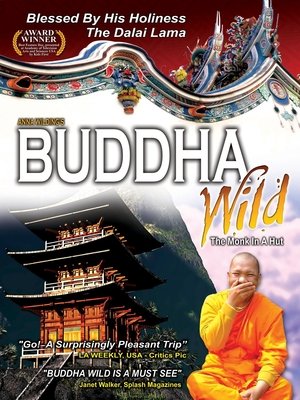
Buddha Wild: Monk in a Hut
Buddhist monks open up about the joys and challenges of living out the precepts of the Buddha as a full-time vocation. Controversies swirling within modern monastic Buddhism are examined, from celibacy and the role of women to racism and concerns about the environment.
2008
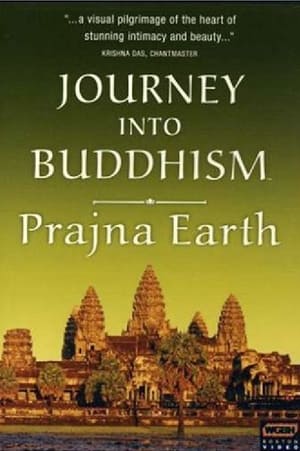
Journey Into Buddhism: Prajna Earth
Prajna is the Sanskrit word for radiant wisdom, and yatra is the word for pilgrimage or spiritual journey. This visually stunning documentary is a cinematic pilgrimage exploring the lost civilization of Angkor in Cambodia, including the largest temple in the world, the magnificent Angkor Wat. The journey continues to sacred sites of the natural world, Hindu Bali, jungles of Java, and discovering Buddhist Borobudur. A John Bush film.
2007
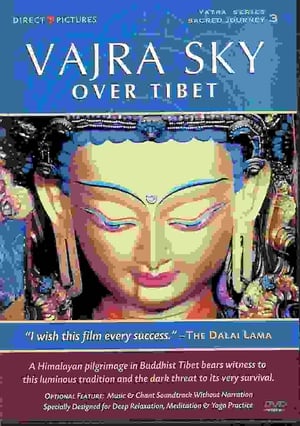
Vajra Sky Over Tibet
Vajra Sky is a cinematic pilgrimage to central Tibet, bearing witness to the indomitable faith of its Buddhist community and the imminent threat to its very survival. This poignant journey bears witness to the indomitable faith of its endangered Buddhist community and the imminent threat to its very survival. The vastness of the Tibetan sky, reflecting snowy mountains, rushing rivers, and turquoise lakes, leads the journey west. Tibetans respond to the denial of the human right to practice one's religion without interference with a defiant devotion.
2006
Peace Is Every Step
The influential life and powerful messages of Vietnamese Buddhist monk Thich Nhat Hanh are explored in this biographical documentary. For more than 50 years, this amazing social activist has preached self-awareness and compassion for all living beings. Follow him as he travels through France and the United States—including a stop at the Vietnam War Memorial in Washington, D.C.—spreading peace by teaching mindfulness and forgiveness.
2005
Wheel of Time
Wheel of Time is Werner Herzog's photographed look at the largest Buddhist ritual in Bodh Gaya, India.
2003
Aside From That
How do we live, knowing we are going to die? In search of answers, we probed the minds of atheists, Buddhists, Jews, Christians, physicians, philosophers, authors, academics, a legendary stand-up comic, and scores of random pedestrians.
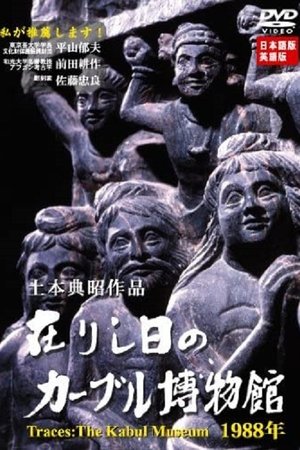
Traces: The Kabul Museum 1988
The Kabul National Museum, once known as the "face of Afghanistan," was destroyed in 1993. We filmed the most important cultural treasures of the still-intact museum in 1988: ancient Greco-Roman art and antiquitied of Hellenistic civilization, as well as Buddhist sculpture that was said to have mythology--the art of Gandhara, Bamiyan, and Shotorak among them. After the fall of the Democratic Republic of Afghanistan in 1992, some seventy percent of the contents of the museum was destroyed, stolen, or smuggled overseas to Japan and other countries. The movement to return these items is also touched upon. The footage in this video represents that only film documentation of the Kabul Museum ever made.
2003
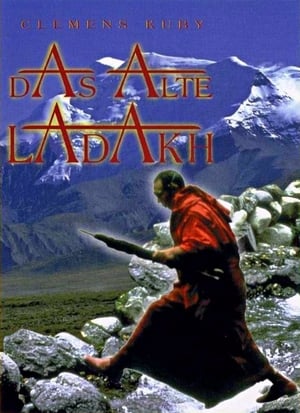
Das alte Ladakh
The Laddakhis, high up in the Western Himalayas, have a strong connection to the psychic energies of the gods and demons through their belief in Tantric Buddhism. People in the valley say of the Geshe (a methaphysical professor) that he can fly if he wants to. But using magic is immoral for the Buddhist. Nevertheless, a young man seduces the woman of his desire with magical powers. In a breathtaking landscape under a crystal-clear blue sky, a life unfolds in harmony with the universe, carried by an ancient consciousness.
1986
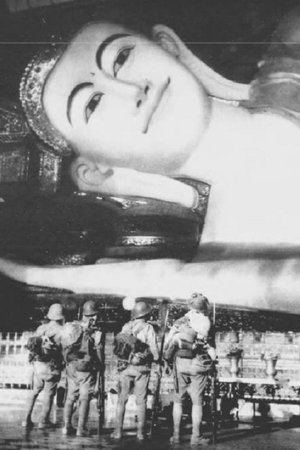
Burma War Record
This film records the Japanese military's efforts to capture the Burma Road,one of the major supply lines to China, from the British beginning in December 1941. The film ends with the fall of Mandalay in May 1942.
1942