Watch Beyond Now, Nyein (2025) Online Free
Choi Jinbae from Korea and Nyein Thazin from Myanmar are an international couple. They married seven years ago in Mandalay and, after a ceremony in Korea, planned to return. But COVID-19 left them stranded in Seoul. One day, a photo arrives from Myanmar showing a village destroyed by the coup. Urged by fellow Myanmar people to share their country's reality with the world, Choi picks up a camera. An ordinary family's life is suddenly thrust into questions of pain, solidarity, and the ethics of bearing witness.
Cast
Nyein Thazin, Choi Jin-bae
More Like This
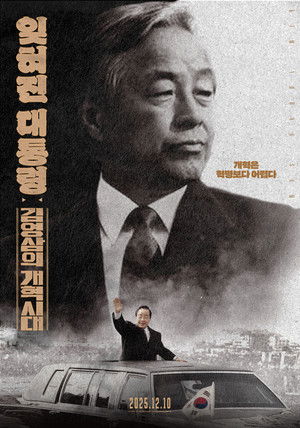
The Forgotten President: Kim Young-sam's Era of Reform
2026

Poliboy
In the spring of 1987, a 14-year old runaway boy ended up in a college campus and made it his home. He grew up on campus under care of students activists. They call him "Poliboy."
2025
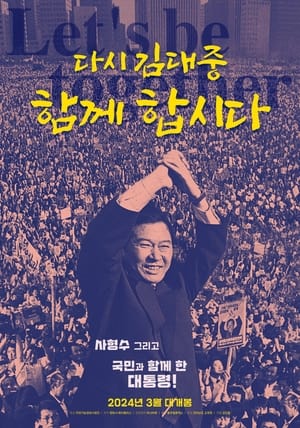
Let's be Together
2024
Kim Dae Jung Must Not Die
Kim Dae Jung, who stands next to people in the middle of caotic history! A young businessman Kim Dae Jung recognized the victims of ideology. He decided to be a politician to make his country where people's politic and democracy are rooted. The price of being leave from a guaranteed future and take the first step on a bumby road was kidnapping, death threats, imprisonment, and a death sentence that shook him to the core, but even in his final moments, when he was sentenced to death, Kim never wavered. "Democracy will be recovered. I believe in it." The life of President Kim Dae-jung, a death row inmate who survived from the throes of death, four parliamentary elections, and three unsuccessful presidential campaigns, is etched into the modern history of South Korea.
2024
Wonderful Tonight
On the 1st of February, 2021, Myanmar’s Military launched air strikes against the Karen minority group. The news reminds K of his time in Karyn State 4 years back. K thinks of General Neda who wanted to build a community for Karen refugees, Khun from Thailand and the village children who helped him. He promised to fight for peace when General Neda sang “Wonderful Tonight” for him. Reminded of his forgotten promise, K roams the street aimlessly. Still, time eats away at his memories.
2022
Blooming over the line
Born in 1918 in the ideal village of independence activists in the northern part of Manchuria, pastor Moon Ik-hwan lost his childhood friend Yun Dong-ju under Japanese oppression and Chang Chun-ha during the Yusin regime. Moon survived the mass of modern Korean history, giving hope everywhere suffering.
2022
Names of Revolution
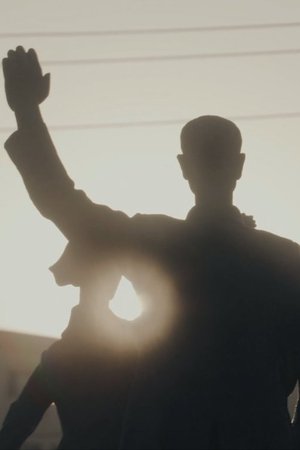
Names of Revolution recalls the memories of those who participated in the struggle to rewrite the history of the “Busan-Masan Democratic Protests,” which has been under-represented in modern Korean history. As the then college students, seamstresses, mold technicians, combat police, workers, bus drivers, advertising planners, and photojournalists pour out their memories from over 40 years ago before the camera, vivid words come to life.
2021

Gwangju Video: The Missing
There are people whose lives have been shaken by the 'Gwangju Video'. On May of 1980, the course of their lives changed in front of a huge wave of truth in Gwangju. The people who made and spread the 'Gwangju Video' are also the people who had their bodies on the waves. The hidden stories of these people, the 40th anniversary of the Gwangju Uprising, and the pursuit to trace the missing 4 hours of mass shooting will be revealed for the first time.
2020
The Price of Democracy
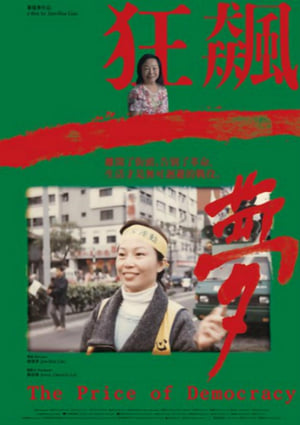
The expressions of democratization are usually interpreted by elites from two different parties but neglect the real faces/ life of every individual among the resistance rally. The director (a confused twenty-something) looks back upon the 40-year-history of democratization of Taiwan through the life experiences of two old-timers (who are grass-root rebels). He attempts to discover what causes their actions and decisions to be lefties, and what are their limitations.
2020
The Hinzpeter Story
In May of 1980, the city is locked down and phone lines are dead because of protests and struggles in demand of democracy. Just when Gwangju was being ignored by the media, Jurgen Hinzpeter, a reporter from Germany, sneaks in despite the danger!
2018
14 Apples
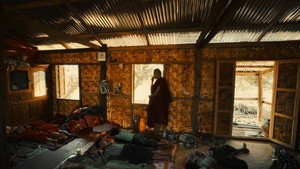
Wang Shin-hong is suffering from insomnia. A fortune teller advises the Mandalay businessman, whose car and bulging wallet suggest that business is going pretty well, to spend 14 days in a monastery, living life as a monk and eating an apple a day. Such a thing is possible in Burma today. Wang Shin-hong arrives at the rural monastery, has his head shaved and dons a red robe, in which he instantly becomes an authority. During the welcome procession, the village women, their poverty clear from their clothing and the huts in the background, put more than they have in his alms bowl. During his fleeting role as their advisor, Wang Shin-hong soon learns of the villagers’ attempts to survive and make a living as legal or illegal migrants in China, Thailand or Malaysia. He also finds out how the other monks try to generate profit and additional income.
2018
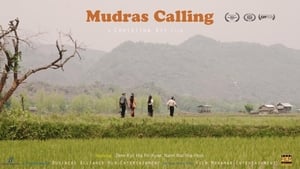
Mudras Calling
When US-raised Jaden returns to his birthplace Myanmar, to search for his roots, he discovers a shocking truth, a new love and ultimately a possible future in his homeland.
2018

Sittwe
Sittwe is about two teenagers separated by conflict and segregation in Burma's Rakhine state, Phyu Phyu Than, a Rohingya girl and Aung San Myint, a Buddhist boy. Both youth saw their homes burned down during communal violence in 2012. Phyu Phyu Than is confined in an apartheid-style camp and has no chance to go to school or travel to her home just a few miles away. Aung San Myint's family struggles to survive and support his high school studies to fulfill his dream to go to medical school. Interviews filmed over two years with the teenagers reveal their ideas about each other's communities and the hope of reconciliation.
2017
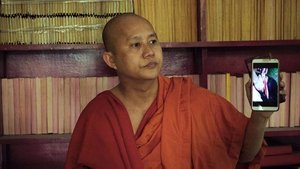
The Venerable W.
A view of the religious tensions between Muslims and Buddhist through the portrait of the Buddhist monk Ashin Wirathu, leader of anti-Muslim movement in Myanmar.
2017
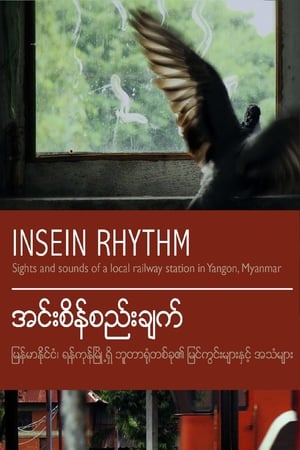
Insein Rhythm
Insein Rhythm portrays the sights, sounds and rhythms of Yangon’s Insein train station which is also a stone’s throw away from the country’s infamous Insein prison.
2016
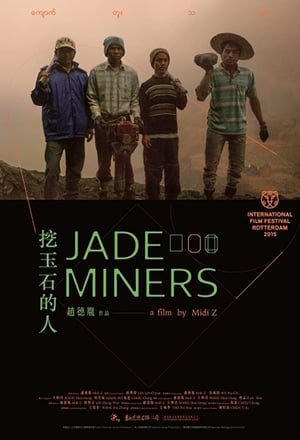
Jade Miners
A fascinating documentary, shot in the mountainous north of Burma. No filmmaker is welcome there, because, against the background of a civil war, the jade miners enter the deserted mines illegally. With the aid of filming locals, however, Midi Z was able to compile this portrait. Getting rich quick turns out to be hard and risky work Jade has always been a valuable commodity in Asia. In the mountains in the north of Burma there are valuable deposits of jade. The area forms part of Kachin State, inhabited by many ethnic groups which found themselves embroiled in the Civil War in 2010 with the Burmese government. Jade mining was halted because of the conflict. Thousands of workers, however, went to the war zone in order to dig for illegal jade. It turned the region into a no-go area and the filmmaker Midi Z, who had so far made feature films in Burma, saw no opportunity to go and film there. It was far too dangerous. © iffr.com
2015
Top Gear: The Burma Special
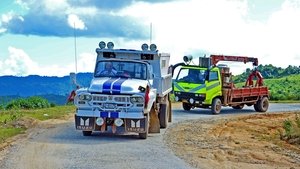
In this special Clarkson, Hammond and May don’t just buy three knackered old lorries and drive miles through the beautiful landscapes of Burma. Oh dear no. They actually have to use their lorries to do something useful. They have to build a real, use able bridge over the River Kwai. On their way to the river they almost bring down Burma’s power supply, encounter the world’s least relaxing truck stop, race around the streets of a deserted capital, saddle up a trio of unhelpful horses and attend a completely deranged party.
2014
Dictator: One Crazy Job
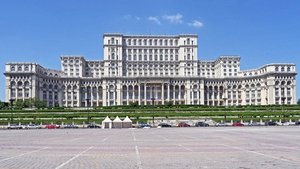
They’ve become the human face of inhuman barbarity. Leaders like Hitler, Idi Amin Dada, Stalin, Kim Jong Il, Saddam Hussein, Nicolae Ceausescu, Bokassa, Muammar Kadhafi, Khomeini, Mussolini and Franco governed their countries completely cut off from reality. These paranoid leaders were driven to abuse their power by the pathology of power itself. Dictators are driven by a relentless, thought-out determination to impose themselves as infallible, all-knowing and all-powerful beings. But they are also men ruled by their caprices, uncontrollable impulses, and reckless fits of frenzy, which paradoxically render them as human as anyone else. The abuses they committed were clearly atrocious, yet some of them were as outlandish as the characters portrayed in the film The Dictator. They sunk to depths worthy of Kafka: so incredibly absurd, they are outrageously funny.
2013
The Rise of Disaster Capitalism
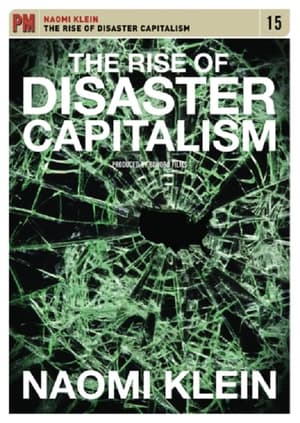
In this revealing program, noted author and economic activist Naomi Klein offers a lecture and a candid interview in which she expounds on the ideas at the heart of her best-selling book.
2009
Burma War Record
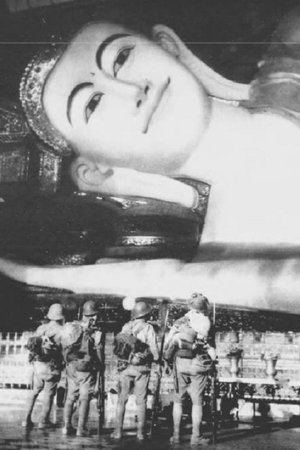
This film records the Japanese military's efforts to capture the Burma Road,one of the major supply lines to China, from the British beginning in December 1941. The film ends with the fall of Mandalay in May 1942.
1942