Watch Restoring a Masterpiece: The Renovation of Eastman Theatre (2010) Online Free
Take a look behind the curtain to see the vast history and recent renovation of one of Rochester, New York's most famous landmarks. Architects, theater personnel, historians, community leaders, and citizens provide in depth insight from start to finish in one of the most extensive renovations the city has ever seen.
Cast
Philip Seymour Hoffman, Christopher Seaman, Joel Seligman, Antonio Manuel Pérez Álvarez, Kathy Connor
More Like This
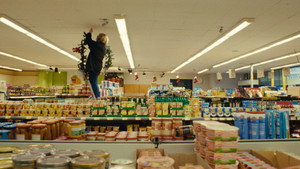
Nothing Remains Nothing Disappears
A Berlin street corner is slowly changing: an aging supermarket turns into a construction site and finally a new building. People restock shelves, demolish walls, take breaks and count money. Those who work here participate in the making and unmaking of the place. How does it shape the conditions of their labor? Between supermarket aisles, construction scaffolding and exposed concrete, different versions begin to overlap. Repetitions appear like echoes between worlds, both playful and eerie.
2026
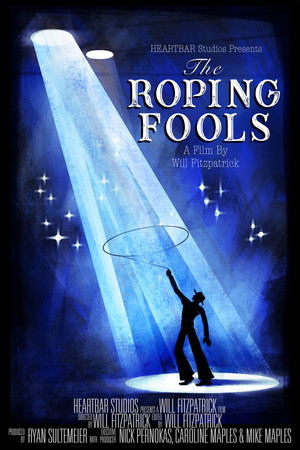
The Roping Fools
A documentary that journeys through the history of Trick Roping as it evolves from Mexico to the dazzling arenas of American Rodeos. This film unveils a story of resilience, entertainment, and the enduring legacy of a western art.
2024
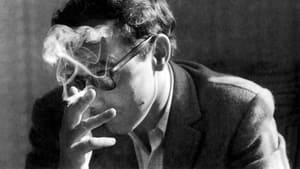
Godard Cinema
Jean-Luc Godard is synonymous with cinema. With the release of Breathless in 1960, he established himself overnight as a cinematic rebel and symbol for the era's progressive and anti-war youth. Sixty-two years and 140 films later, Godard is among the most renowned artists of all time, taught in every film school yet still shrouded in mystery. One of the founders of the French New Wave, political agitator, revolutionary misanthrope, film theorist and critic, the list of his descriptors goes on and on. Godard Cinema offers an opportunity for film lovers to look back at his career and the subjects and themes that obsessed him, while paying tribute to the ineffable essence of the most revered French director of all time.
2023
Seven for Jack
Documentary on career criminal Jack Black during an episode of burglary in Victoria BC. Locations around Victoria and Vancouver are explored in present day, with narration from Black's autobiography.
2022
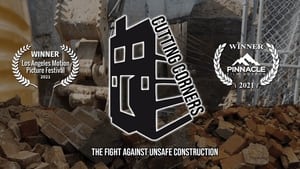
Cutting Corners
With building collapses happening around the country, activists band together to confront the real estate developers and hold them accountable for the construction destruction, lives they have destroyed, and deaths they have caused.
2021
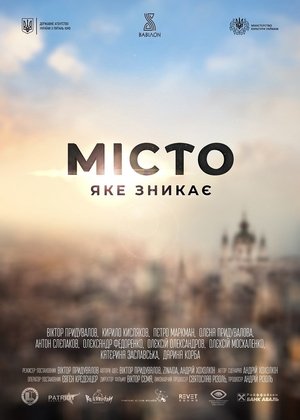
Fading City
A docu-art film about Kyiv and the contemporary problems of the capital. The film raises the issue of the dilapidated state of Kyiv's old buildings and the search for effective mechanisms to preserve the city's architectural heritage.
2020
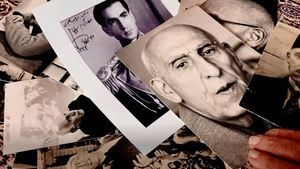
Coup 53
Tehran, Iran, August 19, 1953. A group of Iranian conspirators who, with the approval of the deposed tyrant Mohammad Reza Pahlavi, have conspired with agents of the British MI6 and the US CIA, manage to put an end to the democratic government led by Mohammad Mosaddegh, a dramatic event that will begin the tragic era of coups d'état that, orchestrated by the CIA, will take place, over the following decades, in dozens of countries around the world.
2019
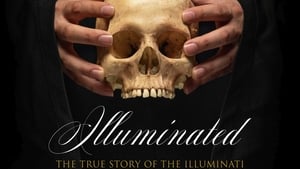
Illuminated: The True Story of the Illuminati
The true historical account of the Illuminati, exposing the actual rituals of the secret society, and answering the age-old question of whether or not the order still exists.
2019
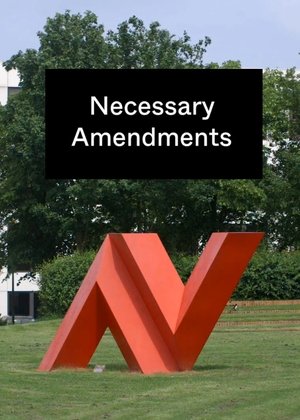
Necessary Amendments
Commissioned by MK Gallery, this film combines contemporary footage of public artworks in Milton Keynes with archive footage from the Open University, cartoons from the Milton Keynes Development Corporation's internal newspaper and accounts from early residents, juxtaposing several perspectives on England's most ambitious 'new town'.
2019
Pyhä
2017
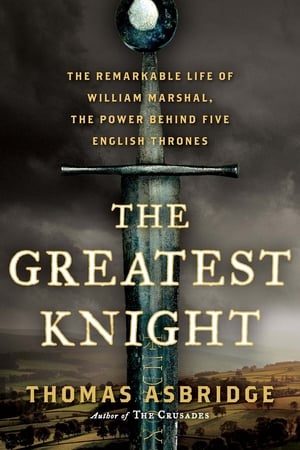
The Greatest Knight - William the Marshal
The fascinating story of knighthood, told through the extraordinary life and times of William Marshal, whom many consider the world's greatest knight. From Europe's medieval castles to the holy city of Jerusalem, presenter Thomas Asbridge explores William's incredible life, revealing a rip-roaring adventure story in the spirit of King Arthur's Knights of the Round Table. In a career that spanned half a century, this English soldier and statesman served some of Christendom's greatest leaders, from Eleanor of Aquitaine to Richard the Lionheart. Marshal fought in battles across Europe, survived court intrigue and exile, put his seal to the Magna Carta and proved to be the best friend a king could have, remaining loyal to those he served through disaster and victory. Then at the age of 70, despite all the odds, he saved England from a French invasion.
2014
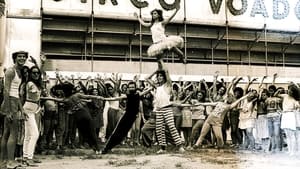
A Farra do Circo
This documentary highlights the evolution of Brazil's Circo Voador venue from homespun artists' performance space to national cultural institution.
2013
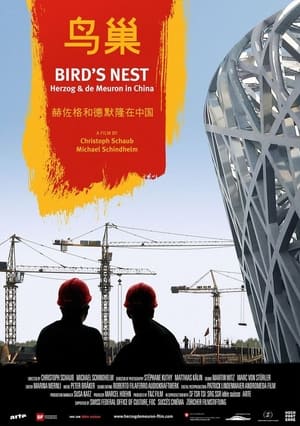
Bird's Nest - Herzog & de Meuron in China
Schaub and Schindelm’s documentary follows two Swiss star architects, Jacques Herzog and Pierre de Meuron, on two very different projects: the national stadium for the Olympic summer games in Peking 2008 and a city area in the provincial town of Jinhua, China.
2008
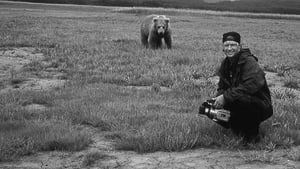
Grizzly Man
Follows the story of "Grizzly Man" Timothy Treadwell and what the thirteen summers in a National Park in Alaska were like in his attempt to protect the grizzly bears. The film is full of unique images and a look into the spirit of a man who sacrificed himself for nature.
2005
Abegweit
A day-to-day record of the construction of the Confederation Bridge linking Prince Edward Island to the mainland, Abegweit reveals some of the innovations that made this mammoth project one of the most impressive engineering feats in Canadian history.
1998
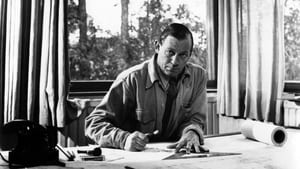
Alvar Aalto: Technology and Nature
The Finnish architect Alvar Aalto (1898–1976) is one of the great figures of modern architecture, ranked alongside Gropius, Le Corbusier and Mies van der Rohe. This film analyses Aalto’s uniquely successful resolution of the demands and possibilities created by new technology and construction materials with the need to make his buildings sympathetic both to their users and to their natural surroundings. His inventive use of timber in particular represents both a reference to the forest landscape of Finland and a building material that is ‘warm’ and extremely adaptable. Filmed in Finland, Italy, Germany and the USA, this documentary shows how the Finnish natural environment and art traditions were essential elements in Aalto’s pioneering harmonization of technology and nature.
1987

Brasilia, Contradictions of a New City
In 1967, de Andrade was invited by the Italian company Olivetti to produce a documentary on the new Brazilian capital city of Brasília. Constructed during the latter half of the 1950s and founded in 1960, the city was part of an effort to populate Brazil’s vast interior region and was to be the embodiment of democratic urban planning, free from the class divisions and inequalities that characterize so many metropolises. Unsurprisingly, Brasília, Contradições de uma Cidade Nova (Brasília, Contradictions of a New City, 1968) revealed Brasília to be utopic only for the wealthy, replicating the same social problems present in every Brazilian city. (Senses of Cinema)
1968
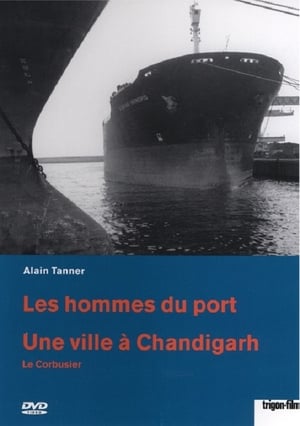
A City at Chandigarh
Documentary on the construction of Chandigarh, the new capital of the Indian Punjab region, planned by Albert Mayer and Swiss architect Le Corbusier.
1966
Gaudi, Catalunya
In 1959 Hiroshi Teshigahara shot the following 16 mm footage of he and his father’s first trip to Barcelona and the outlying Catalonian countryside, including a visit to the home of Salvador Dali in Port Lligat. The footage was recorded without sound.
1959
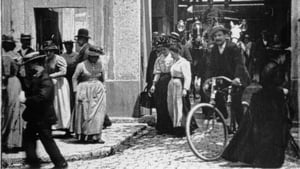
Workers Leaving the Lumière Factory
Working men and women leave through the main gate of the Lumière factory in Lyon, France. Filmed on 22 March 1895, it is often referred to as the first real motion picture ever made, although Louis Le Prince's 1888 Roundhay Garden Scene pre-dated it by seven years. Three separate versions of this film exist, which differ from one another in numerous ways. The first version features a carriage drawn by one horse, while in the second version the carriage is drawn by two horses, and there is no carriage at all in the third version. The clothing style is also different between the three versions, demonstrating the different seasons in which each was filmed. This film was made in the 35 mm format with an aspect ratio of 1.33:1, and at a speed of 16 frames per second. At that rate, the 17 meters of film length provided a duration of 46 seconds, holding a total of 800 frames.
1895