Watch The Equation X + X = 0 (1936) Online Free
“If abstract films are really abstract films… they deal exclusively with those abstract relations that can be expressed in terms of shape and motion” wrote Robert Fairthorne in Film Art in 1936. A mathematician and information scientist, Fairthorne saw aesthetic potential in an animation made as a teaching aid by Salt, and proposed this collaboration. (Tate.org.uk)
More Like This
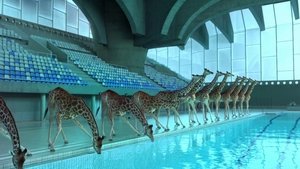
5,80 mètres
5 Meters 80 really is an absurd movie. Yet, no matter how ridiculous, Nicolas Deveaux managed to make it look so realistic that it’s as if giraffes jumping off the high dive are the most natural thing in the world. And that’s what makes it amazing.
2012

The Genie in a Tin of Ravioli
Armand works on the assembly-line of a tinned pasta factory. One evening he opens up a tin of ravioli for dinner. Much to his surprise, a Genie jumps forth, promising to fulfill any two wishes.
2005
Ferrailles
1996

Yanks
1988
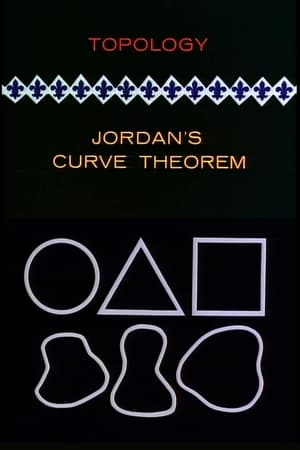
Topology: Jordan's Curve Theorem
Short animated film commissioned by IBM - to illustrate Camille Jordan's concept of topology - the fact that a simple closed curve divides a plane into an inside and an outside.
1961
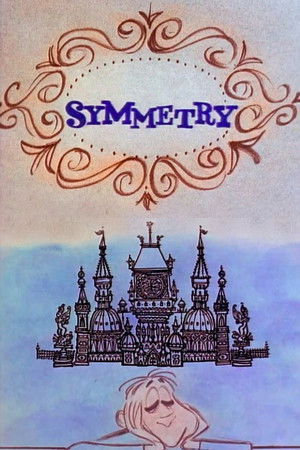
Symmetry
Symmetry is one of five shorts featured in the film "Mathematical Peep Shows." The collection was made by Charles and Ray Eames for the IBM Mathematica Exhibit which opened in 1961. The degree to which an object is symmetrical is illustrated by the number of different positions in which it can fit into a box of its shape.
1961
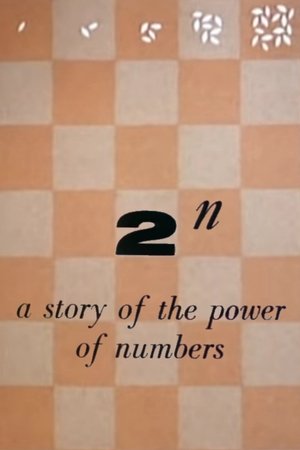
2ⁿ: A Story of the Power of Numbers
2ⁿ is a story about the exponential growth of numbers raised to powers. Part of the Mathematica Peep Shows, one of five films made to accompany the Mathematica: A World of Numbers and Beyond exhibition at the California Museum of Science and Industry and the Museum of Science and Industry in Chicago.
1961

Pen Point Percussion
A documentary showing Norman McLaren working on the hand-drawn sound process he uses for his short film, Loops.
1951
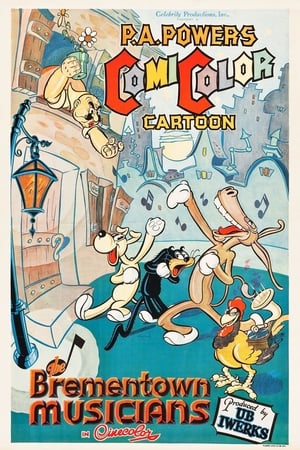
The Brementown Musicians
A group of farm animals run away and form an a cappella quartet. Four animals discover their talent singing together and try to use their newfound quartet to make it through life.
1935
Mickey's Service Station
Mickey, Goofy & Donald have 10 minutes to fix Pete's car. Or else!
1935
Mickey's Man Friday
Mickey is stranded on an island. He runs into some cannibals who are about to cook a fellow cannibal. Mickey scares them off and makes friends with the cannibal whom he calls Friday. Together, they build a fort to protect themselves from the cannibals when they come back, but end up fleeing for their lives on Mickey's raft.
1935

Mickey's Choo-Choo
Mickey is a railroad engineer with an anthropomorphic locomotive. He feeds the train (coal), then feeds his dog, then makes lunch for himself. Minnie drops by and plays a tune on her fiddle while Mickey dances. After lunch, the train has trouble climbing a hill, and the last car with Minnie aboard detaches and runs away.
1929
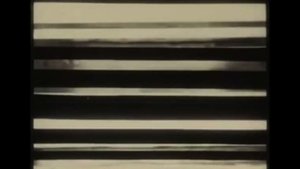
Opus IV
An abstract animation by Walter Ruttmann.
1925
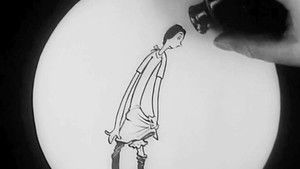
Inklings, Issue 12
Series of animated vignettes linked by a disembodied hand which appears to be drawing the illustrations. In the first segment, the hand turns around a drawing of an old man and canine-hero Rin Tin Tin magically appears. In the second set of segments, drawings of children morph into adults who look completely unlike their youthful countenances. in the final segment, the hand slices up "The House That Jack Built" into the pictures of the most significant characters in the children's rhyme, and then reattaches the slips of paper to reform the house.
1925
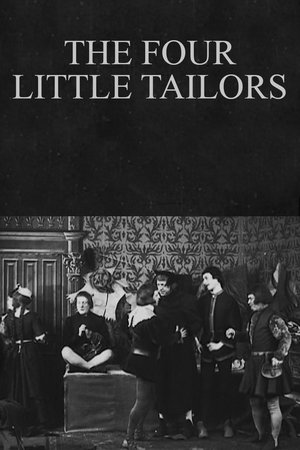
The Four Little Tailors
The opening scene is in a tailor's shop, showing the four assistants more or less in love with their employer's daughter. After some time, the tailor says he will give his daughter to the one who shows himself to be the cleverest. Some very amusing incidents follow. The various feats accomplished during the contest are clever examples of trick photography. (Moving Picture World)
1910
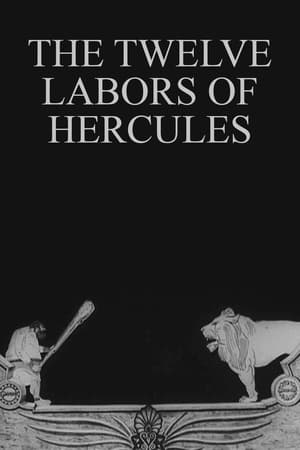
The Twelve Labors of Hercules
A cut-out animation depicting the Twelve Labours of Hercules.
1910
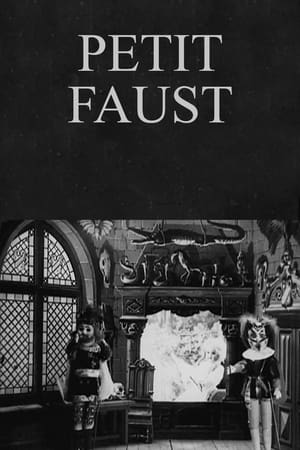
Petit Faust
The various parts of Faust are played by puppets.
1910
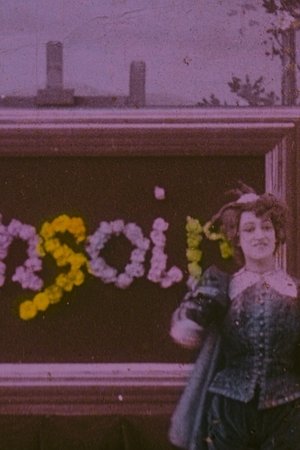
Bonsoir tableau fleuri
Short silent film where the word flower appears when two women trow flower petals on a tableau.
1910
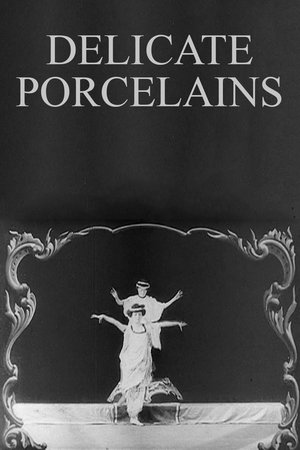
Delicate Porcelains
Several unique specimens of highly ornamented porcelain are shown in series. In each case the various pieces of ware are in reality formed of living people. After a short time has been allowed for admiration of each article, it disintegrates into the individual models, who pose in various figures and dances. In the following pictures are seen a powder box, a clock, candle sticks, a loving cup and a vase, all of wonderfully ornate design, beautifully colored. (Moving Picture World)
1909
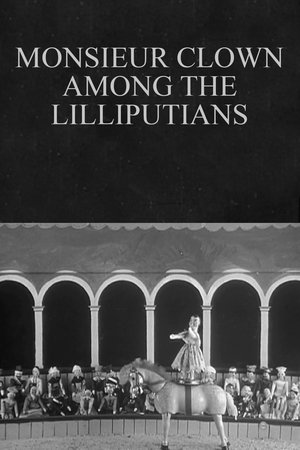
Monsieur Clown Among the Lilliputians
Stop-motion film from Émile Cohl has a clown walk out in front of a group of people and do various tricks including standing on his head, riding a horse and falling face first off the horse.
1909