Loading Cinehub...
"The End of the Line - Rochester's Subway" tells the little-known story of the rail line that operated in a former section of the Erie Canal from 1927 until its abandonment in 1956. Produced in 1994 by filmmakers Fredrick Armstrong and James P. Harte, the forty-five minute documentary recounts the tale of an American city's bumpy ride through the Twentieth Century, from the perspective of a little engine that could, but didn't. The film has since been rereleased (2005) and now contains the main feature with special portions that were added as part of the rereleased version. These include a look at the only surviving subway car from the lines and a Phantom tun through the tunnels in their abandoned state, among others, for a total of 90 minutes of unique and well preserved historical information.
Walter Dixon, Arthur Vedder, Livy Richard, Thomas D'Ettorre, Senator George Argetsinger, Harold S.W. MacFarli, T.M. Wright, Tom Kirn, William Lang, F.W. Armstrong, Randle Cartwright, Jim Harte

Andrew Richter shares odd celebrity encounters from his years of working in hotels.
2025

A young Donald Trump, eager to make his name as a hungry scion of a wealthy family in 1970s New York, comes under the spell of Roy Cohn, the cutthroat attorney who would help create the Donald Trump we know today. Cohn sees in Trump the perfect protégé—someone with raw ambition, a hunger for success, and a willingness to do whatever it takes to win.
2024

Man and boy play a futile game of chess in the middle of nowhere. An internal struggle between what is and what can no longer be.
2022

The battle for accessibility in New York City Transit told by those fighting it. Less than a quarter of stations in the city's sprawling subway system are accessible to people with disabilities and those that need elevators. This film takes you on the frontlines of the disability rights movement featuring the perspectives of activists, local and state legislators, transit advocates and MTA officials.
2021

In 1919 an art school opened in Germany that would change the world forever. It was called the Bauhaus. A century later, its radical thinking still shapes our lives today. Bauhaus 100 is the story of Walter Gropius, architect and founder of the Bauhaus, and the teachers and students he gathered to form this influential school. Traumatised by his experiences during the Great War, and determined that technology should never again be used for destruction, Gropius decided to reinvent the way art and design were taught. At the Bauhaus, all the disciplines would come together to create the buildings of the future, and define a new way of living in the modern world.
2019

2017

The Road Forward is an electrifying musical documentary that connects a pivotal moment in Canada’s civil rights history—the beginnings of Indian Nationalism in the 1930s—with the powerful momentum of First Nations activism today. Interviews and musical sequences describe how a tiny movement, the Native Brotherhood and Sisterhood, grew to become a successful voice for change across the country. Visually stunning, The Road Forward seamlessly connects past and present through superbly produced story-songs with soaring vocals, blues, rock, and traditional beats.
2017

Reporter Clay Pigeon interviews New Yorkers in October, 2008.
2017

The extraordinary story of how Hollywood changed World War II – and how World War II changed Hollywood, through the interwoven experiences of five legendary filmmakers who went to war to serve their country and bring the truth to the American people: John Ford, William Wyler, John Huston, Frank Capra, and George Stevens. Based on Mark Harris’ best-selling book, “Five Came Back: A Story of Hollywood and the Second World War.”
2017

A documentary following the adventures of three high school robotics teams battling for first place at a national robotics competition in Miami, Florida. Lone wolf Will builds robots so powerful they're unstoppable...if only they don't destroy themselves first. The Mechanical Misfits are an all-girls team stumbling through their first foray into combat robotics, and Elizabeth and Danielle are a formidable pair looking to reign supreme during their senior year.
2010
In the late 1980s, Tim Duffy, a penniless North Carolina musicology student, became deeply involved in Winston-Salem's drinkhouse music scene, an off-the-grid hotbed of gritty traditional blues. He began the foundation after observing and living with the deep poverty of the Southern blues artists he befriended and championed.The foundation now helps hundreds of older Southern musicians with everything from financial assistance to tour support. The film travels back to the early artists that were the inspiration for Music Maker, and forward to the current artists carrying on the Southern roots tradition. The film features performances, archival and contemporary, of Music Maker artists on tour and in the studio, as well as interviews with the artists and Duffy on the foundation, music and the blues.
2008

After a quarter-century of political denial and social stigma, of stunning scientific breakthroughs, bitter policy battles and inadequate prevention campaigns, HIV/AIDS continues to spread rapidly throughout much of the world. Through interviews with AIDS researchers, world leaders, activists, and patients, FRONTLINE investigates the science, politics, and human cost of this fateful disease and asks: What are the lessons of the past, and what can be done to stop AIDS?
2006

Georgian director Otar Iosseliani prepares his film Jardins en Automne. Nothing is conventional in the filmmaker's system: Julie Bertuccelli portrays the gestation and production of a film that seems to follow the freest and most unpredictable poetic intuitions of its creator. The constant and hilarious arguments with the producer, Martine Marignac, a Michel Piccoli transformed into an old woman, and the director's peculiar filming system, in which he signals his actors to start with a whistle, paint a picture of one of the most unclassifiable cinematic experiences in contemporary cinema.
2006

Since World War II North Americans have invested much of their newfound wealth in suburbia. It has promised a sense of space, affordability, family life and upward mobility. As the population of suburban sprawl has exploded in the past 50 years Suburbia, and all it promises, has become the American Dream. But as we enter the 21st century, serious questions are beginning to emerge...
2004
2001

2000

A documentary that takes an in depth look at a government sanctioned art school in Cuba and its students. Interviews of various artists attending the school allow viewers a glimpse into their personal and professional lives.
2000

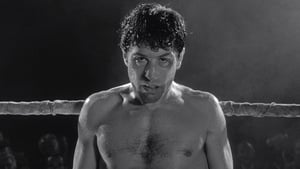
The life of boxer Jake LaMotta, whose violence and temper that led him to the top in the ring destroyed his life outside of it.
1980

A retrospective of the classic game show, What's My Line, in which a four-member celebrity panel attempted to identify a contestant's occupation through yes or no questions. In addition, each episode featured a celebrity mystery guest that the panelists tried to identify the guest while blindfolded. The show ran from 1950-1967 and prominently featured John Daly, Bennett Cerf, Arlene Francis, and Dorothy Kilgallen. This documentary looked back on the show 25 years after it premiered.
1975

Viva El Vedado presents the history of the Havana neighborhood of El Vedado from the last quarter of the 19th century through the Cuban Revolution and highlights its varied and outstanding architecture. Known as a cultural center of Havana, Vedado is particularly notable for its unique collection of Cuban architecture of the 20th century. The film’s goal is to introduce its audiences to the neighborhood’s remarkable architecture, its vibrant life, and the need for preserving Vedado as part of Havana’s heritage. It is a glimpse beyond tourist fantasies and stereotypes, a rare view of one of Havana’s most important neighborhoods.