Watch Country Magistrate (1953) Online Free
This film deals with the administration of justice on the local level in Canada, as seen in the activities of Roderick Haig-Brown, fisherman, writer and magistrate in rural British Columbia. A portrayal of a few of the typical cases on his roster indicates the variety of criminal offences which come under the jurisdiction of a country magistrate's court. In showing the discharge of his responsibilities the film reveals the magistrate's important position in the community, the constant demands on his time, and the integrity of judgment required to uphold the law on the one hand and to act in executive restraint of police powers on the other. Based on parts of the book Measure of the Year by Roderick Haig-Brown.
Cast
Roderick Haig-Brown
More Like This

Wild Horses, the Rockies and Me
Gordon Buchanan heads to the Rocky Mountains in search of wild horses. Finding two stallions battling over a herd, he immerses himself in their world, hoping to win their trust.
2025

Laïcité, l'exception française - 120 ans, et maintenant ?
The 1905 law proclaiming the separation of church and state is 120 years old. This law affirms freedom of conscience and religious freedom. It is considered the founding text of secularism. Secularism is the subject of endless controversy and debate.
2025

Le retour des baleines à bosse
2025
L'audience : dans les coulisses de la justice d'asile
2024

Juste Charity
Six years ago, Charity Jimohe left Nigeria for France. After ten months of forced prostitution to pay off a debt of 35,000 euros contracted with the traffickers who had brought her here, she walked through the door of a police station in Nantes to denounce the members of her prostitution ring.
2023
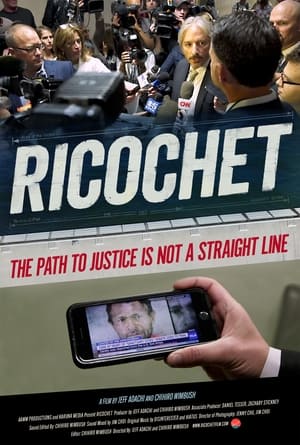
Ricochet
When a young woman is shot by an undocumented immigrant on Pier 14 in San Francisco, the incident ignites a political and media furor that culminates in Donald Trump’s election as President of the United States. In the eye of this storm, two public defenders fight to reveal the truth.
2021
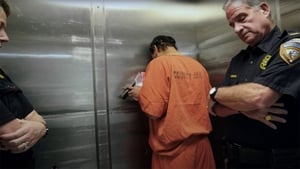
Trapped: Cash Bail In America
Every year, millions of Americans are incarcerated before even being convicted of a crime - all because they can't afford to post bail. How did we get here? “Trapped: Cash Bail in America” shines a light on our deeply flawed criminal justice system and the activists working to reform it. This new documentary explores the growing movement to end the inherent economic and racial inequalities of cash bail while highlighting victims impacted by an unjust system, the tireless campaigners fighting for criminal justice reform, and a bail industry lobbying to maintain the status quo.
2020
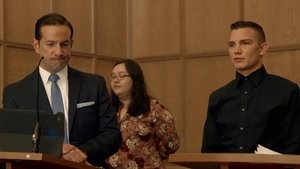
The Definition of Insanity
The Miami-Dade Community Mental Health Project comes to life in this documentary, following a team of dedicated public servants working through the courts to steer people with mental illness on a path from incarceration to recovery.
2020

Kim Kardashian West: The Justice Project
Kim Kardashian West works to shine a light on stories of people she believes have paid their debt to society while also bringing awareness to America’s growing problem with mass incarceration.
2020
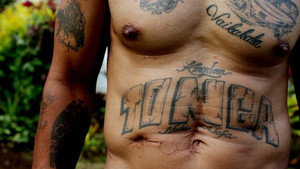
Gangsters in Paradise: The Deportees of Tonga
Tonga is now home to hundreds of deportees — permanent residents of New Zealand, Australia or the United States who committed serious crimes and did jailtime, then were put on a plane to start a new life in an unfamiliar culture. The lucky ones have family land, or a place to stay. But many start from scratch and without institutional support, old bad habits can kick in.
2019

The Call
A courtroom in Milan is filled with people brought together by random selection. Long interviews lie ahead. Based on the interviews, some of them will be chosen for jury duty. However, The Call doesn’t focus on judicial proceedings, but rather considers people’s sense of justice through the conversations in the waiting room.
2017
NCR: Not Criminally Responsible
NCR: Not Criminally Responsible tells the story of a troubled young man who stabbed a complete stranger 6 times in a crowded shopping mall while gripped by psychosis. Twelve years later, his victim, who miraculously survived, is terrified to learn that he's out, living in the community under supervision. He's applying for an absolute discharge, and if he succeeds, he'll no longer be required to take the anti-psychotic drugs that control his mental illness. With unprecedented access to the patient, the victim, and the mental institution, the film looks at both sides of the debate and puts a human face on the complex ethical issues raised.
2017

Los Angeles Plays New York
In this engrossing and hilarious documentary, Wilson puts it all on the line to investigate the televised performances of justice and New York (the latter by Los Angeles, of course).
2016

The Ugly Face of Disability Hate Crime
Adam Pearson - who has neurofibromatosis type 1 - is on a mission to explore disability hate crime: to find out why it goes under-reported, under-recorded and under people's radar.
2015

Restoring Hope
This often confronting documentary observes a Māori restorative justice model through the eyes of straight-talking Mike Hinton, manager of Restorative Justice at Manukau Urban Māori Authority. The bringing together of victims (including wider whānau) and offenders may offer an alternate way forward for "a criminal justice system failing too many and costing too much”. Restoring Hope kicked off Māori Television’s 2013 season of Sunday night documentaries. In a Herald On Sunday preview, Sarah Lang argued it was “enough to restore hope in local documentary-making.” I’m in an arena where people have high emotions, they get stressed and pressured. I’m reasonably confident that I can avoid situations where I’ll be unsafe. I don’t have any death wish — I’ve got a game of golf tomorrow. – Mike Hinton, on the dangers of the job
2012
The Perfect Victim
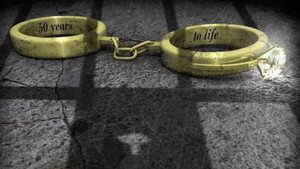
For over thirty years, three women have languished in Missouri State prison under unjust sentences for killing their abusive husbands. Denied the opportunity to enter the abuse into evidence, each of the women represents a system broken by outdated and media-sensationalized stereotypes. When a greater understanding of the "battered" syndrome change legal practices in 2000, Missouri's Governor crafts a new law demanding the parole board reevaluate each woman's case.
2012

Dancing Around the Table, Part One
Dancing Around the Table: Part One provides a fascinating look at the crucial role Indigenous people played in shaping the Canadian Constitution. The 1984 Federal Provincial Conference of First Ministers on Aboriginal Constitutional Matters was a tumultuous and antagonistic process that pitted Prime Minister Pierre Elliot Trudeau and the First Ministers—who refused to include Indigenous inherent rights to self-government in the Constitution—against First Nations, Inuit and Métis leaders, who would not back down from this historic opportunity to enshrine Indigenous rights. The conference was Pierre Elliott Trudeau’s last constitutional meeting before he resigned and the process was handed over to his successor, Brian Mulroney.
1987
Victims Fight Back
Shocking documentary centering on victims of violent crime who seek to get revenge on their assailants.
1985
Little Injustices: Laura Nader Looks at the Law
Anthropologist Laura Nader's first field trip to a Zapotec Indian village in Oaxaca, Mexico, in the late 1950s, led her to study problem-solving in the local courts. There, "little injustices" were the meat of everyday courtroom life.
1981

Boys Will Be Men
This film takes a candid, inside look at the world of juvenile delinquency. We are shown the tough existence on the streets of Montreal, but it could be any city in North America. Some boys as young as ten years of age talk about their lives of crime, the things that are important to them, and the hopes they hold for the future.
1980