Watch Gangsters in Paradise: The Deportees of Tonga (2019) Online Free
Tonga is now home to hundreds of deportees — permanent residents of New Zealand, Australia or the United States who committed serious crimes and did jailtime, then were put on a plane to start a new life in an unfamiliar culture. The lucky ones have family land, or a place to stay. But many start from scratch and without institutional support, old bad habits can kick in.
Cast
'Ila Mo'unga, Sione Moli, Sione Ngaue, Talia'uli Prescott, Sione Falemanu
More Like This

Abschiebung Impossible
Deportation - a political demand that often fails in Germany. There are over 200,000 people in the country who are required to leave the country, but only a few are actually deported. Olaf Sundermeyer accompanied a repatriation team from the Central Aliens Office in Brandenburg for months and shows how the judiciary, police and authorities block each other.
2025

CORRECTIV Unveils: Right-wing Extremist Secret Plan Against Germany
On January 10th, the investigative editorial team of CORRECTIV published research into a secret meeting of right-wing extremists, which no one was supposed to know about and which led to demonstrations and protests all over Germany. AfD politicians, CDU politicians, members of the WerteUnion, neo-Nazis and financially strong entrepreneurs came together in November 2023 in a hotel near Potsdam near the Villa on Wannsee, where the “final solution to the Jewish question” was once decided. They met to debate to expel millions of people from Germany, including non-German citizens with a migration background, as well as German citizens with a migration background and German citizens without a migration background who do not want to adapt to the ideological worldviews of those present. On January 17, 2024, the research premiered in the Berliner Ensemble as a staged reading with a political satirical character.
2024

Between Lands
A long time ago, Ana Laura, Gustavo, and Jesús crossed the border in search of a better opportunity. They worked hard, built a family, and made a life in the United States. Day by day, years after their arbitrary deportations to Mexico, they deal with the grief of being separated from their families. As time goes by, the shattered existence of everyone is slowly and inevitably rebuilt, far away and apart from each other.
2023
Juste Charity
Six years ago, Charity Jimohe left Nigeria for France. After ten months of forced prostitution to pay off a debt of 35,000 euros contracted with the traffickers who had brought her here, she walked through the door of a police station in Nantes to denounce the members of her prostitution ring.
2023

Alfred and Lucie Dreyfus, with Kiss as Deep as My Love
Victim of a terrible plot, Captain Dreyfus was sentenced in December 1894 to deportation for high treason. His wife Lucie made a pact with him: to live, whatever the cost, while awaiting rehabilitation. During five years, the Dreyfus spouses exchanged hundreds of letters. They became a weapon of survival for Alfred. This film is the story of the correspondence of a man and a woman who unwittingly became the unsung heroes of the case that bears their name.
2022

Kim Kardashian West: The Justice Project
Kim Kardashian West works to shine a light on stories of people she believes have paid their debt to society while also bringing awareness to America’s growing problem with mass incarceration.
2020

The Taste of Secrets
My mother always refused to speak about her childhood during the Cambodian genocide. Upset by her silence, my brother and I decide to follow Antoine, a grandson of Armenian genocide survivors, photographing the ghosts of his ancestors in the Middle East.
2020
1944. Deportation
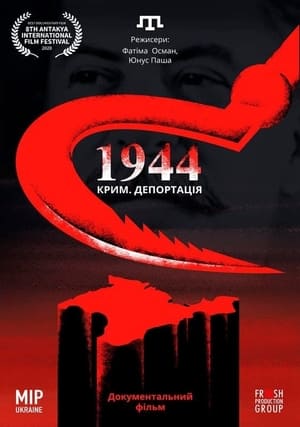
In 1944 Crimean Tatars has suffered a long road in exile. It was accompanied by famine, illness and loss. In the first years of exile, almost half of deported Crimean Tatars died. But those, who survived, dreamed of only one thing - to return to Crimea. The documentary 1944 tells about the tragedy of all Crimean Tatars through several separate life stories. They are cherished by each Crimean Tatar family and must be remembered by all generations to come.
2019
The Deported
The Deported follows four long term residents of the United States, each with an Order of Deportation over their head, and their families as they have to make critical decisions that will either keep their family together and separate them. Their choices are: 1. to self-deport. 2. To take sanctuary in a church. 3. To fight back legally. 4. To fall into denial and do nothing.
2019

The Call
A courtroom in Milan is filled with people brought together by random selection. Long interviews lie ahead. Based on the interviews, some of them will be chosen for jury duty. However, The Call doesn’t focus on judicial proceedings, but rather considers people’s sense of justice through the conversations in the waiting room.
2017
Deportation Class
Documentary about a "transportation commando" in Germany with the goal to deport 200 people to Albania...
2017
NCR: Not Criminally Responsible
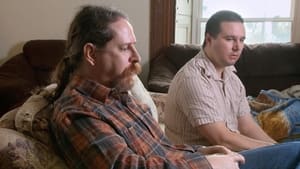
NCR: Not Criminally Responsible tells the story of a troubled young man who stabbed a complete stranger 6 times in a crowded shopping mall while gripped by psychosis. Twelve years later, his victim, who miraculously survived, is terrified to learn that he's out, living in the community under supervision. He's applying for an absolute discharge, and if he succeeds, he'll no longer be required to take the anti-psychotic drugs that control his mental illness. With unprecedented access to the patient, the victim, and the mental institution, the film looks at both sides of the debate and puts a human face on the complex ethical issues raised.
2017

Los Angeles Plays New York
In this engrossing and hilarious documentary, Wilson puts it all on the line to investigate the televised performances of justice and New York (the latter by Los Angeles, of course).
2016
Death of the Serpent God
This film begins, so to speak, where ‘Vol spécial’ left off. The reality of migration bears its teeth: Following a scuffle, 20-year-old Koumba from France is sent back to the place where she was raised – Senegal. She returns to the lost village of her ancestors hysterical, argumentative and unproductively rebellious. Now the mother of a toddler, she continues to come to terms with the two cultures; the outcome is unforeseeable, as is the outcome of this cinematic long-term observation. The risk of its failure due to its protagonist is palpable. But Koumba’s fascinating metamorphosis is also obvious, her body and character have taken on a more harmonious nature. All hope is not lost.
2014

Restoring Hope
This often confronting documentary observes a Māori restorative justice model through the eyes of straight-talking Mike Hinton, manager of Restorative Justice at Manukau Urban Māori Authority. The bringing together of victims (including wider whānau) and offenders may offer an alternate way forward for "a criminal justice system failing too many and costing too much”. Restoring Hope kicked off Māori Television’s 2013 season of Sunday night documentaries. In a Herald On Sunday preview, Sarah Lang argued it was “enough to restore hope in local documentary-making.” I’m in an arena where people have high emotions, they get stressed and pressured. I’m reasonably confident that I can avoid situations where I’ll be unsafe. I don’t have any death wish — I’ve got a game of golf tomorrow. – Mike Hinton, on the dangers of the job
2012
The Perfect Victim
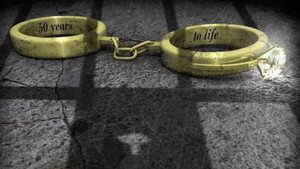
For over thirty years, three women have languished in Missouri State prison under unjust sentences for killing their abusive husbands. Denied the opportunity to enter the abuse into evidence, each of the women represents a system broken by outdated and media-sensationalized stereotypes. When a greater understanding of the "battered" syndrome change legal practices in 2000, Missouri's Governor crafts a new law demanding the parole board reevaluate each woman's case.
2012
Special Flight
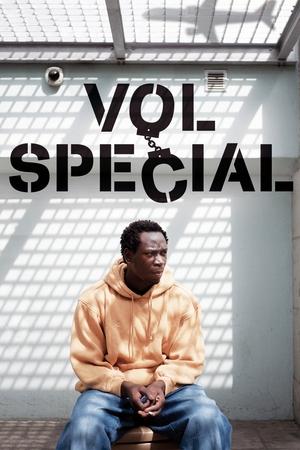
Switzerland still carries out special flights, where passengers, dressed in diapers and helmets, are chained to their seats for 40 hours at worst. They are accompanied by police officers and immigration officials. The passengers are flown to their native countries, where they haven't set foot in in up to twenty years, and where their lives might be in danger. Children, wives and work are left behind in Switzerland. Near Geneva, in Frambois prison, live 25 illegal immigrants waiting for deportation. They are offered an opportunity to say goodbye to their families and return to their native countries on a regular flight, escorted by plain-clothes police officers. If they refuse this offer, the special flight is arranged fast and unexpectedly. The stories behind the locked cells are truly heartbreaking.
2011

2 or 3 Things I Know About Him
What would your family reminiscences about dad sound like if he had been an early supporter of Hitler’s, a leader of the notorious SA and the Third Reich’s minister in charge of Slovakia, including its Final Solution? Executed as a war criminal in 1947, Hanns Ludin left behind a grieving widow and six young children, the youngest of whom became a filmmaker. It's a fascinating, maddening, sometimes even humorous look at what the director calls "a typical German story." (Film Forum)
2005
Victims Fight Back
Shocking documentary centering on victims of violent crime who seek to get revenge on their assailants.
1985

As If It Were Yesterday
Documents the little-known heroism of the Belgian Resistance who, during the Nazi occupation, hid over 4,000 Jewish children, rescuing them from deportation and extermination, , often risking their own lives. Directed by Myriam Abramowicz and Esther Hoffenberg, children of parents who spent the war in hiding, the film inspired the creation of The Hidden Child, a world-wide network of hidden children, which, for three decades, has organized reunions of hidden children with the families who hid them in Belgium during WWII.
1980