Watch Juste Charity (2023) Online Free
Six years ago, Charity Jimohe left Nigeria for France. After ten months of forced prostitution to pay off a debt of 35,000 euros contracted with the traffickers who had brought her here, she walked through the door of a police station in Nantes to denounce the members of her prostitution ring.
Cast
Charity Jimohe
More Like This

Line in The Sand
Undercover journalist James O'Keefe goes to the front lines of the migrant industrial complex using hidden cameras and raw testimonials. O'Keefe reveals the shocking reality of the U.S. border crisis like never before: Mexican freight trains, cartel tunnels, and U.S. funded child detention camps. Watch this gripping exposé of a corrupted system that demands change.
2024
Separated
Academy Award®-winning filmmaker Errol Morris confronts one of the darkest chapters in recent American history: family separations. Based on NBC News Political and National Correspondent Jacob Soboroff’s book, Separated: Inside an American Tragedy, Morris merges bombshell interviews with government officials and artful narrative vignettes tracing one migrant family’s plight. Together they show that the cruelty at the heart of this policy was its very purpose. Against this backdrop, audiences can begin to absorb the U.S. government’s role in developing and implementing policies that have kept over 1300 children without confirmed reunifications years later, according to the Department of Homeland Security.
2024
Operación Brooklyn
Spain, November 5, 2021. After an emergency landing, several people traveling from Casablanca (Morocco) to Istanbul (Turkey) escape from Palma de Mallorca airport.
2023
True Justice: Bryan Stevenson's Fight for Equality
An intimate portrait of Alabama public interest attorney Bryan Stevenson, founder and executive director of the Equal Justice Initiative, who for more than three decades has advocated on behalf of the poor, the incarcerated and the condemned, seeking to eradicate racial discrimination in the criminal justice system.
2019
NCR: Not Criminally Responsible
NCR: Not Criminally Responsible tells the story of a troubled young man who stabbed a complete stranger 6 times in a crowded shopping mall while gripped by psychosis. Twelve years later, his victim, who miraculously survived, is terrified to learn that he's out, living in the community under supervision. He's applying for an absolute discharge, and if he succeeds, he'll no longer be required to take the anti-psychotic drugs that control his mental illness. With unprecedented access to the patient, the victim, and the mental institution, the film looks at both sides of the debate and puts a human face on the complex ethical issues raised.
2017
Tarajal: Desmontando la impunidad en la frontera sur
The events that took place at the beach of El Tarajal in Ceuta (Spain) in February 2014 - the killing by the border police of 15 people who were trying to reach the Spanish coast - are an example of how the police force can violate the laws of its own country and international conventions with total impunity. The worst part is that this violation of human rights is protected by the Spanish Ministry of Interior itself, which hinders any effective action by the prosecution. For this reason, the civil society plays a fundamental role in revealing the facts. This is where the figure of collective complaints (DESC Observatory and the association Coordinadora de Barrios) steps in.
2017
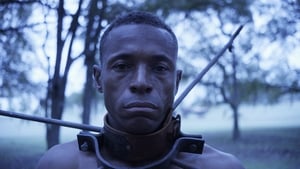
Hillary's America: The Secret History of the Democratic Party
Bestselling author and influential filmmaker Dinesh D’Souza reveals the sordid truth about Hillary Clinton and the secret history of the Democratic Party. This important and controversial film releases at a critical time leading up to the 2016 Presidential campaign and challenges the state of American politics.
2016
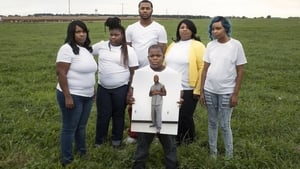
MILWAUKEE 53206
MILWAUKEE 53206 chronicles the lives of those living in the ZIP code that incarcerates the highest percentage of black men in America, up to 62%. Through the intimate stories of three 53206 residents, we witness the high toll that mass incarceration takes on individuals and families that make up the community. The film examines Milwaukee’s ZIP code 53206 to illuminate the story of people from across the United States who live with the daily affects of mass incarceration.
2016
Last Whites of the East End
Documentary exploring the effect of mass immigration on the dwindling white community of the East End, from the perspective of those who remain and those who chose to leave.
2016
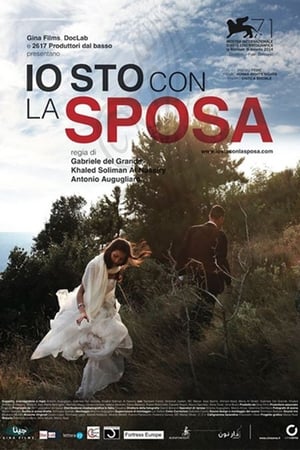
On the Bride’s Side
A Palestinian poet and an Italian journalist meet five Palestinians and Syrians in Milan who entered Europe via the Italian island of Lampedusa after fleeing the war in Syria. They decide to help them complete their journey to Sweden, and hopefully avoid getting themselves arrested as traffickers, by faking a wedding. With a Palestinian friend dressed up as the bride and a dozen or so Italian and Syrian friends as wedding guests, they cross halfway over Europe on a four-day journey of three thousand kilometres.
2014
Among Snakes and Ladders, Missing Persons
The migrants' way to the US has always been hard. In 2006 in Mexico, war against drugs has increased violence. Migrants, lacking from a legal status, became perfect victims. Psychological, social and institutional points of view focus on these forced disappearances. A portrait of the national status on migration, drug traffic, and violence is screened through interviews to experts and victims relatives: main parties in this issue.
2013
Ruins
A documentary about a shocking case of HIV criminalization in Greece.
2013
The Adventure
In 2011, as tens of thousands of migrants, Loss, and Madess Moussa arrived in Europe via Turkey. Required by EU law to remain in Greece, they only want one thing : to leave. Therefore earn the money needed to start is an obsession and all means are good. The film "The Adventure" follows the lives of these three Ivorians to Athens - their sense of enclosure, strategies to find money, failover illegally, attempts to start - and explores what is at stake, individually and collectively during migration: relations to other migrant communities, friendship, betrayal, solidarity, mafias and violence.
2013

Restoring Hope
This often confronting documentary observes a Māori restorative justice model through the eyes of straight-talking Mike Hinton, manager of Restorative Justice at Manukau Urban Māori Authority. The bringing together of victims (including wider whānau) and offenders may offer an alternate way forward for "a criminal justice system failing too many and costing too much”. Restoring Hope kicked off Māori Television’s 2013 season of Sunday night documentaries. In a Herald On Sunday preview, Sarah Lang argued it was “enough to restore hope in local documentary-making.” I’m in an arena where people have high emotions, they get stressed and pressured. I’m reasonably confident that I can avoid situations where I’ll be unsafe. I don’t have any death wish — I’ve got a game of golf tomorrow. – Mike Hinton, on the dangers of the job
2012
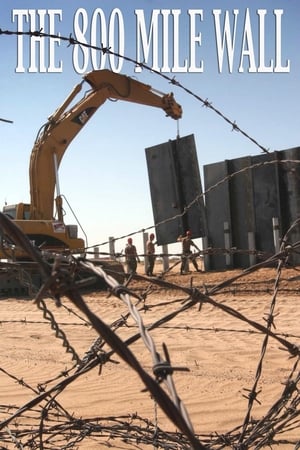
The 800 Mile Wall
"The 800 Mile Wall" highlights the construction of new border walls along the U.S.-Mexico border as well as the effect on migrants trying to cross in the U.S. This powerful 90 minute film is an unflinching look at a failed U.S. border strategy that many believe violates fundamental human rights.
2009
Aan ons den arbeid
Documentary that shows the changing attitude towards immigrant labor in The Netherlands. The documentary follows three immigrants that arrived in Holland 30 years ago to work in a bakery.
2007
Ningún ser humano es ilegal
On January 3, 2001 in Lorca there was a traffic accident that caused 12 deaths who were Ecuadorians, worked in agricultural fields and were in an irregular situation in Spain. This documentary reflects the harsh reality experienced by dozens of illegal Ecuadorians offering much cheaper labor in Spain.
2001

Crimewave
Alan Kelley's eagerly awaited edit of a Survival Research Laboratories show in the Bay Area held on an empty parking lot off Beale Street at the foot of the Bay Bridge. The show revolves around the many humorous aspects of violent human interaction. Also included in the video are footage from the Wired anniversary party and the SRL Halloween Trick where the V1 was operated in front of the Roxie Theater and several other machines and props operated by SRL members on Minna Street. Includes footage of Mark Pauline being detained by the SFPD for questioning on the device ignited on 16th Street...
1996

Country Magistrate
This film deals with the administration of justice on the local level in Canada, as seen in the activities of Roderick Haig-Brown, fisherman, writer and magistrate in rural British Columbia. A portrayal of a few of the typical cases on his roster indicates the variety of criminal offences which come under the jurisdiction of a country magistrate's court. In showing the discharge of his responsibilities the film reveals the magistrate's important position in the community, the constant demands on his time, and the integrity of judgment required to uphold the law on the one hand and to act in executive restraint of police powers on the other. Based on parts of the book Measure of the Year by Roderick Haig-Brown.
1953
Pull of Gravity
North Philadelphia, PA – Kev, El and Andy are three men united by one struggle: they are trying to defy gravity. As part of the 700,000 prisoners released into society every year, they find themselves faced with a chilling outlook: 67% of ex-offenders re-offend within three years. What explains this invisible force that keeps former inmates in a seemingly unending cycle of incarceration? Filmed on the street over the course of two years, Pull of Gravity is an intimate portrait of these three men that confronts head-on the gritty details of lives cut short by poverty and drugs, where dealing is seen as the only route to economic prosperity, where using offers an escape from powerlessness, and where prison is too often the next stop. The film’s unfiltered lense captures its subjects as they lay bare their stories, fears, and tentative dreams.