Watch Trapped: Cash Bail In America (2020) Online Free
Every year, millions of Americans are incarcerated before even being convicted of a crime - all because they can't afford to post bail. How did we get here? “Trapped: Cash Bail in America” shines a light on our deeply flawed criminal justice system and the activists working to reform it. This new documentary explores the growing movement to end the inherent economic and racial inequalities of cash bail while highlighting victims impacted by an unjust system, the tireless campaigners fighting for criminal justice reform, and a bail industry lobbying to maintain the status quo.
More Like This

Vegetarians, The Great Odyssey
A documentary that uncovers the rich, global history of vegetarianism—from ancient Indian Jains and Roman philosophers to Victorian activists and modern hippies—revealing how dietary choices have long challenged humanity’s relationship with the world, shaped by ideals, conflict, and visionary thinkers.
2025

Terra incognita
2024
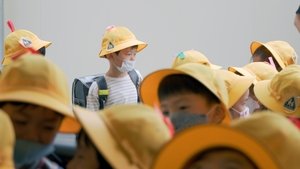
The Making of a Japanese
Intimately following 1st and 6th graders at a public elementary school in Tokyo, we observe kids learning the traits necessary to become part of Japanese society.
2024

Polvere in Sala
2023

Black Eagles
The documentary Schwarze Adler (Black Eagles) lets black players of the German national football team tell their personal stories for the first time. What road did they take before they got to where we cheer for them? What hurdles did they have to overcome? What prejudices and racist hostility were they exposed to – and what was it like in the past, what is it like today?
2021
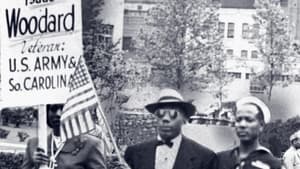
The Blinding of Isaac Woodard
In 1946, Isaac Woodard, a Black army sergeant on his way home to South Carolina after serving in WWII, was pulled from a bus for arguing with the driver. The local chief of police savagely beat him, leaving him unconscious and permanently blind. The shocking incident made national headlines and, when the police chief was acquitted by an all-white jury, the blatant injustice would change the course of American history. Based on Richard Gergel’s book Unexampled Courage, the film details how the crime led to the racial awakening of President Harry Truman, who desegregated federal offices and the military two years later. The event also ultimately set the stage for the Supreme Court’s landmark 1954 Brown v. Board of Education decision, which finally outlawed segregation in public schools and jumpstarted the modern civil rights movement.
2021

Inhabitants
For millennia, Native Americans successfully stewarded and shaped their landscapes, but centuries of colonization have disrupted their ability to maintain their traditional land management practices. From deserts, coastlines, forests, mountains, and prairies, Native communities across the US are restoring their ancient relationships with the land. As the climate crisis escalates these time-tested practices of North America's original inhabitants are becoming increasingly essential in a rapidly changing world.
2021
Wonder of the Century
2019
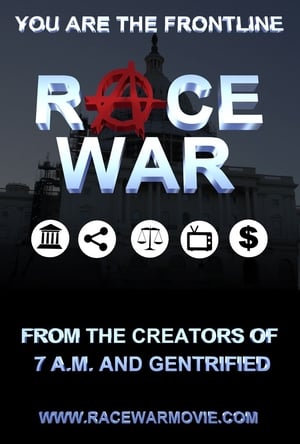
Race War
The explosive documentary from Black Channel Films daring to ask the question "Is it still just racism or is it a race war?" NOW IS THE TIME TO ASK IS IT STILL JUST "RACISM" OR IS IT A RACE WAR? RACE WAR IS THE FIRST DOCUMENTARY IN HISTORY THAT EXAMINES EVERY LEVEL OF AMERICAN SOCIETY TO EXPLORE THE MOST EXPLOSIVE ISSUE FACING AMERICA ALL OF OUR YESTERDAYS . . . AND TOMORROW.
2018
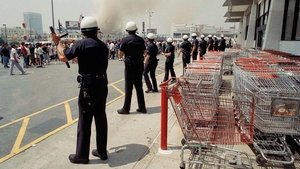
Let It Fall: Los Angeles 1982-1992
An in-depth look at the culture of Los Angeles in the ten years leading up to the 1992 uprising that erupted after the verdict of police officers cleared of beating Rodney King.
2017
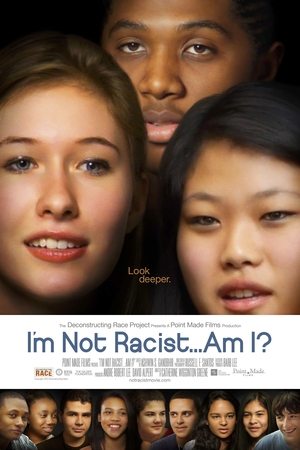
I'm Not Racist... Am I?
What if this next generation could transcend racism? One year, 12 teens, on a remarkable journey to face racism and white privilege, have the conversations most of us are too afraid to have. Once they push through naivete, guilt and tears, what they learn may change us all.
2014
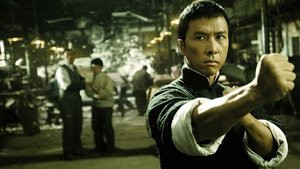
Ip Man
A semi-biographical account of Yip Man, the first martial arts master to teach the Chinese martial art of Wing Chun. The film focuses on events surrounding Ip that took place in the city of Foshan between the 1930s to 1940s during the Second Sino-Japanese War. Directed by Wilson Yip, the film stars Donnie Yen in the lead role, and features fight choreography by Sammo Hung.
2008

This Film Is Not Yet Rated
Kirby Dick's provocative documentary investigates the secretive and inconsistent process by which the Motion Picture Association of America (MPAA) rates films, revealing the organization's underhanded efforts to control culture. Dick questions whether certain studios get preferential treatment and exposes the discrepancies in how the MPAA views sex and violence.
2006
The Life and Times of Allen Ginsberg
Visionary, radical, spiritual seeker, renowned poet, founding member of a major literary movement, champion of human rights, Buddhist, political activist and teacher. Extensive archival footage, interviews, and home movies cover Allen Ginsberg's life, activism, and influence on American culture through the Beat era, the 1960s, and beyond.
1994
Glory
Robert Gould Shaw leads the US Civil War's first all-black volunteer company, fighting prejudices of both his own Union army and the Confederates.
1989
Cult People
In interviews, various actors and directors discuss their careers and their involvement in the making of what has come to be known as "cult" films. Included are such well-known genre figures as Russ Meyer, Curtis Harrington, Cameron Mitchell and James Karen.
1989
The Society of the Spectacle
Guy Debord's analysis of a consumer society.
1974

In Memory of Rock
The rock-wild youth of the 1960s during the apparitions of their idols.
1963
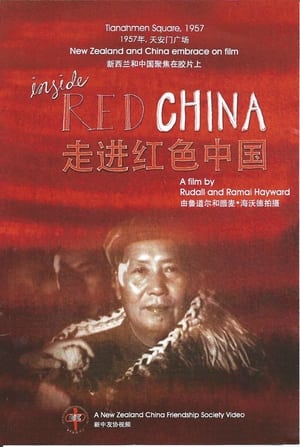
Inside Red China
October 1st, 1957. Dusk descends on Tiananmen Square, Peking. Fireworks crackle light across the night sky, above a city alive with National Day festivities and celebrations. Two intrepid New Zealand film-makers - Rudall and Ramai Te Miha Hayward - are there, documenting the life and times of communist China. The distinction of being the first English speaking foreigners to film unfettered in communist China was significant. The invitation to visit China was facilitated through the New Zealand China Friendship Society. They filmed in Canton, Shanghai, Peking (Beijing) and Wuhan. It was a small window of opportunity for Westerners to gaze on a country that was largely a mystery to the outside world since 1949. The unfortunate irony was that two of the documentaries; “Wonders of China”, and “Inside Red China”, were considered to be communist propaganda, and were not distributed outside of New Zealand.
1958

The Chaplain & the Doctor
Frustrated by watching Black patients suffer due to end-of-life healthcare inequities, two determined allies – a chaplain and a doctor – work to transform a broken medical system, one patient at a time.