Watch Codename Pirate (2014) Online Free
Was my father really a spy, as his file in the former East German Secret Service (STASI) suggests? This question marks the starting point of a son’s journey into his late father’s past which still remains somewhat mysterious even today. Eric Asch is looking for answers – in the Stasi archives, at the NSA and in his own family history. The result is a very personal documentary which reports ironically about the practices of secret service during the Cold War.
More Like This
Enhanced – Die Dopingspiele: Zwischen Medizin, Moral und Milliarden
The controversial Enhanced Games challenge the foundations of modern sport by allowing athletes to use performance-enhancing drugs in pursuit of world records and prize money. As investors, athletes, scientists, and anti-doping officials clash over the project's ambitions, questions emerge about human enhancement, medical risks, commercial interests, and the future of elite competition. Between technological progress, ethical boundaries, and billion-dollar business opportunities, the debate raises a fundamental question: if doping becomes the norm, what remains of sport?
2026
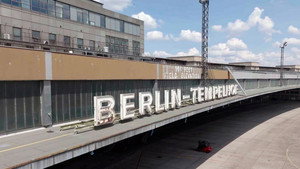
Berlin Tempelhof Airport - Gateway to Freedom
Located in former West Berlin, Tempelhof Airport reflects the dramatic history of the 20th century. Once a Nazi showpiece, it later became a symbol of freedom during the Berlin Airlift and the Cold War. In 1978, East German citizen Constanze Glien unexpectedly arrived here after her flight was hijacked, changing the course of her life.
2024

The Stasi: Secrets, Lies and British Spies
With access to recently-opened court files, Julie Etchingham reveals some of the Stasi's UK operations and asks why its other secrets are yet to be revealed.
2023
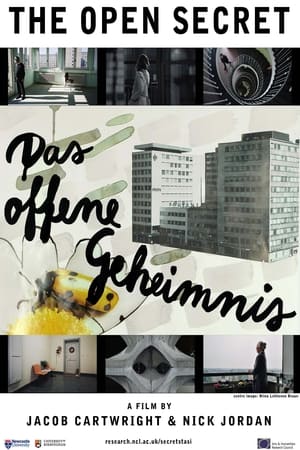
The Open Secret
A documentary that explores questions of secrecy and power in relation to the East German Secret Police (the 'Stasi') within East German society. The film is based upon key findings from an extensive research project, 'Knowing the Secret Police', and reflects upon how different kinds of knowledge were circulated through social, religious, political and literary networks within the former GDR. The filmmakers present this research with footage filmed at key locations throughout East Berlin and the wider surrounding landscape, including the Stasi archives and former HQ, Karl-Marx-Allee, Volkspark Friedrichshain, rural 'dacha' cabins, the urban neighbourhood of Prenzlauerberg and the social housing estates of Marzahn.
2022
Cell 364
While Germany sits as one of the major democratic models, an ex-prisoner of the Stasi delivers from his former cell a frightening testimony that questions the sustainability of our contemporary democracies.
2020
Honeckers letzte Reise
25 years after Erich Honecker's death, his personal secretary in Chile gives MDR an exclusive insight into the family's private archive. The material provides new background information on the dramatic escape story of the once most powerful man in the GDR, his journey to Chile and the dispute over Honecker's mortal remains.
2019
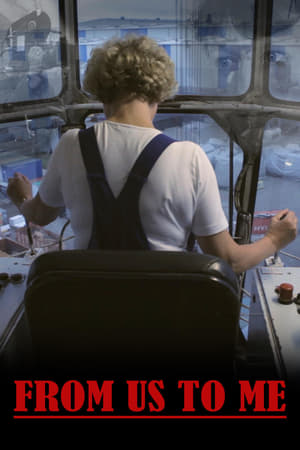
From Us to Me
In October 1987, the documentary film collective Amber Films from Newcastle became the first British film crew ever allowed to shoot in East Germany. They filmed the workers of the state-owned fishing concern in Warnemünde and a brigade of crane operators at the state Warnow dockyards. Just two years later, East Germany was history, including most of the jobs it once provided. Twenty-five years later, in 2014, the filmmakers returned to an utterly different Rostock. They visited the people they had filmed in 1987. Together, documentarians and subjects look at excerpts from the earlier film, and talk about the enormous changes the men and women experienced, how they dealt with them, and how they feel today.
2016
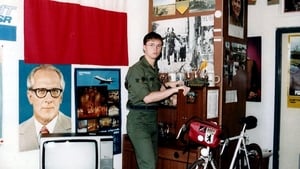
Une taupe de la STASI à la NSA : l'insoupçonnable Sergent Carney
In 1983, in Berlin, an American member of the secret service puts himself at the service of the GDR. This fascinating documentary tells the story of his life as a "passer-murailles". In 1983, American soldier Jeffrey M. Carney betrayed his country and defected to the East. At the time, he was working in Berlin for the NSA (National Security Agency), which intercepts Soviet airspace communications. But his patriotism and fervor for Reagan had waned: he felt underestimated by his colleagues and had discovered his homosexuality, for which he could be expelled from the army. One night of drinking, the young man crosses the demarcation line at Checkpoint Charlie with the aim of never returning...
2016

Großes Kino made in DDR
In 2016, DEFA celebrates its 70th anniversary: the film embarks on a journey into the exciting film history of the GDR. In a comprehensive kaleidoscope, the importance of DEFA productions is illuminated, the relevance of the films as propaganda productions for the GDR, which socio-political themes were in the foreground, but also which heroes DEFA brought to the screen and celebrated as people from the people.
2016
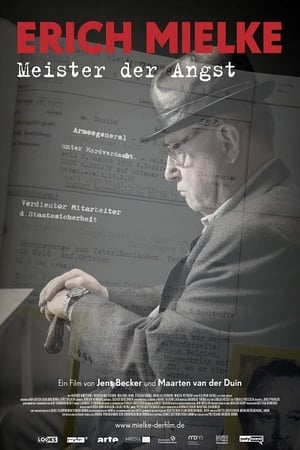
Erich Mielke - Master of Fear
Docudrama about life, career and breakdown of Erich Mielke, the former Security chief of East Germany.
2015
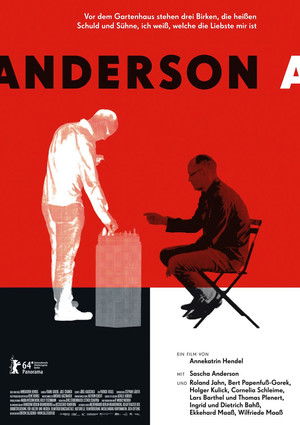
Anderson
Documentary about poet Sascha Anderson.
2014
We Steal Secrets: The Story of WikiLeaks
Julian Assange. Bradley Manning. Collateral murder. Cablegate. WikiLeaks. These people and terms have exploded into public consciousness by fundamentally changing the way democratic societies deal with privacy, secrecy, and the right to information, perhaps for generations to come. We Steal Secrets: The Story of WikiLeaks is an extensive examination of all things related to WikiLeaks and the larger global debate over access to information.
2013
East-West Passage
In the summer of 1989 tens of thousands of tourists from communist East Germany came to Hungary. They were deeply disillusioned because they felt they had no future in East Germany. There was no freedom, no choice in the shops, salaries were low and they could not travel except to Eastern Europe. They wanted to go to a prosperous and free West Germany but they could not get passports, so they hoped that by travelling through Hungary, the least suppressed country of the Soviet Block, they could cross the Iron Curtain into Austria and then travel on into West Germany. For them the Hungary of twenty years ago was the new east-west passage. Written by Czes
2010
Heimatkunde
Former "Titanic" satire magazine editor Martin Sonneborn takes an undercover trip around Berlin and discovers the East-German mentality and what is left of the socialist German Democratic Republic.
2008
Ich will da sein - Jenny Gröllmann
The film accompanies Jenny Gröllmann, a German actress, during the last two years of her life.
2008
Lenin kam nur bis Lüdenscheid - Meine kleine deutsche Revolution
The free, almost naive view from the perspective of a child puts the "68ers" in a new, illuminating light in the anniversary year 2008. The film is a provocative reckoning with the ideological upbringing that seemed so progressive and yet was suffocated by the children's desire to finally grow up. With an ironic eye and a feuilletonistic style, author Richard David Precht and Cologne documentary film director André Schäfer trace a childhood in the West German provinces - and place the major events of those years in completely different, smaller and very private contexts.
2008
Bernau liegt am Meer
Daniel lives in Bernau, a small town north of Berlin.This film tells this 21-year-old’s story and describes the radical right-wing milieu in which he grew up. In his candid portrait of how right-wing radicalism breeds, Daniel explains how difficult it is to break out of a vicious circle of violence, self-hatred and a right-wing extremist frame of mind.
2003
The Ministry for State Security - Everyday life at a public authority
Former heads, senior officers and the rector of the MfS law school explain how the ministry functioned. The interviewees see themselves as legitimate actors with a clear mandate and political enemy image. They provide an insight into the techniques and routines of secret service work, psychological tricks during interrogations and the management of “unofficial collaborators”. What they all have in common is that they are not aware of any moral guilt. The directors contrast their footage of prisons and archives with the statements of former Stasi employees in an attempt to expose their evasions and efforts at suppression.
2002
I Am My Own Woman
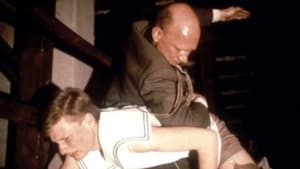
The life story of Charlotte von Mahlsdorf, who survived the Nazi reign as a trans woman and helped start the German gay liberation movement. Documentary with some dramatized scenes. Two actors play the young and middle aged Charlotte and she plays herself in the later years.
1992
Time Loops - A Conversation with Christa Wolf
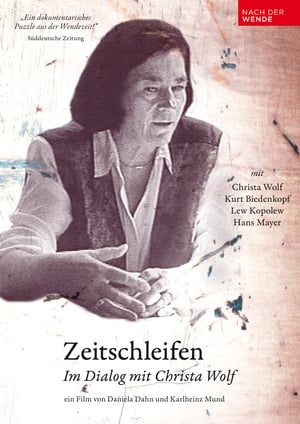
Journalist Daniela Dahn interviews the East-German author Christa Wolf during the German reunification: reflections on history, changing politics, life and work.
1991