Watch Ich will da sein - Jenny Gröllmann (2008) Online Free
The film accompanies Jenny Gröllmann, a German actress, during the last two years of her life.
Cast
Jenny Gröllmann, Michael Gwisdek, Henry Hübchen, Anna Maria Mühe, Jaecki Schwarz, Uwe Kockisch
More Like This
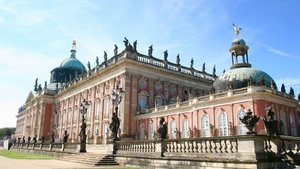
Sanssouci, Friedrichs Paradies
2025
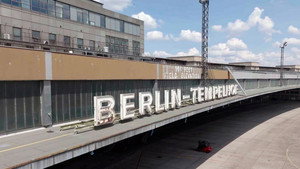
Berlin Tempelhof Airport - Gateway to Freedom
Located in former West Berlin, Tempelhof Airport reflects the dramatic history of the 20th century. Once a Nazi showpiece, it later became a symbol of freedom during the Berlin Airlift and the Cold War. In 1978, East German citizen Constanze Glien unexpectedly arrived here after her flight was hijacked, changing the course of her life.
2024
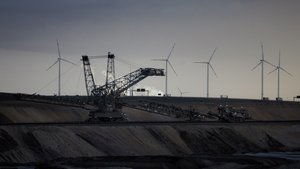
The Unpredictable Factor
In today's climate debate, there is only one factor that cannot be calculated in climate models - humans. How can we nevertheless understand our role in the climate system and manage the crisis? Climate change is a complex global problem. Increasingly extreme weather events, rising sea levels, and more difficult living conditions - including for us humans - are already the order of the day. Global society has never faced such a complex challenge. For young people in particular, the frightening climate scenarios will be a reality in the future. For the global south, it is already today. To overcome this crisis, different perspectives are needed. "THE UNPREDICTABLE FACTOR" goes back to the origins of the German environmental movement, accompanies today's activists in the Rhineland in their fight against the coal industry and gives a voice to scientists from climate research, ethnology and psychology.
2022

Patrick Ekwall: Om ett år utan Hannah
2022
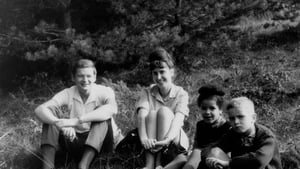
Becoming Black
In the 1960s, a white couple living in East Germany tells their dark-skinned child that her skin color is merely a coincidence. As a teenager, she accidentally discovers the truth. Years before, a group of African men came to study in a village nearby. Sigrid, an East German woman, fell in love with Lucien from Togo and became pregnant. But she was already married to Armin. The child is Togolese-East German filmmaker Ines Johnson-Spain. In interviews with Armin and others from her childhood years, she tracks the astonishing strategies of denial her parents, striving for normality, developed following her birth. What sounds like fieldwork about social dislocation becomes an autobiographical essay film and a reflection on themes such as identity, social norms and family ties, viewed from a very personal perspective.
2019
The Cut of It
The Cut of It is a unique exploration of the decisions real women made when they were diagnosed with cancer.
2019
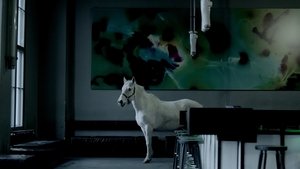
After Hours
Something strange and unpredictable takes inthe mysteriously vacant rooms of Berlin’s infamous Techno club Berghain. A group of wild animals occupy the monumental spaces of the former power station. We explore the building together with the animals and experience its dimensions from a new, nonhuman perspective. The brutality of the industrial architecture is confronted with the beauty of these shy creatures.
2013

Berlin Geheimoperation Tunnel
2011

Shine a Light
Martin Scorsese’s electrifying concert documentary captures The Rolling Stones live at New York’s Beacon Theatre during their A Bigger Bang tour. Filmed over two nights in 2006 with an all-star team of cinematographers, the film combines dynamic performances with archival footage and rare glimpses behind the scenes, offering a vibrant portrait of the band’s enduring energy and legacy.
2008

Prinzessinnenbad
A film about three teenagers - Klara, Mina and Tanutscha - from the Berlin district of Kreuzberg. The trio have known each other since Kindergarten and have plenty in common. The three 15-year-olds are the best of friends; they are spending the summer at Prinzenbad, a large open-air swimming pool at the heart of the district where they live. They're feeling pretty grown up, and are convinced they've now left their childhood behind.
2007
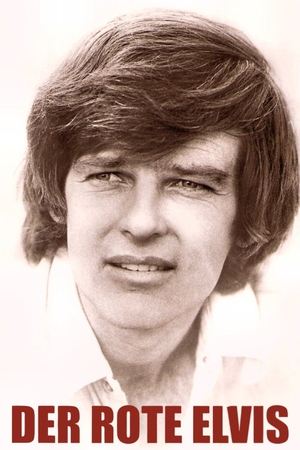
The Red Elvis
A documentary on the late American entertainer Dean Reed, who became a huge star in East Germany after settling there in 1973.
2007

White Man with Black Bread
Christof Wackernagel, best known in Germany as an actor and former member of the Red Army Faction ("RAF") lives in Mali. In his compelling portrait, Jonas Grosch shows a man who simply cannot stand still if he senses injustice. The courage to stand up for one’s beliefs coupled with vanity? However one chooses to look at it, it is easy to imagine what made him connect with the "RAF". With his irrepressible will for freedom, Christof Wackernagel gets entangled in the horrors of day-to-day life in Africa.
2007
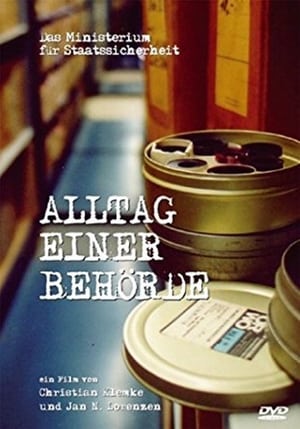
The Ministry for State Security - Everyday life at a public authority
Former heads, senior officers and the rector of the MfS law school explain how the ministry functioned. The interviewees see themselves as legitimate actors with a clear mandate and political enemy image. They provide an insight into the techniques and routines of secret service work, psychological tricks during interrogations and the management of “unofficial collaborators”. What they all have in common is that they are not aware of any moral guilt. The directors contrast their footage of prisons and archives with the statements of former Stasi employees in an attempt to expose their evasions and efforts at suppression.
2002
I Am My Own Woman
The life story of Charlotte von Mahlsdorf, who survived the Nazi reign as a trans woman and helped start the German gay liberation movement. Documentary with some dramatized scenes. Two actors play the young and middle aged Charlotte and she plays herself in the later years.
1992
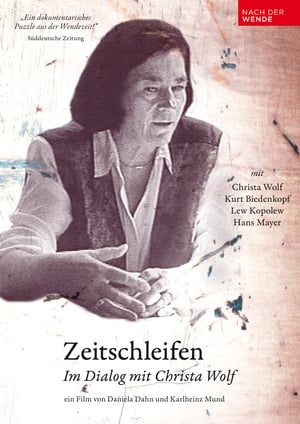
Time Loops - A Conversation with Christa Wolf
Journalist Daniela Dahn interviews the East-German author Christa Wolf during the German reunification: reflections on history, changing politics, life and work.
1991

Our Children
From an official perspective, marginal youth culture did not exist in East Germany. The topic of subcultures was taboo in the GDR, and groups such as goths, skinheads, anti-skins, punks and neo-Nazis were dismissed as social deviations promoted by western countries. Director Roland Steiner had access to such young East Germans in the late 1980s. Over the course of four years, he brought them before the camera in an attempt to understand what drew them to these groups.
1989
Nick Cave: Stranger in a Strange Land
Documentary made for Dutch television about Nick Cave in Berlin in 1987.
1987
Begegnung in Berlin
Short documentary directed by Günter Schlesinger
1965

How the Berlin Worker Lives
This documentary shows how the Berliner workers lived in 1930. The director Slatan Dudow shows through images: a) the workers leaving the factory; b) the raise of the rents; c) the "unpleasant" guest, meaning the justice officer that brings the eviction notice; d) the fight of classes of the houses of capitalists and working classes; e) the parks of the working class; f) the houses of the working class, origin of the tuberculosis and the victims; g) the playground of the working class; h) the swimming pool for the working class, ironically called the "Baltic Sea" of the working class; i) the effects of humidity of basement where a family lives, with one member deaf; j) one working class family having dinner while the capitalist baths his dog; k) the eviction notice received from an unemployed family and their eviction.
1930

Berlin: Symphony of a Great City
A day in the city of Berlin, which experienced an industrial boom in the 1920s, and still provides an insight into the living and working conditions at that time. Germany had just recovered a little from the worst consequences of the First World War, the great economic crisis was still a few years away and Hitler was not yet an issue at the time.
1927