Watch Amir Hetsroni: Case Study (2020) Online Free
A fascinating journey with Israel’s notorious provocateur, Prof. Amir Hetsroni, into the depth of his romantic and interpersonal relationships, alienated childhood, and public persona versus his self-identity.
Cast
Amir Hetsroni, Shirin Noufi, Dr. Daniel Drei, Assaf Voll
More Like This
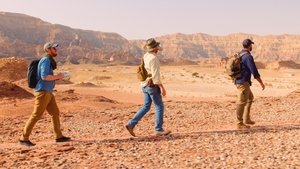
I AM ISRAEL: The Mountain of the King
I AM ISRAEL: The Mountain of the King will take you on a great adventure to explore the place where Heaven meets earth. Join the expedition and follow the path of the Glory of God — from the deserts of the Exodus to the very heart of Jerusalem. Along the way, meet Jewish men and women who dream of worshiping God here once again, just as their ancestors did in Biblical times. This much-anticipated sequel to the groundbreaking film, I AM ISRAEL, is the first movie ever made about the Temple Mount, and you’ll be amazed by what you discover. With breathtaking cinematography, powerful storytelling and unprecedented access to the Holy Land’s most ancient sites, this is more than just a movie—it’s an epic journey to the mountain where God’s presence once dwelt… and will soon return.
2025

Life and Death in Gaza
A film made by four Palestinians living through extraordinary times. Filming from the first days of the war, Khalid, Aya, Adam and Aseel document their own lives as they endure bombing raids, multiple evacuations, family separations and reunions, deaths, and even the birth of a new life amidst the chaos.
2024
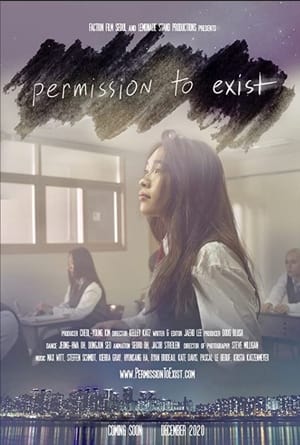
Permission to Exist
In just sixty years, South Korea went from being one of the poorest countries on the Asian continent to having the 12th largest economy in the entire world. Every year, it is measured that Korean students have some of the highest test scores and a higher rate of acceptance into Ivy League schools compared to all other nations. But on the flip side, South Korea also has one of the highest suicide rates in the developed world, the highest gender pay gap of all developed countries, and the highest plastic surgery rate per capita. Always expected to receive top scores and constantly bombarded by media and messages that seem to demand nothing short of visual “perfection,” how do these individuals come to accept and learn to love themselves as they are?
2020
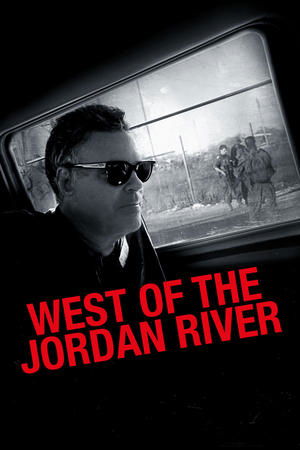
West of the Jordan River
Amos Gitai returns to the occupied territories for the first time since his 1982 documentary FIELD DIARY. WEST OF THE JORDAN RIVER describes the efforts of citizens, Israelis and Palestinians, who are trying to overcome the consequences of occupation. Gitai's film shows the human ties woven by the military, human rights activists, journalists, mourning mothers and even Jewish settlers. Faced with the failure of politics to solve the occupation issue, these men and women rise and act in the name of their civic consciousness. This human energy is a proposal for long overdue change.
2018

Take 3
A Palestinian refugee visiting his ruined village is documented in an Israeli film. Amazingly, out of pure coincidence the same person is filmed again returning to his village in a different film, thirty years later. Will it be possible to film the return scene for the third time?
2016
Letter in Motion to Gilles Jacob and Thierry Fremaux
Rather than writing a simple letter to explain his absence from the press conference for his latest Cannes entry, "Goodbye to Language," at the Cannes Film Festival, instead, legendary filmmaker Jean-Luc Godard created a video "Letter in motion to (Cannes president) Gilles Jacob and (artistic director) Thierry Fremaux." The video intercuts from Godard speaking cryptically about his "path" to key scenes from Godard classics such as "Alphaville" and "King Lear" with Burgess Meredith and Molly Ringwald, and quotes poet Jacques Prevert and philosopher Hannah Arendt.
2014
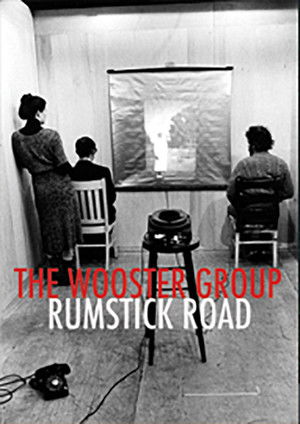
Rumstick Road
A video reconstruction of the 1977 Wooster Group production Rumstick Road, an experimental theater performance created by Spalding Gray and Elizabeth LeCompte after the suicide of Gray's mother. Archival recordings are combined with photographs, slides, and other materials to recreate the original production.
2014
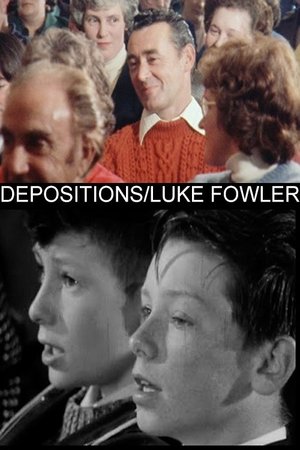
Depositions
The quietly insistent and critical DEPOSITIONS attempts to restore some dignity to images of the communities of the Scottish highlands taken from patronizing BBC documentaries and news features from the 70’s and 80’s. DEPOSITIONS repurposes footage from the archives of the BBC and sound from the School of Scottish Studies, it is a film about differences and dichotomies: science and superstition, near and far, community and the individual.
2014
Revelation - The Bride, The Beast & Babylon
Going to the very heart of the Bible's most challenging Book, this one hour documentary decodes the visions of Revelation 12 and 17 for everyone to understand. Journeying from the birth of Christ through the Christian era, this amazing video pulls aside the veil of hidden history to reveal the rise of Babylon, the persecution of the bride of Christ, and the real-world identity of the beast. Educational and inspiring, Revelation delivers the keys to understanding the epic conflict between Christ and Satan and what it means for your life today.
2013
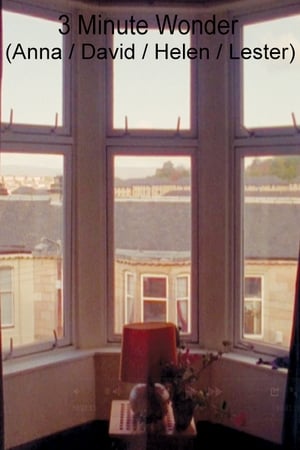
Tenement Films
A series of portraits, made for Television, of four diverse individuals brought together through shared residence. These short films were filmed in the tenement where I lived for eight years. The first is shot in our bedroom, which doubled up as my former partner's office, the three others were shot in architecturally identitical spaces owned by my then neighbours. Shot and edited on a single 16mm bolex camera using available light throughout, the films invoke reflections on the four individuals, how they occupy these particular spaces together.
2009
The Guide for the Perplexed
Director Yigal Bursztyn’s made-for-TV road movie takes viewers on a contemporary journey in which he traces the gospel and teachings of Jewish philosopher, Maimonides (aka the Rambam). Burszstyn goes from the Spanish city of Cordoba to Fes in Morocco, then onwards to Egypt and finally, Israel. In the course of this physical, geographical journey, Bursztyn also does a deep dive into Maimonides’s 12th century canonical work, The Guide for the Perplexed, which he uses as a tool to interpret present-day events and the conflicts between faith and rationale, and between religion, culture, and gender.
2006
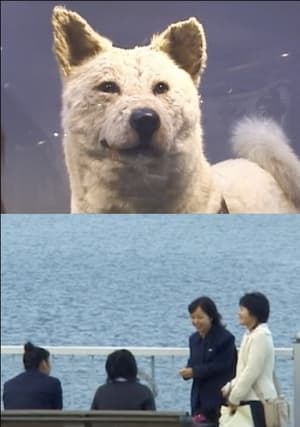
I Have No Memory of My Direction
Ostensibly searching for an emotional connection with her aging father, the woman contemplates her own inherited culture and familial touchstones. Her North American pop culture sensibility fuses with a distorted Japanese perspective to create a surreal interpretation of a “Japan of the imagination.” This fictional landscape is peppered with invented Japanese myths, ruminations on memory loss, the temporal space of digital photography and the ghosts of inherited imagination.
2005
Daumë
Culled from four rolls of Super-8 film shot while the maker was a development worker in a small South American village, Daumë is at its center a film about ritual, power, and play. Daumë is both ethnography and critique; it is an interrogation into how to represent a place that can't be represented.
2000
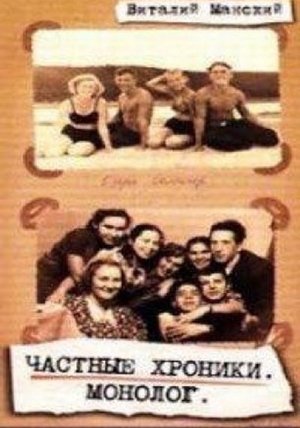
Private Chronicles: Monologue
The collective life of the generation born as Jurij Gagarin became the first man in space. Vitaly Mansky has woven together a fictional biography – taken from over 5.000 hours of film material, and 20.000 still pictures made for home use. A moving document of the fictional, but nonetheless true life of the generation who grew up in this time of huge change and upheaval.
1999
Just Hold Still
In his New York City landscape, Cohen finds inspiration in disturbance. Looking to life for rhythm and to architecture for state of mind, he locates simple mysteries. Just Hold Still is comprised of an interconnected series of short works and collaborations that explore the gray area between documentary, narrative, and experimental genres.
1989

Impressions from the Upper Atmosphere
Sistiaga painted directly on 70mm film a circular (planetary?) form, around which dance shifting colours in a psychedelic acceleration matched by the soundtrack’s deep-space roar and howl. - Cinema Scope
1989
Lebanese, Hostages of Their City
Jocelyne Saab toured the city of Beirut devastated by Israeli bombings. She assesses the number of victims and the extent of the destruction.
1982
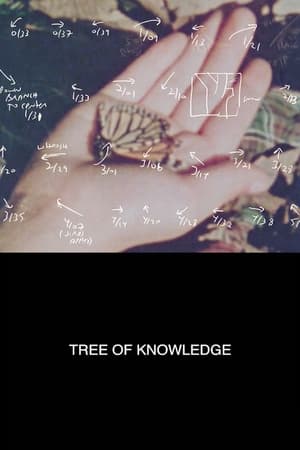
Tree of Knowledge
It started with filming the tree. Something was released in that manner of filming seemingly farthest removed from the procedure of the early films. I first thought a simple ordering of this rich material might be enough, something related to BARN RUSHES [...] But the film only came into its form-life with the idea of linking this deep-rooted and far-outreaching tree material with that film on paranoia that had fascinated me for many years. –L. G.
1981
Everyday Life
Dialogue-free short detailing the daily tasks of a man and his wife.
1976
Ich lebe in der Gegenwart - Versuch über Hans Richter
1973