Watch Life and Death in Gaza (2024) Online Free
A film made by four Palestinians living through extraordinary times. Filming from the first days of the war, Khalid, Aya, Adam and Aseel document their own lives as they endure bombing raids, multiple evacuations, family separations and reunions, deaths, and even the birth of a new life amidst the chaos.
More Like This
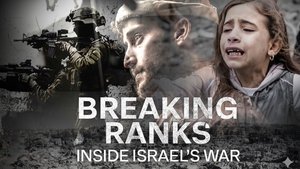
Breaking Ranks: Inside Israel's War
Breaking Ranks: Inside Israel’s War presents the first-hand recollections of IDF soldiers who have broken official silence to share their experiences of the war in Gaza - accounts that may raise serious questions about conduct on the ground and potential breaches of international law. Directed by award-winning filmmaker Ben Zand, the film features exclusive interviews with Israel Defense Forces (IDF), reservists and veterans - many speaking for the first time - who served during the war in Gaza. Their testimonies describe what they recall as indiscriminate bombardment, instances where Palestinian civilians were used as human shields, and an operational culture that some soldiers characterised as “no innocents in Gaza.”
2025
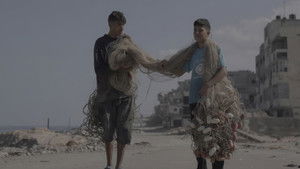
Free Fish
Free Fish is a short documentary filmed over the course of a year in Gaza, following two brothers — Abu Nagham and Ahmad — separated by war yet connected by the sea. Displaced from their home, Abu Nagham now lives in a tent in the south, fishing with his young nephew Rami, who lost his twin brother. Ahmad remains in the north, fishing amid ruins and occupation. Once a source of livelihood and freedom, the sea has become a battleground — heavily restricted, constantly watched, and always dangerous.
2025
A Propaganda Film by Betar USA
The Grayzone presents a behind-the-scenes portrait of Betar USA, the militant Zionist street group that claims credit for guiding the Trump administration's jailing and attempted deportation of pro-Palestine student activists.
2025
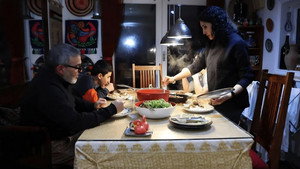
A State of Passion
A feature-length documentary film by Carol Mansour and Muna Khalidi. After 43 horrific days working round the clock under constant bombardment in the emergency rooms of Gaza’s Al Shifa and Al Ahli hospitals, British-Palestinian reconstructive surgeon, Dr. Ghassan Abu Sittah, emerged to find himself as a face of Palestinian resistance.
2024

Os Mortos Resistirão Para Sempre
Cinepoem about the current Palestinian tragedy, with Brazilian films from 1922 and 1932 (the indigenous catastrophe), documentaries from 2023/2024, essays by Jean-Luc Godard, Hani Jawharieh and Mustafa Abu Ali, statements by Edgar Morin and Noam Chomsky, and a poem by Mahmud Darwich.
2024

La scomparsa di Bruno Bréguet
In 1970, the barely twenty-year-old high school student Bruno Breguet was arrested in Israel while trying to smuggle explosives into the country for the Palestinian resistance. He became radicalized during his imprisonment and joined the group around the terrorist Carlos after his release. In 1995, he mysteriously disappears.
2024

Netanyahu, America & the Road to War in Gaza
As the war in Gaza continues with devastating consequences, a major 90-minute documentary offers a sweeping examination of the critical moments leading up to this crisis over the course of the past three decades, and the pivotal role of a central player: Israeli Prime Minister Benjamin Netanyahu. Starting with the Oslo peace accords and continuing through the Oct. 7 Hamas attack and the ongoing war in Gaza, the documentary draws on years of reporting and is an incisive look at the long history of failed peace efforts and violent conflict in the region — and the increasing tensions between Israel and its ally, the U.S., over the war’s catastrophic toll and what comes next.
2023
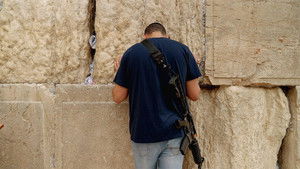
La bataille de Jérusalem
This documentary, filmed after October 7, places recent events in context and retraces the extraordinary history of this region to shed light on the present, interviewing actors and witnesses to this conflict: Islamists, Jewish nationalists, imams, rabbis, intellectuals, urban planners, soldiers, etc.
2023
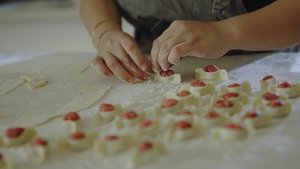
Breaking Bread
In Breaking Bread, exotic cuisine and a side of politics are on the menu. Dr. Nof Atamna-Ismaeel - the first Muslim Arab to win Israel's MasterChef - is on a quest to make a social change through food. And so, she founded the A-sham Arabic Food Festival in Haifa. There, pairs of Arab and Jewish chefs collaborate on mouthwatering dishes like kishek (a Syrian yogurt soup), and qatayef (a dessert typically served during Ramadan), as we savor the taste of hope and discover the food of their region free from political and religious boundaries.
2022
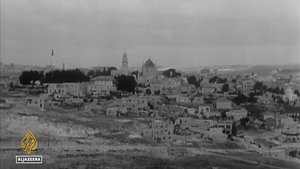
Palestine 1920: The Other Side of the Palestinian Story
“A land without a people, and a people without a land” is how the relationship between Palestine and the Jewish people was described by Christian writers in the 1800s. And the 20th-century history of the Middle East has largely been written through these eyes. But this film from Al Jazeera Arabic looks at Palestine from a different angle. It hears from historians and witness accounts, and features archive documents that show Palestine as a thriving province of Greater Syria and the Ottoman Empire at the dawn of the 20th century. The evidence suggests that its cities had a developing trade and commercial sector, growing infrastructure, and embryonic culture that would enable it to meet the challenges of the decades ahead. This film is the other side of the Palestinian story.
2022
Promised Lands
An Israeli director currently living in Berlin returns to Israel to meet some of her friends from primary school. She learns what has been happening in their lives since their paths parted while we get a glimpse of different Israelis.
2021
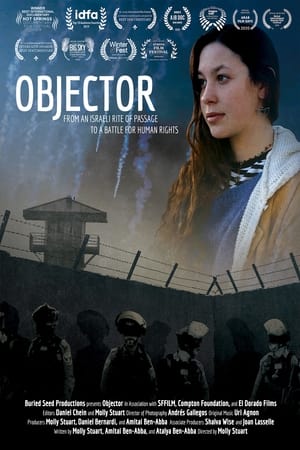
Objector
Like all Israeli youth, Atalya is obligated to become a soldier. Unlike most, she questions the practices of her country's military, and becomes determined to challenge this rite of passage. Despite her family's political disagreements and personal concerns, she refuses military duty and is imprisoned for her dissent. Her courage moves those around her to reconsider their own moral positions and personal power. OBJECTOR follows Atalya to prison and beyond, offering a unique window into the Israeli-Palestinian conflict from the perspective of a young woman who seeks truth and takes a stand for justice.
2019
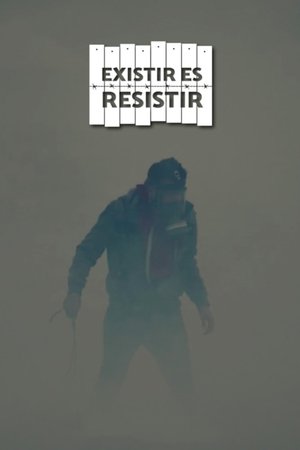
Existir es resistir
2018
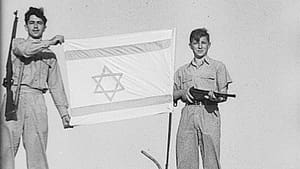
And There Was Israel
The film returns to the origins of the creation of the State of Israel (from 1896 to 1948) and highlights the responsibility of the Western World.
2018
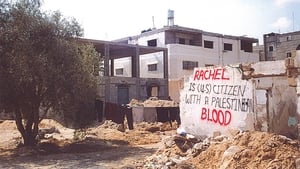
Rachel
Rachel Corrie, a young American woman and her friends attempt to stop a bulldozer from clearing out some homes and other buildings. Corrie was run over and killed. Witnesses claim it was deliberate.
2009

Palestine Blues
Follows the repercussions of the Israeli Security Wall and Settlement expansion in the engulfed/annexed Palestinian farming communities of the West Bank and the Gaza Strip, examining the grassroots resistance movement that sprang up against it. An interminable road trip across hard and liquid borders, across a terrain that is being erased as it is being traversed.
2006
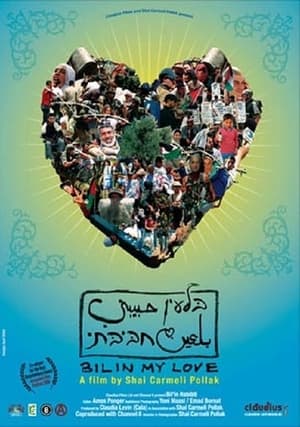
Bil'in Habibti
The Israeli filmmaker Shai Corneli Polak records the building of the 'security wall' through Palestinian territory at the village of Bil'in. The villagers protest mostly peacefully, while the Israeli army doesn't react peacefully. By now the Israeli High Court has ruled that the building of the wall was illegal.
2006
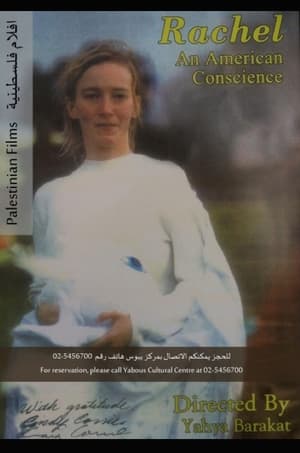
Rachel: An American Conscience
A documentary about the killing of American activist Rachel Corrie by an Israeli military bulldozer while she was protecting Palestinian homes from demolition in the Gaza Strip in 2003.
2005
Death of an Idealist
Rachel Corrie was aged 23 when she was killed by an Israeli Army bulldozer.
2005
Promises
Documentarians Justine Shapiro and B.Z. Goldberg traveled to Israel to interview Palestinian and Israeli kids ages 11 to 13, assembling their views on living in a society afflicted with violence, separatism and religious and political extremism. This 2002 Oscar nominee for Best Feature Documentary culminates in an astonishing day in which two Israeli children meet Palestinian youngsters at a refugee camp.
2001