Watch West of the Jordan River (2018) Online Free
Amos Gitai returns to the occupied territories for the first time since his 1982 documentary FIELD DIARY. WEST OF THE JORDAN RIVER describes the efforts of citizens, Israelis and Palestinians, who are trying to overcome the consequences of occupation. Gitai's film shows the human ties woven by the military, human rights activists, journalists, mourning mothers and even Jewish settlers. Faced with the failure of politics to solve the occupation issue, these men and women rise and act in the name of their civic consciousness. This human energy is a proposal for long overdue change.
Cast
Amos Gitai, Yizhak Rabin
More Like This
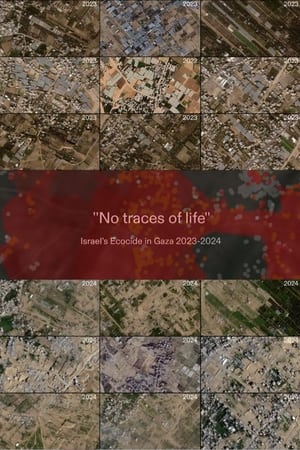
No Traces of Life
Building on Forensic Architecture’s previous investigation into herbicidal warfare and its effects on Palestinian farmers along the eastern perimeter of the occupied Gaza Strip, this investigation marks Land Day in Palestine by examining the systematic targeting of orchards and greenhouses by Israeli forces since October 2023. Our analysis reveals that this destruction is a widespread and deliberate act of ecocide that has exacerbated the ongoing catastrophic famine in Gaza and is part of a wider pattern of deliberately depriving Palestinians of critical resources for survival.
2024

Jawaher
Jawaher was a farmer with her father when she was young, and a beekeeper in old age. Beekeeping to her is a way to overcome life's difficulties. Despite the difficulties she's facing; the economic situation, climate change, and wars, she's still sticking to her source of livelihood to save a living.
2023
O'ud
Ghassan Sidawi takes a trip to get to know more about a late friend of his family. While doing so, he learns what it feels to be a lost Palestinian artist from home.
2023
Three Promises
Yousef Srouji’s childhood in Palestine wasn’t something that he and his parents spoke of as a family, so when he found a box of his mother’s home videos from the early 2000s, an especially perilous and tumultuous period in the West Bank, the tapes became a means for remembering and comprehending a painful past. The stories she captured illuminate the nature of life in a war zone, and familial bonds that cannot be broken. – Bedatri Choudhury (DocNYC)
2023

Praying for Armageddon
While much of the world struggles to keep the planet going, a frighteningly large group of American fundamentalist Christians are working to promote the apocalypse. The evangelical movement is convinced that they will be saved when Jesus appears in the state of Israel on horseback and, with a sword raised to heaven, kills the infidels so that the blood reaches the horses’ bridles. Natural fires, corona, wars and crises are evidence that the time is nigh. But for the prophecies to be realized, the state of Israel has to grow stronger, so they provide huge financial support and are so far inside the White House that they help influence US foreign policy.
2023

Tantura
When, in the late 1990s, Israeli student Teddy Katz exposed the massacre of Palestinian civilians by Israeli forces in the village of Tantura, in May 1948, during the first Arab-Israeli war, he was initially praised for his pioneering work; but he was soon infamous and branded a traitor. Decades later, incendiary new evidence emerges that corroborates Teddy's findings.
2022
Finding Abraham
A group of young Arabs and Israelis join together for road trip across the desert. In the wake of recent Peace Agreements between their countries, they’re on a journey to find Abraham, offering an honest, open, challenging, unconventional insight into a peace process that, rooted in Religious conflict, is as much about profits as prophets.
2021

Divas: d’Oum Kalthoum à Dalida
2021

Teta, Opi & Me
Filmed entirely with an iPhone, Teta, Opi & Me is a tribute to conformity, tolerance and courage. It is a poetic, meditative, multilingual, and feeling-driven short film, documenting the intricacies of the artist’s playful process in capturing her grandparents’ enduring romance through social, political and racial adversity. He comes from Bethlehem, Palestine and she comes from Vienna, Austria. Incorporating poetic filmic scenarios, vérité scenes, interviews, and home movies, the work is an inter-generational dialogue that explores themes of family, love, and the intermingling of cultures.
2018
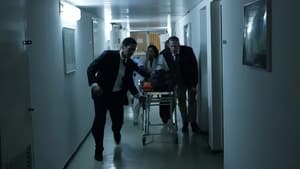
Rabin, the Last Day
Itzhak Rabin's murder ended all efforts of peace, and with him the whole left wing of Israel died. The movie shows the last of his days as prime minister, and what led to his murder.
2015
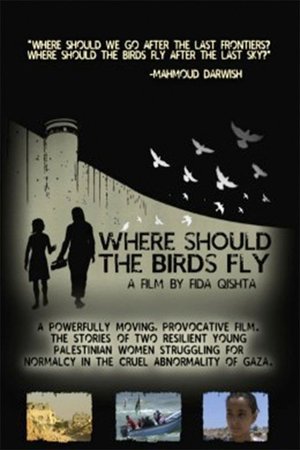
Where Should the Birds Fly?
The film tells the compelling and moving stories of two remarkable young women living in Gaza and the struggle of Gazans trying to maintain their humanity and humor while hoping to find some sense of normality in a world that is anything but normal.
2013
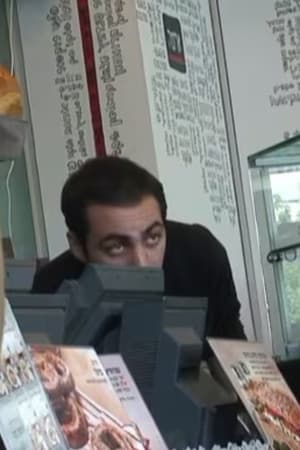
Foreign Names
Foreign Names focuses on the worker displacement in a compilation of video clips from Aroma, a coffee shop chain. Ben-Ner’s video shows counter staff at the coffee shops yelling nonsensical English “names,” fabricated and given to them by the artist. The texts edited together become a lament of the waiters’ disappearance and the state of workers today.
2012
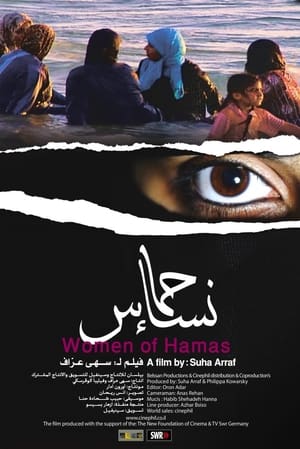
Women of Hamas
Everyone was surprised at the triumph of Hamas in the last Palestinian elelctions, but the bigger surprise was that the women were behind that victory. We follow three Hamas women to try and understand why an Islamist political party, operating in a very conservative society, allows its women to become political, social and even military leaders.
2010
Streets of Jerusalem
Streets of Jerusalem, shot over a period of five years, centers around the lives of ten Jerusalem residents.
2007
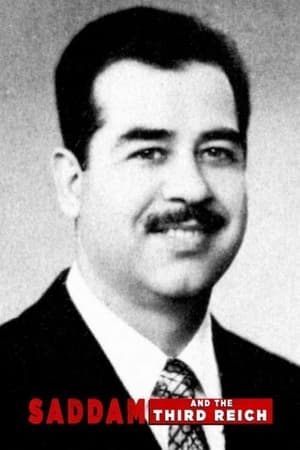
Saddam and the Third Reich
The key individuals of the Iraqi-Nazi connection.
2005
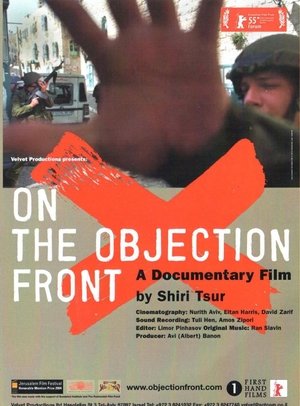
On the Objection Front
A film documenting the story of the Israeli refusnik-movement and interviews some of its protagonists. This timely documentary interweaves the stories of six soldiers who, after years of loyal reserve duty and annual active combat, find they can no longer countenance serving in the occupied territories of the West Bank and Gaza Strip. They become "refusniks" - an action that puts them at odds with deeply held national values and has devastating consequences in their own lives. In the film, six of the signers of the original "Combatants’ Letter" reveal the untenable combat experiences that led to their decision, the public outcry it provoked and the price they continue to pay for refusing to serve - including isolation, family ostracism and imprisonment. Winner, Ecumenical Jury Prize, Berlin Film Festival
2005

HALEMEH
In the Gaza refugee camp of Jerash, Palestinians face the critical issue of lacking identification documents. This situation undermines their rights and hinders access to essential services and opportunities.
2003
Gaza Ghetto
Gaza Ghetto: Portrait of a Family, 1948 – 1984 is a documentary film about the life of a Palestinian family living in the Jabalia refugee camp. The film, created by Joan Mandell, Pea Holmquist, and Pierre Bjorklund in 1984 is believed to be the first documentary ever made in Gaza. The film features Ariel Sharon, Binyamin Ben-Eliezer and soldiers on patrol "candidly discuss[ing] their responsibilities." The film follows a refugee family from the Gaza Strip who visit the site of their former village, now a Jewish town in Israel. As the grandfather and great-grandfather point out an orchard and sycamore fig that belonged to Muhammed Ayyub and Uncle Khalil, an Israeli resident appears and tells them to leave, claiming they need a permit to be there. The mother tells him that, "We work in Jaffa and Tel Aviv and that's not forbidden," to which he replies, "Here it's forbidden."
1985
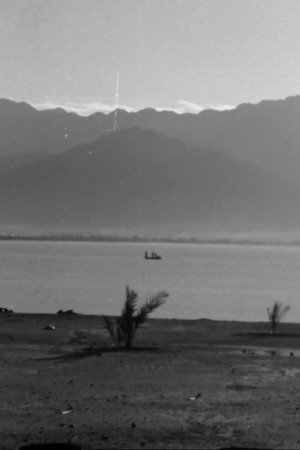
The Kibbutz Brigade in Eilat
Between the mountains of Edom and the Red Sea, the younger and older workers of the United Kibbutz Brigade positioned themselves in order to build and settle the city of Eilat. Under the leadership of Beni Marshak, the organization’s secretaries are exploring the possibility of establishing permanent structures while supervising British activities in the area. Meanwhile, in the brigade camp, meals are being prepared and clothes are being thoroughly washed by the dedicated female brigade members. The brigade members take on tasks for the preparation of the settlement, in carpentry, fishing, planting gardens and orchards, and in the construction work of a Solel Boneh. The 12th grade students from the Kibbutzim come to be impressed by the pioneering work in the city.
1956

The United Kibbutz Newsreel #2
The inauguration ceremony of the monument to the victims of the Harel Brigade of the Palmach during the War of Independence in the cemetery in Kiryat Anavim. A glimpse into the work of the fishermen of Kibbutz Nachsholim on their ship Nachshol, sailing towards the fishing grounds off the coast of Turkey. A veterinarian performs surgery and removes nails and glass from a cow’s stomach. And finally, a request not to throw away cigarette waste where it could cause a fire.
1955