Watch A Dangerous Idea (2016) Online Free
A dangerous idea has threatened the American Dream from the beginning - the belief that some groups and individuals are inherently superior to others and more deserving of fundamental rights. Such biological determinism provided an excuse for some of America's most shameful history. And now it's back. This documentary reveals how biologically determined politics has disenfranchised women and people of color, provided a rationale for state sanctioned crimes committed against America's most vulnerable citizens, and now gains new traction under the Trump administration.
Cast
Andrew Kimbrell, Garland Allen, Ignacio Chapela, Barry Commoner, Troy Duster, Fidelma Fitzpatrick, Agustín Fuentes, Ruth Hubbard, Oliver James, Van Jones, Jay Joseph, Evelyn Fox Keller
More Like This

Laïcité, l'exception française - 120 ans, et maintenant ?
The 1905 law proclaiming the separation of church and state is 120 years old. This law affirms freedom of conscience and religious freedom. It is considered the founding text of secularism. Secularism is the subject of endless controversy and debate.
2025
Olympe de Gouges : Liberté, égalité, féminité
2025
Cracking the Code: Phil Sharp and the Biotech Revolution
The 1977 discovery of RNA splicing by Dr. Phillip A. Sharp, Kentucky farm boy turned Nobel-prize winning scientist, set the stage for a revolution in molecular biology, enabling research into a new class of medicines predicated on recombinant DNA techniques ranging from the development of synthetic insulin and human growth hormone to the COVID-19 vaccine.
2025
Pass It Around
Documentary about living with an addict and grappling with the genetic propensity of becoming one.
2022
Tangled Roots
An intimate look into Demers family's experience raising children while dealing with the societal stigmas around disabilities and the consequences of Alberta's forgotten experiment in eugenics.
2022
Men In Sync
A short documentary exploring the gender inequality that male artistic swimmers are facing in the Olympics, including intimate interviews with Spanish mixed duet Pau Ribes and Emma Garcia, and legendary American male artistic swimmer Bill May.
2022
Crazy Money
What is possible when we have guaranteed money to meet our basic needs? No requirements. No stipulations. No paybacks. We look to the village of Busibi to discover what’s possible when we give money directly to people. No strings attached. The answer lies in the residents’ personal stories. Their successes and tribulations illustrate the impact of one of the most daring projects in contemporary development cooperation. Their life stories unexpectedly prove to be all too familiar. They make us laugh. They move us. Blending in together, they create a colorful and poetic reality portrait, illustrating the big consequences of a small sum of money …
2021
Human By Chance?
If we compare ourselves with our genetically closest living relatives, the chimpanzees, we have few physical advantages. We are far weaker, cannot move nearly as fast, and do not have the same climbing capabilities. Instead, humans excel in areas such as architecture, religion, science, language, writing, art, culture, and ideas. These achievements are due to our larger brain that contain billions of neurons. It was the rapid growth of our brain, originating about 2 million years ago, that allowed us to be the predominant species of the world. What caused this rapid growth of our cerebral cortex? Researchers worldwide have asked this question for many years, but now there finally seems to be an answer.
2020
Genesis 2.0
A well-preserved mammoth carcass is found in the remote New Siberian Islands in the Arctic Ocean, opening up the possibility of a world-changing “Jurassic Park” moment in genetics.
2018
The Scientist, The Imposter and Stalin: How to Feed the People
The documentary tells two very different human fates in the 1920s Soviet Union. Nikolai Vavilov was a botanical genius, Trofim Lyssenko was an agronomist who made great promises and fake inventions. Each of them tried to solve the country's nutritional problem, but only one succeeded.
2018
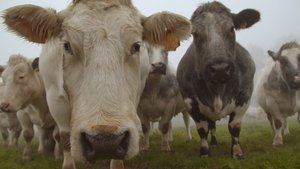
And Man Created the Cow
10,000 years ago, the European forests were inhabited by huge cattle with protruding horns: the aurochs. Then man began to domesticate them and created the cow. By crossing species, he adapted the animals over time so that they increasingly met his needs and desires. Industrial livestock farming was born. From then on, beef cattle and dairy cows such as the Holstein cow were bred. Milk production tripled within a few decades. Today, the cow of the future is produced by artificial insemination. By selecting a few breeding bulls that are considered to be top bulls, rapid genetic progress is ensured.
2016
Equal Means Equal
An unflinching look at how women are treated in the USA today examining issues such as workplace harassment, domestic violence, rape and sexual assault. It shows how discriminatory attitudes still prevail and influence society and argues for the need to improve laws that claim to protect women.
2016
Genetic Me
Is our life predetermined from birth? Does our genes determine our personality and behavior? Is there a criminal gene? This documentary follows the well-known Danish journalist, author, and neurobiologist Lone Frank, who explores her own self with the help of her genetic map and her family history.
2014
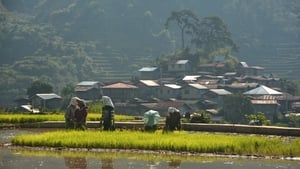
Bontok, Rapeless
Two Filipina victims of sexual abuse search the truth behind the finding of a renowned anthropologist: that merely a few generations ago, the Bontok Igorot lived in what seems an unthinkable utopia—a rape-less society.
2014
Mind of a Rampage Killer
Can science help us understand these crimes?
2013
What Darwin Never Knew
Earth teems with a staggering variety of animals, including 9,000 kinds of birds, 28,000 types of fish, and more than 350,000 species of beetles. What explains this explosion of living creatures—1.4 million different species discovered so far, with perhaps another 50 million to go? The source of life's endless forms was a profound mystery until Charles Darwin brought forth his revolutionary idea of natural selection. But Darwin's radical insights raised as many questions as they answered. What actually drives evolution and turns one species into another? To what degree do different animals rely on the same genetic toolkit? And how did we evolve?
2009
The Journey of Man: A Genetic Odyssey
Many geneticists and archaeologists have long surmised that human life began in Africa. Dr. Spencer Wells, one of a group of scientists studying the origin of human life, offers evidence and theories to support such a thesis in this PBS special. He claims that Africa was populated by only a few thousand people that some deserted their homeland in a conquest that has resulted in global domination.
2003
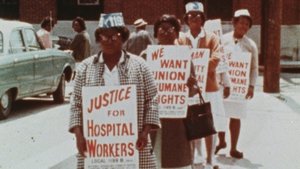
I Am Somebody
Madeline Anderson’s documentary brings viewers to the front lines of the civil rights movement during the 1969 Charleston hospital workers’ strike, when 400 poorly paid Black women went on strike to demand union recognition and a wage increase, only to find themselves in confrontation with the National Guard and the state government. Anderson personally participated in the strike, along with such notable figures as Coretta Scott King, Ralph Abernathy and Andrew Young, all affiliated with Martin Luther King’s Southern Christian Leadership Conference. Anderson’s film shows the courage and resiliency of the strikers and the support they received from the local black community. It is an essential filmed record of this important moment in the history of civil and women’s rights. The film is also notable as arguably the first televised documentary on civil rights directed by a woman of color, solidifying its place in American film history.
1970
Gregor Mendel
1965
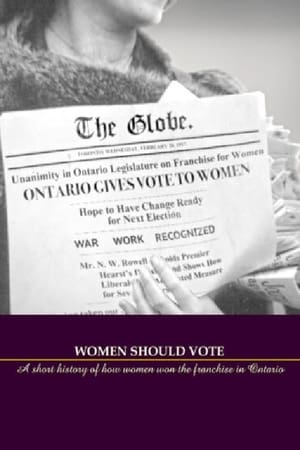
Women Should Vote: A short history of how women won the franchise in Ontario
The documentary follows the activism of prominent suffragists such as Emily Stowe, as they struggled for an equal say in their own future. These women formed associations, petitioned the Ontario Legislature, wrote essays, and held satirical events to achieve their goals of equal rights for women. It is a celebration of the 100th anniversary of women’s suffrage in Ontario.