Watch Human By Chance? (2020) Online Free
If we compare ourselves with our genetically closest living relatives, the chimpanzees, we have few physical advantages. We are far weaker, cannot move nearly as fast, and do not have the same climbing capabilities. Instead, humans excel in areas such as architecture, religion, science, language, writing, art, culture, and ideas. These achievements are due to our larger brain that contain billions of neurons. It was the rapid growth of our brain, originating about 2 million years ago, that allowed us to be the predominant species of the world. What caused this rapid growth of our cerebral cortex? Researchers worldwide have asked this question for many years, but now there finally seems to be an answer.
Cast
Alex D'Attoma
More Like This
Cracking the Code: Phil Sharp and the Biotech Revolution
The 1977 discovery of RNA splicing by Dr. Phillip A. Sharp, Kentucky farm boy turned Nobel-prize winning scientist, set the stage for a revolution in molecular biology, enabling research into a new class of medicines predicated on recombinant DNA techniques ranging from the development of synthetic insulin and human growth hormone to the COVID-19 vaccine.
2025

Grotte Chauvet - Dans les pas des artistes de la Préhistoire
2024
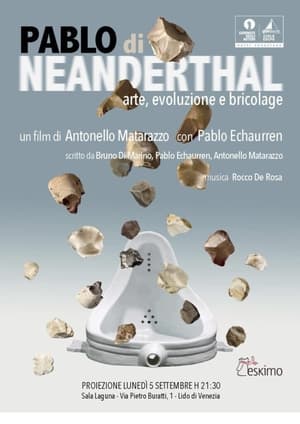
Pablo From Neanderthal
What would have happened if the Neanderthals had prevailed over Homo Sapiens? How would our species have evolved? How does art relate to evolution, and why in the world does evolution behave like a bricoleur? Last of all, just what does Marcel Duchamp have to do with all of this? This film is neither a documentary nor a portrait of the artist Pable Echaurren; it’s a kaleidoscopic meditation on our past, present and future.
2022
Out Of Europe
Looking at whether the history of early human evolution should be rewritten. For decades, most experts have been convinced that Africa is the cradle of mankind and many fossil finds from Kenya, Ethiopia, South Africa and Chad seemed to prove it.
2020
Genesis 2.0
A well-preserved mammoth carcass is found in the remote New Siberian Islands in the Arctic Ocean, opening up the possibility of a world-changing “Jurassic Park” moment in genetics.
2018
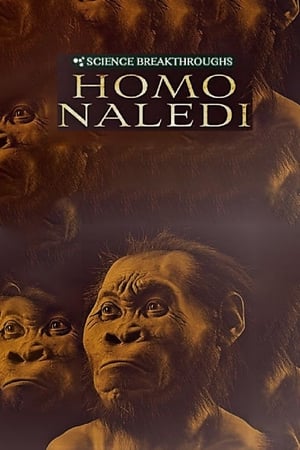
Science Breakthroughs: Homo Naledi
Science Breakthroughs: Homo Naledi Discovered in 2013, new and puzzling finding of small-skulled fossils of Homo Naledi has scientists trying to understand whether Homo Sapiens lived at the same time as Homo Naledi, and how Homo Naledi communities may have lived.
2017
Brains in Danger
For the past 20 years, the world has seen an alarming decrease in IQ and a rise of autism and behavioral disorders. This international scientific investigation reveals how chemicals in objects surrounding us affect our brain, and especially those of fetuses.
2017
Le virus qui soigne
2015
The Dark Gene
The film tells a very personal story from two perspectives: our protagonist is both doctor and patient. As a patient, he has struggled with recurring depression for years, and as a doctor he wants to find out why. The search for the origins of his illness leads him into the realm of his own genes and casts light on the fundamental changes facing modern society as a result of the tremendous progress being made in the field of genetic sequencing. Along the way, he meets a host of people – researchers, artists, visionaries – who have developed their own very individual approach to genetic coding and are drawing attention to the social significance of genetic technology. The film does not restrict itself to a scientific view of the subject but also makes use of artistic visions and more playful approaches to genetic blueprints.
2015
Genetic Me
Is our life predetermined from birth? Does our genes determine our personality and behavior? Is there a criminal gene? This documentary follows the well-known Danish journalist, author, and neurobiologist Lone Frank, who explores her own self with the help of her genetic map and her family history.
2014
Your Inner Fish
How did your body become the complicated, quirky, amazing machine it is today? Anatomist Neil Shubin uncovers the answers in this 3-part science series that looks at human evolution. Using fossils, embryos and genes, he reveals how our bodies are the legacy of ancient fish, reptiles and primates — the ancestors you never knew were in your family tree.
2014
Another World
A feature documentary about the journey of mankind to discover our true force and who we truly are. It is a quest through science and consciousness, individual and planetary, exploring our relationships with ourselves, the world around us and the universe as a whole.
2014
Mind of a Rampage Killer
Can science help us understand these crimes?
2013
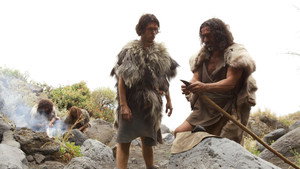
Decoding Neanderthals
Over 60,000 years ago, the first modern humans left their African homeland and entered Europe, then a bleak and inhospitable continent in the grip of the Ice Age. But when they arrived, they were not alone: the stocky, powerfully built Neanderthals had already been living there for hundreds of thousands of years. So what happened when the first modern humans encountered the Neanderthals? Did they make love or war?
2013
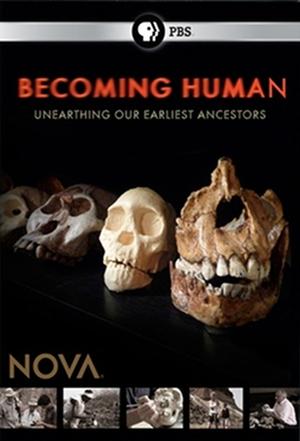
Becoming Human
NOVA's groundbreaking investigation explores how new discoveries are transforming views of our earliest ancestors. Becoming Human explores the origins of us -where modern humans and our capacities for art, invention, and survival came from, and how our social history led to 3-5% of our genetic heritage being Neanderthal. Featuring interviews with world-renowned scientists, footage shot in the trenches as fossils were unearthed, and stunning computer-generated animation, Becoming Human brings early hominids to life, examining how they lived and how we became the creative and adaptable modern humans of today. In gripping forensic detail, we meet: Selam, the amazingly complete remains of a 3 million year-old child, packed with clues to why we split from the apes, came down from the trees, and started walking upright; Turkana Boy -a tantalizing fossil of Homo erectus, the first ancestor to leave Africa and colonize the globe. What led to this first great African exodus?
2009
The Journey of Man: A Genetic Odyssey
Many geneticists and archaeologists have long surmised that human life began in Africa. Dr. Spencer Wells, one of a group of scientists studying the origin of human life, offers evidence and theories to support such a thesis in this PBS special. He claims that Africa was populated by only a few thousand people that some deserted their homeland in a conquest that has resulted in global domination.
2003
Gregor Mendel
1965
Vývoj člověka IV.
1957
Vývoj člověka II.
1954
Vývoj člověka I.
1953