Watch Bontok, Rapeless (2014) Online Free
Two Filipina victims of sexual abuse search the truth behind the finding of a renowned anthropologist: that merely a few generations ago, the Bontok Igorot lived in what seems an unthinkable utopia—a rape-less society.
More Like This

Looking for Simone
In 1949, philosopher and novelist Simone de Beauvoir wrote the groundbreaking The Second Sex, launching a disruptive discourse on women’s oppression and second-class citizenship. This film dissects the origins and relevance of this bible of feminism, charting de Beauvoir’s fact-finding journey across the US to research her book. The timely and fascinating film honors de Beauvoir’s brilliance and limitations, connecting her revolutionary ideas to the pressing issues women face today.
2024
Skate Territory
After a long and successful career as a skater, Veronica has stepped away from competing, but continues her legacy by organizing skateboarding workshops to teach young girls from indigenous communities to skate, and to push them to fight back for the public spaces that have been occupied by men and to practice a sport that also belongs to women.
2024

Show Her the Money
This is a story that’s never been told. SHOW HER THE MONEY addresses how women are getting less than 2% of venture capital funding and demystifies what venture capital is. Featuring rock-star female investors who invest in diverse women entrepreneurs with innovations that will change the world, Show Her The Money reminds us that money is power and women need it to achieve true equality.
2023
out of frame
Six professionals in the audiovisual field share their experiences through a visual and sound sensory journey
2020
Cultura de la Delgadez
Personal stories taken from a survey on how women's lives are affected by a culture obsessed with body image and thinness.
2019
War Baby
Meet Duewand Collier Jr.-Male, 68 years old, American Citizen, a child conceived in the backdrop of the Philippines-American Mutual Defense Treaty, born and raised with Catholic guilt. He has made peace with his past and now tells his story-a story of love.
2019
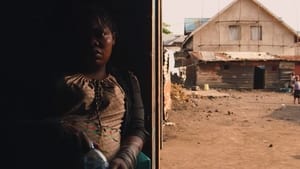
UN Sex Abuse Scandal
A documentary about the UN sex abuse scandal where companies and staff working for the United Nations in the Congo and other Central African countries were involved in rape and sex abuse of local women. There have been over 1700 allegations of sexual exploitation and abuse against UN peacekeepers in the last 15 years. Ramita Navai reveals why it keeps happening despite UN promises to stamp it out. It was produced for Channel 4 and for PBS Frontline – and ARTE. The film won the Robert F Kennedy Human Rights Journalism award for Television – International. Nominated for 2019 Emmy Award for Outstanding Investigative Documentary. Shortlisted for 2019 Grierson Awards for Best Single Documentary – International and Best Current Affairs Documentary. In 2020, the documentary won the 22nd Media Awards for “Children’s Rights in One World” in Germany.
2018
Les Champs de la colère
2017
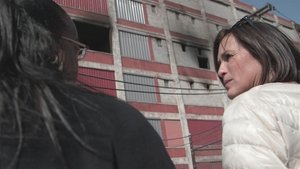
I Am Evidence
The modern criminal justice system is hindered by the fact that countless rape kits remain untested in police evidence storage facilities across the United States. Only eight states currently have laws requiring mandatory testing of rape kits.
2017
Virago: Changing The World One Page at a Time
Despite the 1960s free-love and alternative culture, many women found that their lives and expectations had barely altered. But by the 1970s, the Women's Liberation Movement was causing seismic shifts in the march of the world's events, and women's creativity and political consciousness was soon to transform everything - including the face of publishing and literature. In 1973 a group of women got together and formed Virago Press; an imprint, they said, for 52 per cent of the population. These women were determined to make change - and they would start by giving women a voice, by giving them back their history and reclaiming women's literature.
2016
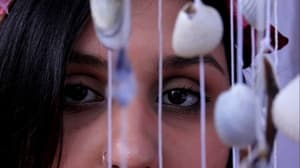
Madrepérola
In a tide oblivious to diversity, pearl oysters live under attack for not fitting into the standards and sizes. This is the story of how their pearls are born.
2015

Regarding Susan Sontag
An intimate study of one of the most influential and provocative thinkers of the 20th century tracking feminist icon Susan Sontag’s seminal, life-changing moments through archival materials, accounts from friends, family, colleagues, and lovers, as well as her own words, as read by Patricia Clarkson.
2014

The Guerilla is a Poet
The tale of an activist’s journey during the turbulent years of Martial Law, until his capture in the mountains and the dark, nine years of imprisonment that followed, leading to his birth as a poet.
2013
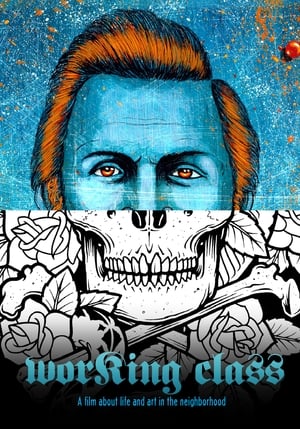
Working Class
Loosely based on Charles Dicken’s book “A Tale of Two Cities”, Working Class tells the tale of underground street artists Mike Giant and Mike Maxwell and their decade long friendship that started with a tattoo. The story is told through the cities they call home by, cutting back and forth between the neighborhoods of San Francisco and San Diego, as the artists talk about their life philosophies and the work they create.
2011
Monumento a Uruçumirim
Manifesto of the Pataxó tribe, with the testimony of the chief José Guajajara, in front of the Monument to Estácio de Sá, where the Tamoios massacre took place in 1567, on the coincident day that celebrates the foundation of the city of Rio de Janeiro, 20 January.
2009

Dead Gay Men and Living Lesbians
As a result of the Holocaust and later, AIDS, the male homosexual community has sustained bitter losses and, according to Praunheim, lesbian women have now placed themselves at the head of the so-called queer movement. The female protagonists in the film represent two different generations; they also incorporate the past and present status of homosexuals in society.
2008

Dixie Chicks: Shut Up and Sing
Shut Up and Sing is a documentary about the country band from Texas called the Dixie Chicks and how one tiny comment against President Bush dropped their number one hit off the charts and caused fans to hate them, destroy their CD’s, and protest at their concerts. A film about freedom of speech gone out of control and the three girls lives that were forever changed by a small anti-Bush comment
2006

Tarnation
Filmmaker Jonathan Caouette's documentary on growing up with his schizophrenic mother -- a mixture of snapshots, Super-8, answering machine messages, video diaries, early short films, and more -- culled from 19 years of his life.
2003
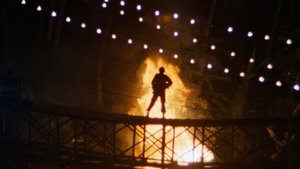
Hearts of Darkness: A Filmmaker's Apocalypse
A chronicle of the production problems — including bad weather, actors' health, war near the filming locations, and more — which plagued the filming of Apocalypse Now, increasing costs and nearly destroying the life and career of Francis Ford Coppola.
1991