Watch Yotsuya Ghost Stories (1936) Online Free
More Like This

Kokuho
Nagasaki, 1964: Following the death of his Yakuza father, 15-year-old Kikuo is taken under the wings of a famous Kabuki actor. Alongside Shunsuke, the actor’s only son, he decides to dedicate himself to this traditional form of theatre. For decades, the two young men grow and evolve together – and one will become the greatest Japanese master of the art of Kabuki.
2025
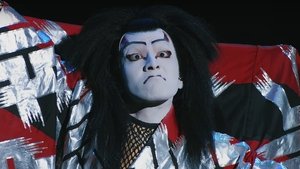
Kabuki Akadō Suzunosuke
Two young swordsmen, Akado Suzunosuke and Tatsumaki Rainoshin, arrive at the city of Edo in their quest to test and improve their skills. Soon they become involved in a conflict against a mysterious group of demonic criminals led by the king of hell, Taira no Masakado — a strugle to which both were destined since the moment they were born.
2022
Hot And Cold
A day in a Hyatt suite gone weird
2020
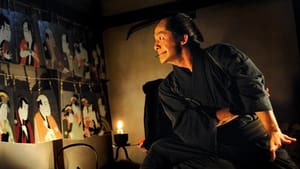
Two Portraits of MIYAGINO
In Edo-era Japan, a ukiyo-e artist languishes in his master’s shadow. Creatively stifled, he finds consolation in the company of a prostitute, and becomes entangled in a love triangle. A mystery emerges involving two portraits and the sudden disappearance of the artist Sharaku. Helmed by Cannes-selected director Tatsuji Yamazaki, the film employs kabuki-inspired sequences and stylised sets.
2010
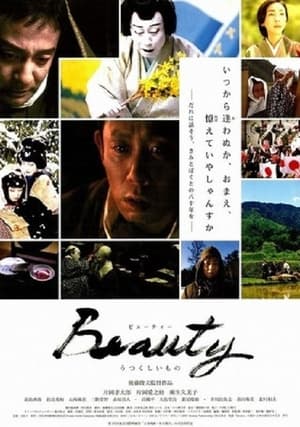
Beauty
Set in a small Nagano village in the 1930s, the film follows Hanji, a young boy captivated by a local kabuki performance. Inspired by Yukio, Hanji learns kabuki with Utako. As they grow, they become skilled actors, performing in a final kabuki before World War II. After the war, Hanji returns to revive kabuki and restore the community’s spirit. In the 1980s, as he nears death, the villagers organise a final performance in his honour, where he performs “Tenryu Koishibuki” for Yukio.
2008

Chūshingura Urabanashi: Nakazō Kyōran
Nakazo is forced by his foster mother, Shun, to practice dance intensively. He is bullied in the Kabuki world, and worries about his future as an actor.
2000

An Actor's Revenge
In Edo Japan, a kabuki actor seeks revenge against the three men who drove his parents to their deaths years ago.
1963
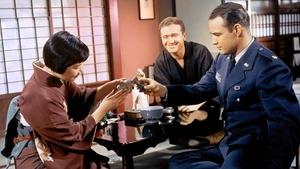
Sayonara
Air Force Major Lloyd Gruver is reassigned to a Japanese air base and is confronted with US racial prejudice against the Japanese people. The issue is compounded because a number of the soldiers become romantically involved with Japanese women, in defiance of US military policy. Ordinarily, a by-the-book officer, Gruver must take a position when a buddy of his, an enlisted man, Joe Kelly, falls in love with a Japanese woman, Katsumi, and marries her. Gruver risks his position by serving as best man at the wedding ceremony.
1957
Zangiku monogatari
Based on the novel by Shofu Muramatsu, the film is dedicated to the actors of the renowned Japanese Kabuki theatre. Set in Japan in 1885, the story follows Kikunosuke Onoe, the adopted son of a famous Kabuki actor. Kikunosuke’s father teaches him professional acting skills, preparing him to become his successor and continue the acting dynasty. However, Kikunosuke leaves his family, much to his father’s dismay, to hone his craft outside of Tokyo and moves to Osaka.
1956
The Story of the Last Chrysanthemum
In late 19th-century Tokyo, Kikunosuke Onoue, the adopted son of a legendary actor, himself an actor specializing in female roles, discovers that the praise he receives is only due to his status as his father's heir. Devastated, he turns to Otoku, a servant of his family, for comfort, and they fall in love. Kikunosuke becomes determined to leave home and develop as an actor on his own merits, and Otoku faithfully joins him.
1939
Irohagana Yotsuya Kaidan
1937
An Actor's Revenge
An onnagata (female impersonator) of a Kabuki troupe avenges his parents' deaths. Remade in 1963 as Yukinojô Henge.
1935
A Story of Floating Weeds
An aging actor returns to a small town with his troupe and reunites with his former lover and illegitimate son, a scenario that enrages his current mistress and results in heartbreak for all.
1934
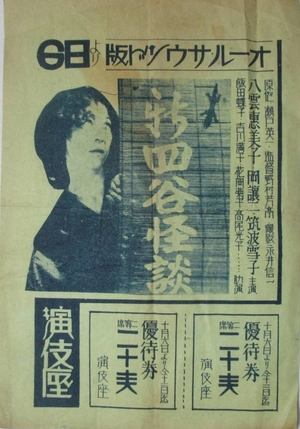
Shin Yotsuya Ghost Story
1932
Oiwa Nagaya
1931
Irohagana Yotsuya Kaidan
1927
Shin Yotsuya Kaidan
1925
Yotsuya Kaidan
1921
Yotsuya Kaidan
1921

Maple Leaf Viewing
A reel of the Noh drama Momiji-gari, in which Danjuro Ichikawa played opposite Onoe Kikugoro V as an ogress who has disguised herself as the Princess Sarashina. Filmed by Shibata Tsunekichi in the open air on a windy day in November 1899, Danjuro would allow only the one take, so that when his fan blew away in mid-performance the scene had to stay. The film re-emerged at the Kikikan theatre in 1907 where it was a great success and inspired a wave of fiction filmmaking based on traditional Japanese narratives.
1899