Watch Maple Leaf Viewing (1899) Online Free
A reel of the Noh drama Momiji-gari, in which Danjuro Ichikawa played opposite Onoe Kikugoro V as an ogress who has disguised herself as the Princess Sarashina. Filmed by Shibata Tsunekichi in the open air on a windy day in November 1899, Danjuro would allow only the one take, so that when his fan blew away in mid-performance the scene had to stay. The film re-emerged at the Kikikan theatre in 1907 where it was a great success and inspired a wave of fiction filmmaking based on traditional Japanese narratives.
Cast
Danjuro Ichikawa, Kikugoro Onoe V
More Like This

Kokuho
Nagasaki, 1964: Following the death of his Yakuza father, 15-year-old Kikuo is taken under the wings of a famous Kabuki actor. Alongside Shunsuke, the actor’s only son, he decides to dedicate himself to this traditional form of theatre. For decades, the two young men grow and evolve together – and one will become the greatest Japanese master of the art of Kabuki.
2025
let me come in
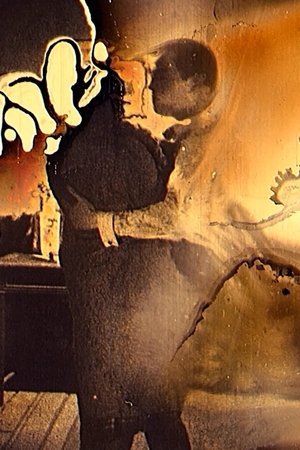
Bill Morrison’s experimental short features decayed film reels from the lost, German silent film Pawns of Passion (1928).
2021
NOVR
As their planet is being ripped apart two young soldiers Ashmal and Zack stumble across something that might be mankind's only hope for survival against an overwhelming alien invasion. A NOVR.
2013

B.O.B.'s Big Break
Dr. Cockroach comes up with a brilliant plan to break themselves out of Area 52 – but to implement the plan, he has to trick B.O.B. into thinking it’s his birthday.
2009
Curiosity
On a quiet night, a young couple find themselves caught up in a nightmarish ordeal after they witness a murderer disposing of a body in this claustrophobic thriller.
2009
The Call of Cthulhu
A dying professor leaves his great-nephew a collection of documents pertaining to the Cthulhu Cult. The nephew begins to learn why the study of the cult so fascinated his grandfather. Bit-by-bit he begins piecing together the dread implications of his grandfather's inquiries, and soon he takes on investigating the Cthulhu cult as a crusade of his own.
2006

Above the Lake
Avant-garde homage to pre-revolution Russian silent movies, and to the poet Aleksandr Blok.
1995
Puff, the Magic Dragon
Jackie is a boy who is so trapped by his fears and doubts that he could not communicate with anyone. Then, a magic dragon named Puff comes to help Jackie by taking his soul force on a wonderous voyage to his island of Honah Lee. Along the way, they have adventures that nurture Jackie's imagination and courage in unorthodox ways.
1978
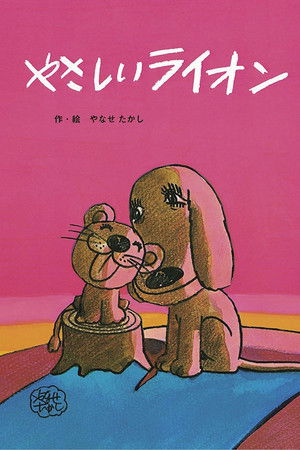
The Kindly Lion
This is an animated version of Yanase Takashi's picture book featuring the friendship between a mother dog, Muku-muku, who lost her puppy, and the baby lion Buru-buru, who lost her mother.
1970
The Pop Show
A Pop Art extravaganza by Fred Mogubgub from the late-1960s, innovative in the use of the quick cut, this film is a parade of pop icons of its time. Features a pre-Playboy, pre-N. O. W. Gloria Steinem.
1966
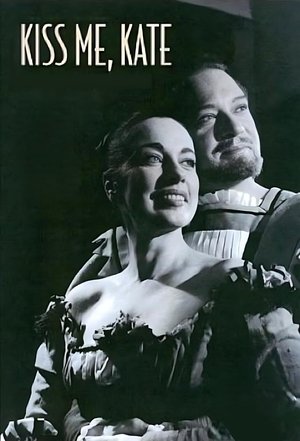
Kiss Me, Kate
Broadcast live on the Hallmark Hall of Fame series on NBC, a pair of divorced actors are brought together to participate in a musical version of The Taming of the Shrew. Of course, the couple seem to act a great deal like the characters they play, and they must work together when mistaken identities get them mixed up with the mafia.
1958

Faust
God and Satan wager on the soul of a learned and prayerful alchemist as part of their eternal war over Earth.
1926

O Fauno das Montanhas
This film is the pearl of his pioneer work in Madeira Island and captures the most of his methodology: good stories taking the most of Madeira's natural scenery, and provoking the audience with some ironic and "double-sense" scenes. The film tells the story of an English girl travelling with her father, a botanic, and a guide from madeira in the deep mountains of the island. The girl has some mental disturbs and is always scaring about an attack from the native man, appearing as a half-man/half-monster.
1926

Eerie Tales
A demon, a reaper, and the ghost of a prostitute read gothic short stories and act them out.
1919
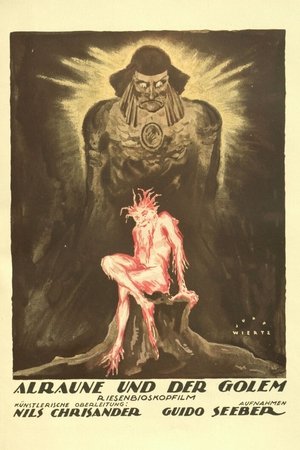
Alraune and the Golem
1919
Birth of Shri Krishna
This film begins with the invocation of 'almighty god' at a river where several people are gathered. The child god Krishna rises out of the water astride the demon snake Kaliya. Then we see Yashoda as she rocks the sleeping Krishna's crib and imagines the god as Gopala. The next scene shows Kamsa fantasizing about Krishna threateningly duplicated many times around him. Kamsa then imagines himself dead as his severed head rises up and descends again. People of all castes pay obeisance to the deity with the title-card: 'may this humble offering be accepted by the Lord'.
1918
The Student of Prague
Prague, Bohemia, 1820. Balduin, a penniless student, falls in love with Countess Margit, a wealthy noblewoman whom he has saved from drowning.
1913
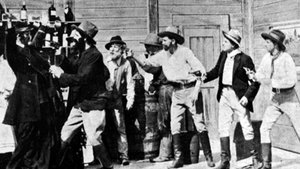
The Story of the Kelly Gang
Just as Galeen and Wegener's Der Golem (1915) can be seen as a testament to early German film artistry, The Story of the Kelly Gang (1906) symbolizes both the birth of the Australian film industry and the emergence of an Australian cinema identity. Even more significantly, it heralds the emergence of the feature film format. However, only fragments of the original production of more than one hour are known to exist, preserved at the National Film and Sound Archive, Canberra; Efforts at reconstruction have made the film available to modern audiences.
1906

Bake Jizo
One of the two earliest horror films ever made. This film is presumed lost.
1898
Resurrection of a Corpse
One of the two earliest horror films ever made. This film is presumed lost. In this black comedy scene, the bottom falls out of a coffin, the corpse tumble out, and is jolted back to life. Short sequences like this, as well as street scenes and dancing geisha girls were the main subjects of early Nippon cinema, pioneered by Shiro Asano and Shibata Tsunekichi from 1897 onwards. In creating dramatic, scenes, film-makers naturally chose the most striking or bizarre. Another undocumented film, recalled by cameraman Shiro Asano.
1898