Watch Windscale 1957: The Nuclear Winter (1996) Online Free
In October 1957, one of the Windscale nuclear reactors caught fire. It was the world's first nuclear accident, attributed to the rush to build atomic weapons. This programme highlights the mistakes leading to a nuclear event which, 40 years on, still takes second place only to Chernobyl.
Cast
Tim Pigott-Smith
More Like This
Iran, Israël et la bombe
2026

Ways of Knowing: A Navajo Nuclear History
The American Southwest holds a dark legacy as the place where nuclear weapons were invented and built. Navajo people have long held this place sacred, and continue to fight for a future that transcends historical trauma. This is their story.
2025
Atomic Reaction
An investigation of Canada's clandestine involvement in the Manhattan Project, from Gilbert LaBine's 1930 discovery of a rare radium deposit in the Northwest Territories to today's ongoing 2.6 billion dollar nuclear waste clean-up project in Port Hope, Ontario. Expert interviews, first hand testimonies, and generational accounts present a nuanced and thought-provoking examination of how these hidden histories have impacted the Indigenous Dene people of the Northwest Territories, Port Hope residents, and other communities worldwide.
2024
Mystery Man of the A-Bomb
Stories of the people who built the first atomic weapons are well known. But what about those who provided the uranium? We look at a mysterious man who derived huge profits from the business of war.
2023
Nuclear Now
With unprecedented access to the nuclear industry in France, Russia, and the United States, Nuclear Now explores the possibility for the global community to overcome the challenges of climate change and energy poverty to reach a brighter future through the power of nuclear energy. Beneath our feet, Uranium atoms in the Earth’s crust hold incredibly concentrated energy. Science unlocked this energy in the mid-20th century, first for bombs and then to power submarines. The United States led the effort to generate electricity from this new source. Yet in the mid-20th century as societies began the transition to nuclear power and away from fossil fuels, a long-term PR campaign to scare the public began, funded in part by coal and oil interests.
2023
A Compassionate Spy
Physicist Ted Hall is recruited to join the Manhattan Project as a teenager and goes to Los Alamos with no idea what he'll be working on. When he learns the true nature of the weapon being designed, he fears the post-war risk of a nuclear holocaust and begins to pass significant information to the Soviet Union.
2022
I'm So Sorry
In a quiet forest, a sign warns of radiation hazard. “Is this the past or the future?” muses the masked figure who appears like a kind of ghost in nuclear disaster areas. At a time when nuclear power may be re-emerging as an alternative to fossil fuels, this calmly observed and compelling tour takes us to places that may serve as a warning.
2021

Le IIIe Reich n'aura pas la bombe
2019
Savagely, silence
December 21, 2015. The image of a fox was captured by a camera inside the unit 2 building at Fukushima No.1 nuclear power plant... A film-essay about contemporary Japan in the aftermath of March 2011 earthquake.
2017
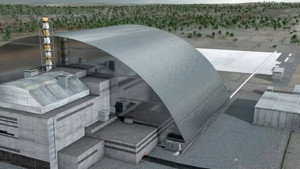
Inside Chernobyl's Mega Tomb
Documentary which follows the construction of a trailblazing 36,000-tonne steel structure to entomb the ruins of the nuclear power plant destroyed in the 1986 Chernobyl disaster.
2016

Dounreay: The Atomic Dream
Documentary telling the story of the rise and fall of a daring experiment into atomic energy as the history of the Dounreay fast reactor is charted by the pioneers involved.
2006
Stockpile: The New Nuclear Menace
Since the collapse of the Soviet Union, the threat of a nuclear war between the USA and Russia has diminished, but the threat posed by nuclear weapons and materials on both sides has increased. As nuclear weapons age, they become unstable and begin to behave in unpredictable ways. This film is the first to go behind the scenes in Arzamas-16 - the Russian nuclear city so secret that it has never appeared on any map - and the American nuclear weapons laboratory at Los Alamos, New Mexico, to see Russian and American bomb designers working together to reduce the risk. Exclusive archive material.
2001
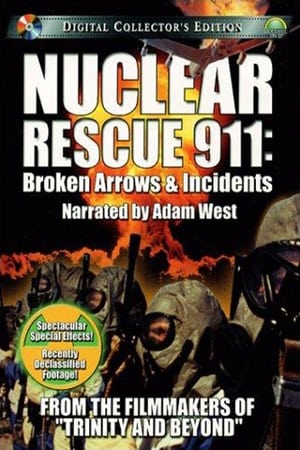
Nuclear Rescue 911: Broken Arrows & Incidents
Since 1950, there have been 32 nuclear weapon accidents, known as "Broken Arrows." A Broken Arrow is defined as an unexpected event involving nuclear weapons that result in the accidental launching, firing, detonating, theft or loss of the weapon. To date, six nuclear weapons have been lost and never recovered.Now, recently declassified documents reveal the history and secrecy surrounding the events known as "Broken Arrows". There have been 32 nuclear weapon accidents since 1950. Six of these nuclear weapons have been lost and never recovered. What does this say about our defense system? What does this mean to our threatened environment? What do we do to rectify these monumental "mistakes"? Using spectacular special effects, newly uncovered and recently declassified footage, filmmaker Peter Kuran explores the accidents, incidents and exercises in the secret world of nuclear weapons.
2001
In Time's Shadow
Drawing upon eye-witness accounts from survivors and participants in the bombing of Hiroshima, this programme shows how both Japan and the United States are still facing enormous problems in coming to terms with the legacy of that fateful August day.
1995
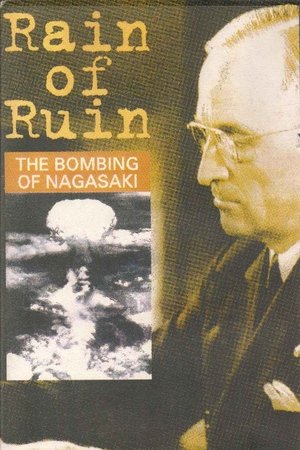
Rain of Ruin: The Bombing of Nagasaki
Scholars and eyewitnesses provide a picture of the 75 hours between the atomic bombings of Hiroshima and Nagasaki and document the contradictions, interrelationships, and ambiguities of politics and military strategy in time of war.
1995

The Journey
Peter Watkins' global look at the impact of military use of nuclear technology and people's perception of it, as well as a meditation on the inherent bias of the media, and documentaries themselves.
1987

Women - For America, For the World
Twenty-two prominent American women discuss their activism for nuclear disarmament and their motivations in seeking the end of the arms race.
1986

We Are the Guinea Pigs
Farmers and parents of young children, who live in the Harrisburg, Pa., area, discuss their fears of radioactive contamination from the Three Mile Island nuclear reactor accident in 1979. Scientists and physicians also expound on the lethal dangers of nuclear power and the risks in containment processes.
1980
Ten Seconds that Shook the World
This film is a factual and chronological account of the events preceding the atomic bombing of Hiroshima during World War II and the significant effect of the atomic bomb on peacetime projects and events of the atomic age.
1963
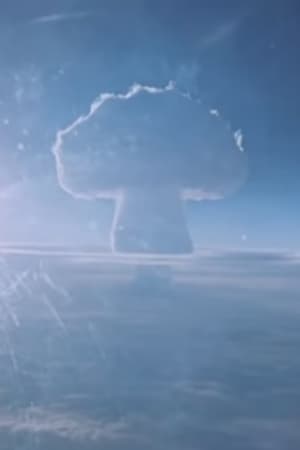
Test of a clean hydrogen bomb with a yield of 50 megatons
Documentary movie about testing of the largest nuclear weapon in history, the Tsar Bomba. Declassified and made available to the public in 2020.
1961