Watch Atomic Reaction (2024) Online Free
An investigation of Canada's clandestine involvement in the Manhattan Project, from Gilbert LaBine's 1930 discovery of a rare radium deposit in the Northwest Territories to today's ongoing 2.6 billion dollar nuclear waste clean-up project in Port Hope, Ontario. Expert interviews, first hand testimonies, and generational accounts present a nuanced and thought-provoking examination of how these hidden histories have impacted the Indigenous Dene people of the Northwest Territories, Port Hope residents, and other communities worldwide.
More Like This
Iran, Israël et la bombe
2026

Ways of Knowing: A Navajo Nuclear History
The American Southwest holds a dark legacy as the place where nuclear weapons were invented and built. Navajo people have long held this place sacred, and continue to fight for a future that transcends historical trauma. This is their story.
2025

Mystery Man of the A-Bomb
Stories of the people who built the first atomic weapons are well known. But what about those who provided the uranium? We look at a mysterious man who derived huge profits from the business of war.
2023
A Compassionate Spy
Physicist Ted Hall is recruited to join the Manhattan Project as a teenager and goes to Los Alamos with no idea what he'll be working on. When he learns the true nature of the weapon being designed, he fears the post-war risk of a nuclear holocaust and begins to pass significant information to the Soviet Union.
2022
The Phenomenon
This documentary examines unidentified aerial phenomenon. With testimony from high-ranking government officials and NASA Astronauts, Senator Harry Reid says it "makes the incredible credible."
2020

Le IIIe Reich n'aura pas la bombe
2019
North Korea: All the Dictator's Men
North Korea has nuclear weapons. How did it manage to get them quietly? Donald Trump is under the impression that as US president he could convince Kim Jong-un, the North Korean leader, to disarm his nuclear weapons and make peace with South Korea. But how was it possible that one of the poorest countries in the world could acquire the knowledge to produce nuclear-tipped rockets?
2018
City 40
Hidden in the heart of Russia, there is a Soviet-era city where thousands of people live and work behind barbed-wire fences monitored by armed guards. It is Ozyorsk (Ozersk), located in the Chelyabinsk Oblast, one of the most polluted places on the planet and home to the largest stockpiles of nuclear material. Its code name: City 40.
2016
Nobody Told Us Anything
Between 1952 and 1967, in the largest Tri-Service operation since the D-Day landings, over 20,000 servicemen participated in British Nuclear Weapons Tests. The development of these superweapons bought our place at the world superpower table. The cost in human terms has never been fully calculated nor appreciated, in the blinding light of the bombs a shadow was cast across the lives of so many people. This documentary tells that story in archive footage and candid interviews with the survivors and their children. Its release is being supported with a collection of art from the ‘Shadow of the Bomb’ exhibition. Inspired by experiences and stories of veterans and their children this thought provoking art sets the scene for the open honest revelations in the film.
2014
The Forgotten Bomb
When the Cold War ended, worry about nuclear weapons receded. But has the nuclear threat really diminished? Join Bud Ryan on a personal and global journey to discover what the bomber can learn from the bombed, and what our prospects look like for finally living in a nuclear-free world. Features interviews with bomb survivors from Hiroshima and Nagasaki, former U.S. Secretary of State George Shultz, authors Gar Alperovitz and Jonathan Schell, and many more.
2011
Stockpile: The New Nuclear Menace
Since the collapse of the Soviet Union, the threat of a nuclear war between the USA and Russia has diminished, but the threat posed by nuclear weapons and materials on both sides has increased. As nuclear weapons age, they become unstable and begin to behave in unpredictable ways. This film is the first to go behind the scenes in Arzamas-16 - the Russian nuclear city so secret that it has never appeared on any map - and the American nuclear weapons laboratory at Los Alamos, New Mexico, to see Russian and American bomb designers working together to reduce the risk. Exclusive archive material.
2001
Nuclear Rescue 911: Broken Arrows & Incidents
Since 1950, there have been 32 nuclear weapon accidents, known as "Broken Arrows." A Broken Arrow is defined as an unexpected event involving nuclear weapons that result in the accidental launching, firing, detonating, theft or loss of the weapon. To date, six nuclear weapons have been lost and never recovered.Now, recently declassified documents reveal the history and secrecy surrounding the events known as "Broken Arrows". There have been 32 nuclear weapon accidents since 1950. Six of these nuclear weapons have been lost and never recovered. What does this say about our defense system? What does this mean to our threatened environment? What do we do to rectify these monumental "mistakes"? Using spectacular special effects, newly uncovered and recently declassified footage, filmmaker Peter Kuran explores the accidents, incidents and exercises in the secret world of nuclear weapons.
2001
In Time's Shadow
Drawing upon eye-witness accounts from survivors and participants in the bombing of Hiroshima, this programme shows how both Japan and the United States are still facing enormous problems in coming to terms with the legacy of that fateful August day.
1995
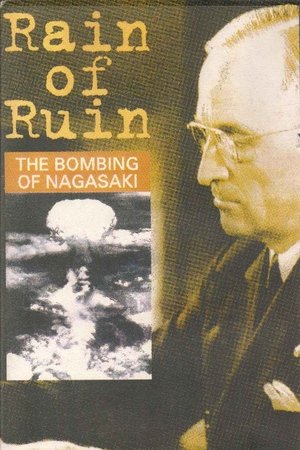
Rain of Ruin: The Bombing of Nagasaki
Scholars and eyewitnesses provide a picture of the 75 hours between the atomic bombings of Hiroshima and Nagasaki and document the contradictions, interrelationships, and ambiguities of politics and military strategy in time of war.
1995

The Journey
Peter Watkins' global look at the impact of military use of nuclear technology and people's perception of it, as well as a meditation on the inherent bias of the media, and documentaries themselves.
1987

Women - For America, For the World
Twenty-two prominent American women discuss their activism for nuclear disarmament and their motivations in seeking the end of the arms race.
1986
Prophecy
This rare documentary is one of the very last efforts from preeminent documentarist/activist Susumu Hani best known for his feature films. This one is a short documentary about the 1945 atomic bombing and its devastating consequences. The film came out of the "10 Foot Movement". A movement organized by the Japan Peace Museum, which mobilized Japanese citizen activists to buy back small segments of film footage of the effects of the atomic bomb from the U.S. National Archives. The film combines recent footage of survivors of the atomic bomb with American archival footage, portraying the sorrow of atomic bomb survivors in the Cold War period.
1982
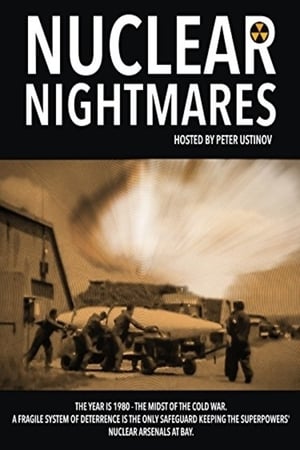
Nuclear Nightmares
Peter Ustinov hosts this haunting 1980 documentary exploring the world's nuclear weaponry and the fragile system that deters either side from initiating the first nuclear strike. Although the world's political climate has mellowed since the Cold War era, Nuclear Nightmares takes the viewer back in time to gain a perspective of what it was like to live under a very real nuclear threat.
1979
Ten Seconds that Shook the World
This film is a factual and chronological account of the events preceding the atomic bombing of Hiroshima during World War II and the significant effect of the atomic bomb on peacetime projects and events of the atomic age.
1963
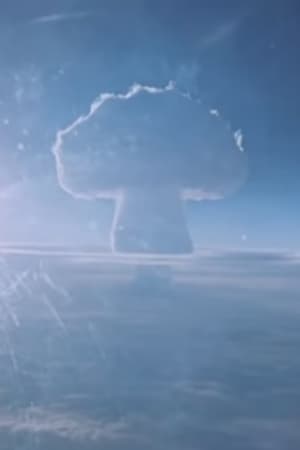
Test of a clean hydrogen bomb with a yield of 50 megatons
Documentary movie about testing of the largest nuclear weapon in history, the Tsar Bomba. Declassified and made available to the public in 2020.
1961