Watch Who killed the Neanderthal? (2018) Online Free
Neandertal man disappeared abruptly 30,000 years ago. Who was that "other" man and what is the most plausible hypothesis leading to his extinction? An investigation using all current knowledge available tries to answer these questions.
Cast
Anne Cardona, Damien Cochereau, Thierry Frémont, Agnès Jamonneau, Sara Malaterre, Aruna Shields, Simon Paul Sutton
More Like This
Primitif
2026

Chauvet: Humanity's First Great Masterpiece
In December 1994, an archaeological marvel hidden deep inside France's Gorges de l'Ardèche was revealed to the modern world for the very first time: the Chauvet cave. Scientists immediately recognised the importance of this discovery. Sealed by a landslide more than 20,000 years ago, the cave had been extraordinarily well preserved. With over 1,000 paintings adorning its walls, Chauvet is a cave art jewel. How were the hidden chambers first formed? Who created the extraordinary art? And how can we preserve it for future generations? Follows a 30-year archaeological, geological and artistic adventure as scientists endeavour to understand and conserve this exceptional record of humanity's distant past.
2025

La grotte Chauvet — hors du temps
2024

Néandertal : Qui a tué notre cousin ?
2023

Attenborough and the Mammoth Graveyard
Sir David Attenborough joins an archaeological dig uncovering Britain's biggest mammoth discovery in almost 20 years. In 2017, in a gravel quarry near Swindon, two amateur fossil hunters found an extraordinary cache of Ice Age mammoth remains and a stone hand-axe made by a Neanderthal.
2021
Persépolis, les secrets de l'empire perdu
2021
Homo sapiens, the New Origins
In Morocco, new excavations on the site of Jebel Irhoud upset the generally accepted view of the dating of the appearance of man.
2020
Meeting Neanderthal
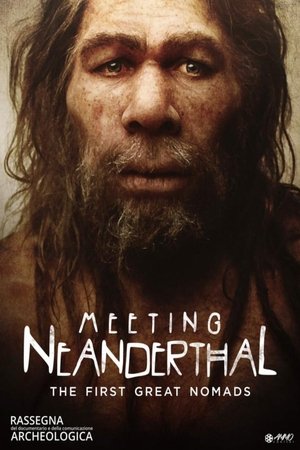
Long before the arrival of Homo Sapiens, the Neanderthals wandered the vast European plains, and regularly drowned into the Ice Ages. Several discoveries, in France and England, and especially on the island of Jersey, now allow archaeologists to understand the lifestyle of those first great nomads of Europe, that lasted 300.000 years.
2019

Sharkwater Extinction
Discovering that sharks are being hunted to extinction, and with them the destruction of our life support system - activist and filmmaker Rob Stewart embarks on a dangerous quest to stop the slaughter. Following the sharks - and the money - into the elusive pirate fishing industry, Stewart uncovers a multi-billion dollar scandal that makes us all accomplices in the greatest wildlife massacre ever known.
2018
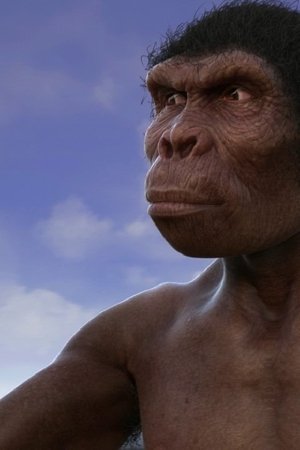
Evolution from ape to man
For Millions of years, our planet has been floating in space. Millions of creatures have lived on its surface. Many a quaint being was among them, but they affected only our, human imagination, for in the evolutionary struggle we are the only ones who have obtained the advantage of reason.
2017
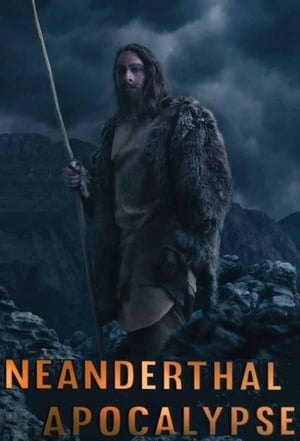
Neanderthal Apocalypse
40, 000 years ago the steppes of Eurasia were home to our closest human relative, the Neanderthals. Recent genetic and archaeological discoveries have proven that they were not the dim-witted cave dwellers we long thought they were. In fact, they were cultured, technologically savvy and more like us than we ever imagined! So why did they disappear? We accompany scientists on an exciting search for an answer to this question and come to a startling conclusion …
2015
Les génies de la grotte chauvet
2015
Yaguareté, la última frontera
2014
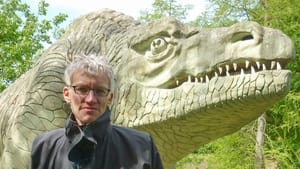
Dinosaurs, Myths and Monsters
Tom Holland explores how our ancestors sought to explain the remains of dinosaurs and other giant prehistoric creatures, and how bones and fossils have affected human culture.
2011

Where Did We Come From?
Host Neil deGrasse Tyson tackles one of science's major challenges in each segment of Where Did We Come From? He will guide us as he explores dramatic discoveries and the frontiers of research that connect each central, provocative mystery. Program includes: Revealing the Origins of Life; Origins of the Solar System; Lice and Human Evolution; and Profile: Andre Fenton
2011
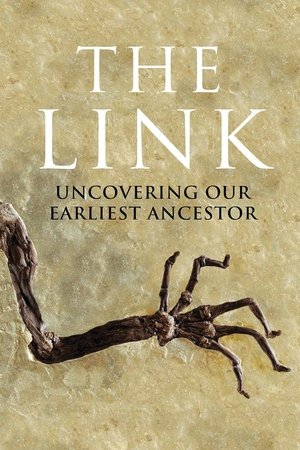
Uncovering Our Earliest Ancestor: The Link
Explores the story behind the discovery of an early primate fossil, Darwinius masillae, nicknamed Ida, in a shale quarry in Germany. The fossil is believed to be around 47 million years old, and is extraordinarily well-preserved. Originally unearthed in 1983, Ida lay in the hands of a private collector for 20 years before it was shown to a Norwegian paleontologist, Dr Jørn Hurum. Realising that Ida could turn out to be a significant missing link between modern primates, lemurs and lower mammals, he persuaded the Natural History Museum in Oslo to purchase the fossil and assembled an international team of experts to study it. Their findings were announced in a press conference and the online publication of a scientific paper on 19 May 2009.
2009
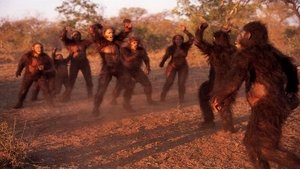
Walking with Cavemen
The great follow-up to 'Walking with Dinosaurs' and 'Walking with Beasts', presented by Professor Robert Winston, explains the story of human evolution.
2003
Living with Dinosaurs
David Attenborough discovers that the descendants of the dinosaur age still thrive today. But how did they survive the cataclysmic events that wiped out their ancient ancestors?
2000
Endangered Hawaiʻi
Endangered Hawaiʻi produced by American Bird Conservancy (ABC) with funding by the National Fish and Wildlife Foundation, and narrated by actor Richard Chamberlain. The film explores the on-going bird extinction crisis in Hawaiʻi that has led to about 70 percent of all native bird species in the state becoming extinct. With beautiful footage of many of Hawaiʻi’s stunning birds and their habitats, the film showcases the unique biodiversity of our 50th state and explains the environmental crisis that has caused Hawaiʻi to become known as the “Bird Extinction Capital of the World.” It describes the nature of the crisis, its causes, and current efforts to implement solutions for species on the brink.
2000
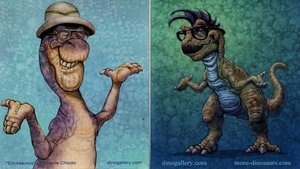
Dinosaurs, Dinosaurs, Dinosaurs
Gary is turning into a dinosaur, and Eric must find the cure. This becomes a globetrotting journey into everything dino while searching for the magic waters needed to stop Gary's odd transformation. Will Eric be too late? Get ready to meet the Garysaurus!
1985