Watch Where Did We Come From? (2011) Online Free
Host Neil deGrasse Tyson tackles one of science's major challenges in each segment of Where Did We Come From? He will guide us as he explores dramatic discoveries and the frontiers of research that connect each central, provocative mystery. Program includes: Revealing the Origins of Life; Origins of the Solar System; Lice and Human Evolution; and Profile: Andre Fenton
Cast
Neil deGrasse Tyson
More Like This
Préhistoire en Asie : L'Aventure humaine
In the docudrama "Les Derniers Secrets de l'humanité" (The Last Secrets of Humanity), author and director Jacques Malaterre and paleoanthropologist and professor at the Collège de France Yves Coppens reveal the incredible adventure of Asian prehistory. How does science help to reconstruct these bygone times in images? Thanks to discoveries made at excavation sites and in analysis and genetics laboratories, researchers are now revealing this distant, vanished past.
2024
Children of Stars
Astrophysicist Jean Surdej brings a small group of teenage pupils on a trip to the Lofoten islands in northern Norway, for a very special class on the solar system. Using the geography of the archipelago to illustrate the distances between the planets, they journey through space by car and ferry, with the picturesque landscapes standing in for the black emptiness that surround the heavenly bodies. A masterstroke of both pedagogy and filmmaking, Children of Stars is a captivating documentary about humanity's place in the grand scheme of things.
2023
Les Derniers Secrets de l'humanité
This series incorporates the latest animated 3D films to explore recent discoveries about human history, especially in Asia.
2023
Pablo From Neanderthal
What would have happened if the Neanderthals had prevailed over Homo Sapiens? How would our species have evolved? How does art relate to evolution, and why in the world does evolution behave like a bricoleur? Last of all, just what does Marcel Duchamp have to do with all of this? This film is neither a documentary nor a portrait of the artist Pable Echaurren; it’s a kaleidoscopic meditation on our past, present and future.
2022
Intelligence artificielle - Quand les émotions s'en mêlent
With the rapid advancements in artificial intelligence, the line between humans and machines continues to blur, and everything is evolving at an astonishing pace as this technology offers tantalizing promises. However, some researchers, including 2024 Nobel Prize in Physics laureate Geoffrey Hinton, warn about its exponential power. A deep dive into the dizzying complexities of AI.
2021
Human By Chance?
If we compare ourselves with our genetically closest living relatives, the chimpanzees, we have few physical advantages. We are far weaker, cannot move nearly as fast, and do not have the same climbing capabilities. Instead, humans excel in areas such as architecture, religion, science, language, writing, art, culture, and ideas. These achievements are due to our larger brain that contain billions of neurons. It was the rapid growth of our brain, originating about 2 million years ago, that allowed us to be the predominant species of the world. What caused this rapid growth of our cerebral cortex? Researchers worldwide have asked this question for many years, but now there finally seems to be an answer.
2020
Searching for Skylab, America's Forgotten Triumph
The first American space station Skylab is found in pieces scattered in Western Australia. Putting these pieces back together and re-tracing the Skylab program back to its very conception reveals the cornerstone of human space exploration.
2019
Homo Spatius
Can Homo sapiens evolve into Homo spatius? For over 50 years now, we have been testing our human nature in our effort to conquer outer space, and still 30 years away from a possible human exploration of Mars, a question remains: Can our body take such travels? Will it ever adapt? Combining human adventure and the exploration of the human body, this film offers unique insights into the physical and psychological effects of space travel on the Astronauts and measures the impact on medical sciences.
2018
The squatters’ Return
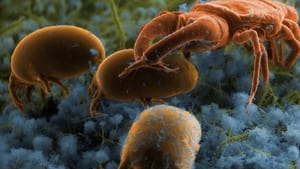
Lice, bedbugs, fleas, mites, mosquitoes, ticks, crab lice, which we believed for a moment we had gotten rid of, once again proliferate. Bedbugs invade city centers, lice are doing most well, the Tiger mosquito is on the way to Germany, ticks abound. Why are they back? How can we eliminate rapidly these very unwanted guests? Scientists point the finger at global warming, our too well insulated homes, our lifestyle changes, but also the genetic mutations of these invaders. If some parasites cause minor afflictions, others are vectors of very disabling diseases such as Lyme disease. Embark on a scientific investigation to understand the unexpected return of these bloodsuckers and the potential risks to our health.
2018

Miniverse
What if you could get behind the wheel and race through space? We scale down the Solar System to the continental United States and place the planets along the way to better appreciate the immense scale of the Universe. See space as never before, with Mars looming over the Freedom Tower and Jupiter towering above the Lincoln Memorial. Join former astronaut Chris Hadfield - a YouTube sensation for his performance of David Bowie’s “Space Oddity” aboard the International Space Station - and his interstellar hitchhikers Michio Kaku and astronomers Derrick Pitts and Laura Danly. It’s a joyride from coast to coast - and from the sun to Pluto.
2017
Cassini's Grand Finale
To help visualize the dramatic final chapter in Cassini's remarkable story, NASA's Jet Propulsion Laboratory produced this short film that features beautiful computer-generated animation, thoughtful narration and a rousing score. Producers at JPL worked with filmmaker Erik Wernquist, known for his 2014 short film "Wanderers," to create a stirring finale video befitting one of NASA's most successful missions of exploration.
2017
Dawn of Humanity
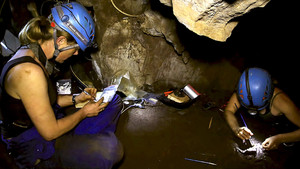
Nova and National Geographic present exclusive access to an astounding discovery of ancient fossil human ancestors.
2015
New Horizons
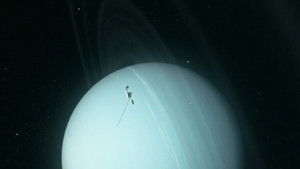
A brief visualisation of NASA’s historic spacecrafts Mariner, Pioneer, Voyager, and Dawn, exploring the solar system, culminating in the New Horizons mission.
2015
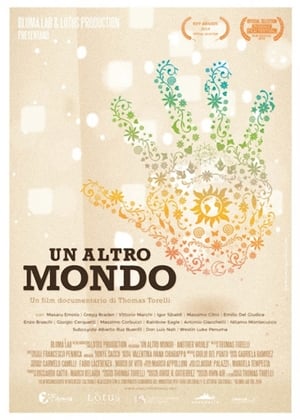
Another World
A feature documentary about the journey of mankind to discover our true force and who we truly are. It is a quest through science and consciousness, individual and planetary, exploring our relationships with ourselves, the world around us and the universe as a whole.
2014
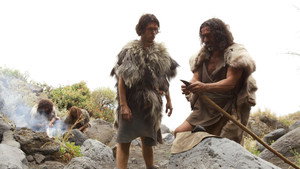
Decoding Neanderthals
Over 60,000 years ago, the first modern humans left their African homeland and entered Europe, then a bleak and inhospitable continent in the grip of the Ice Age. But when they arrived, they were not alone: the stocky, powerfully built Neanderthals had already been living there for hundreds of thousands of years. So what happened when the first modern humans encountered the Neanderthals? Did they make love or war?
2013
The Age of Transitions
The cutting edge group known as transhumanists see a beautiful future brought about by artificial intelligence, life extension, and cybernetics. What one must realize before getting carried away with such utopian dreams is that transhumanism was born out of the elitist pseudo-science eugenics. This documentary provides vital information on the history of eugenics and its new cutting edge transformation.
2009
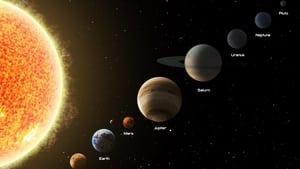
The Planets

Planets of the Sun
An Educational Favorites VHS from the NATURE SERIES featuring Leonard Nimoy
1985
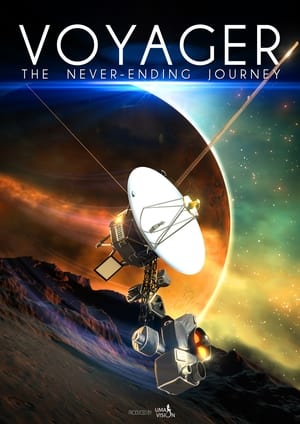
Voyager: Never Ending Journey
The show tells a thrilling story of the most remarkable space mission in human history.

Mysteries from Beyond Earth
Narrator Lawrence Dobkin examines unusual paranormal activities and conspiracy theories in several eerie segments. Subjects include flying saucers and alien encounters, the disappearance of Atlantis, the Bermuda Triangle and the origins of Bigfoot, telekinesis, witchcraft, and the unusual notion that human evolution and technology might have been moved forward with assistance from intelligent extraterrestrial beings.
1975