Watch Neanderthal Apocalypse (2015) Online Free
40, 000 years ago the steppes of Eurasia were home to our closest human relative, the Neanderthals. Recent genetic and archaeological discoveries have proven that they were not the dim-witted cave dwellers we long thought they were. In fact, they were cultured, technologically savvy and more like us than we ever imagined! So why did they disappear? We accompany scientists on an exciting search for an answer to this question and come to a startling conclusion …
Cast
Demetri Goritsas, Peter Muggleworth, Eric Supensky
More Like This
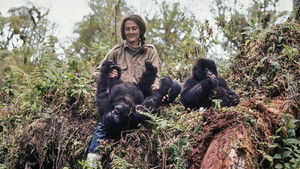
Dian Fossey: Ihr Leben für die Gorillas
She was the first to study gorillas in their natural environment: the high mountains of Rwanda, where she settled in 1967. For nearly twenty years, Dian Fossey lived with the gorillas, observed their behavior, and changed the way people viewed them. Her relentless fight against poaching prevented the species from becoming extinct. But in December 1985, the primatologist was murdered, and the mystery surrounding her death remains unsolved. Former colleagues, scientists, and biographers shed light on the impact of her work, but also on the darker sides of her personality and her uncompromising commitment.
2025
Tautavel : vivre en Europe avant Néandertal
2024
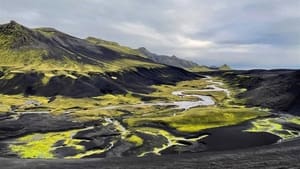
Great natural monuments - Iceland
The fascinating landscape formations of Iceland in the North Atlantic bear witness to the beauty and primal power of nature. They were created through the interaction of powerful volcanic, geological and biological processes that have been changing the face of the earth for billions of years. This is what the Earth might have looked like four billion years ago. Iceland is the realm of ice and fire. Nowhere else is there such a high density of volcanoes. The landscapes, which are continually reshaped by eruptions, make the island a natural laboratory full of clues about the formation and development of the earth. The documentary follows a group of scientists through the most active areas of Iceland, along a mountain range that has emerged from the ocean. On the slopes of the volcanoes, in the fog of the fumaroles and on streams and rivers, the three researchers explore how the first forms of life populated the earth's surface and in what evolutionary steps they took over the earth.
2023

Yarigai
2023
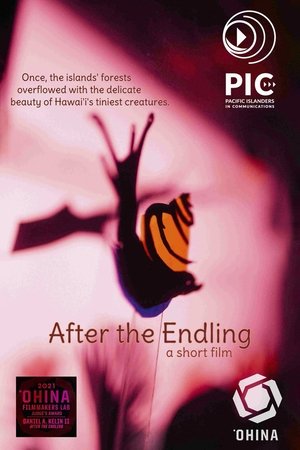
After the Endling
A shadow puppet film inspired by the story of an extinct Hawaiian tree snail (pūpū kani oe) named Lonely George.
2022
Supervolcan Yellowstone : Menace sur la planète ?
2022

Intelligence artificielle - Quand les émotions s'en mêlent
With the rapid advancements in artificial intelligence, the line between humans and machines continues to blur, and everything is evolving at an astonishing pace as this technology offers tantalizing promises. However, some researchers, including 2024 Nobel Prize in Physics laureate Geoffrey Hinton, warn about its exponential power. A deep dive into the dizzying complexities of AI.
2021
One Strange Rock
A mind-bending, thrilling journey exploring the fragility and wonder of planet Earth, one of the most peculiar, unique places in the entire universe, brought to life by the only people to have left it behind – the world’s most well known and leading astronauts. This edit combined episodes one and ten to create a new movie.
2018
Dawn of Humanity
Nova and National Geographic present exclusive access to an astounding discovery of ancient fossil human ancestors.
2015
Another World
A feature documentary about the journey of mankind to discover our true force and who we truly are. It is a quest through science and consciousness, individual and planetary, exploring our relationships with ourselves, the world around us and the universe as a whole.
2014
Lava Land - Glowing Hawaii
Hawaii, with its tropical rainforests and diverse coral reef is a spectacular natural paradise for travellers, surfers and all fans of breathtaking sandy beaches and lush green mountains. But life on the American island chain also has a dangerous side: permanently active volcanoes, lava caves, and even burning lava pours into the sea! Here you can see black smoke rise up, spray the red-hot magma into the sky and feel how the earth trembles. Located on the Pacific plate is unusual for volcanoes, Hawaii is thus researchers a fascinating destination. At Kilauea, the most active volcano on earth, the inhabitants have to live in constant danger found over the centuries cope. Lava Land - Glowing Hawaii takes you into the world of researchers and residents on the Big Iceland, the largest island of Hawaii.
2013
Decoding Neanderthals
Over 60,000 years ago, the first modern humans left their African homeland and entered Europe, then a bleak and inhospitable continent in the grip of the Ice Age. But when they arrived, they were not alone: the stocky, powerfully built Neanderthals had already been living there for hundreds of thousands of years. So what happened when the first modern humans encountered the Neanderthals? Did they make love or war?
2013
Lon Marum
A TV-hour length documentary film depicting the relationship between language, culture, place, music, tradition, and magic on an active volcano, in the Pacific nation of Vanuatu, on the island of Ambrym.
2012
The Neanderthals’ Dark Secret
49,000 year old Neanderthal bones have been discovered by chance in a remote, mountainous region of Northern Spain. The bones may help solve the biggest Neanderthal puzzle of all – why we are here today and Neanderthals are not. ‘The Neanderthals’ dark Secret’ revolves around ongoing investigations deep inside the forbidding subterranean cave system called El Sidrón. Here, Palaeontologist Antonio Rosas and Archaeologist Marco de la Rasilla are in their 11th year of excavation. Bones from at least 12 people and 400 stone tool fragments have been recovered. We’ll bring these people back from the past. Our haunting, hologram-like Neanderthal characters, will communicate to the scientists of today, as they unlock the secrets of El Sidrón. Many mysteries surround the site, foremost, how the bones and tools came to be here in the first place. The remains aren’t weathered nor do they show signs of scavenging from large animals.
2012

Mount St. Helens: 30 Years of Change
A look at the people, history, and recovery of the mountain since the eruption in 1980.
2011
The Age of Transitions
The cutting edge group known as transhumanists see a beautiful future brought about by artificial intelligence, life extension, and cybernetics. What one must realize before getting carried away with such utopian dreams is that transhumanism was born out of the elitist pseudo-science eugenics. This documentary provides vital information on the history of eugenics and its new cutting edge transformation.
2009
Encounters at the End of the World
Acclaimed filmmaker Werner Herzog travels to Antarctica, where he finds a desolate, beautiful landscape, largely untouched by human hands, and a group of truly unique people who risk their lives to study it. Centered at McMurdo Station, the United States' largest Antarctic research center, Herzog explores the minds of the scientists willing to abandon civilization and endure volatile conditions to learn more about the continent's wildlife and awe-inspiring natural wonders.
2007
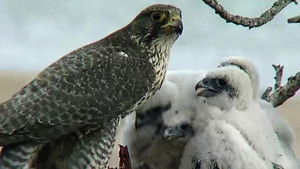
The Barrens Quest
This feature documentary examines the destruction of the tundra barrens of northern Canada for mineral mining, including that of Canadian diamonds. Many species have been threatened by this development, including the caribou and the Eskimo Curlew, a bird that flew the sky in thousands which is now nearly extinct. This film makes a compelling case for planned conservation in one of the last unspoiled wilderness regions left in the world.
1996
Exploration du volcan Niragongo
Short Belgian documentary on volcanos.
1959
Les Eaux souterraines
Short Belgian documentary on volcanos.
1955