Watch Decoding Neanderthals (2013) Online Free
Over 60,000 years ago, the first modern humans left their African homeland and entered Europe, then a bleak and inhospitable continent in the grip of the Ice Age. But when they arrived, they were not alone: the stocky, powerfully built Neanderthals had already been living there for hundreds of thousands of years. So what happened when the first modern humans encountered the Neanderthals? Did they make love or war?
Cast
Lance Lewman
More Like This
Dans la peau des premiers paysans français
2026
Echoes of the Ancients: A Journey through Neanderthal Lives
Echoes of the Ancients explores the lives, genes, and legacy of Neanderthals through science, archaeology, and art. It reveals the deep roots of human identity in a visually stunning and intellectually rich journey across prehistoric Europe.
2025
Tautavel : vivre en Europe avant Néandertal
2024
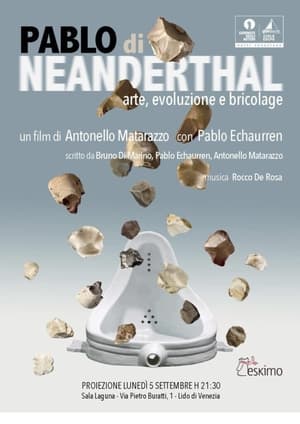
Pablo From Neanderthal
What would have happened if the Neanderthals had prevailed over Homo Sapiens? How would our species have evolved? How does art relate to evolution, and why in the world does evolution behave like a bricoleur? Last of all, just what does Marcel Duchamp have to do with all of this? This film is neither a documentary nor a portrait of the artist Pable Echaurren; it’s a kaleidoscopic meditation on our past, present and future.
2022
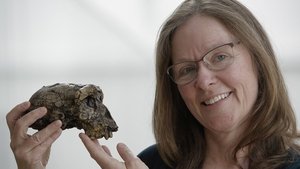
Out Of Europe
Looking at whether the history of early human evolution should be rewritten. For decades, most experts have been convinced that Africa is the cradle of mankind and many fossil finds from Kenya, Ethiopia, South Africa and Chad seemed to prove it.
2020
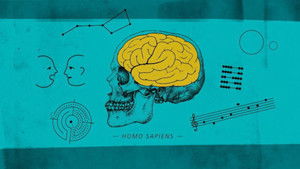
Human By Chance?
If we compare ourselves with our genetically closest living relatives, the chimpanzees, we have few physical advantages. We are far weaker, cannot move nearly as fast, and do not have the same climbing capabilities. Instead, humans excel in areas such as architecture, religion, science, language, writing, art, culture, and ideas. These achievements are due to our larger brain that contain billions of neurons. It was the rapid growth of our brain, originating about 2 million years ago, that allowed us to be the predominant species of the world. What caused this rapid growth of our cerebral cortex? Researchers worldwide have asked this question for many years, but now there finally seems to be an answer.
2020
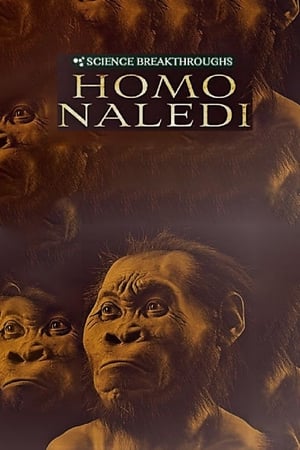
Science Breakthroughs: Homo Naledi
Science Breakthroughs: Homo Naledi Discovered in 2013, new and puzzling finding of small-skulled fossils of Homo Naledi has scientists trying to understand whether Homo Sapiens lived at the same time as Homo Naledi, and how Homo Naledi communities may have lived.
2017
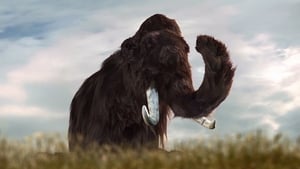
Mammoths: Giants of the Ice Age
Follow one mammoth expert as he traces the legendary giants from Africa to the Yukon.
2014

Another World
A feature documentary about the journey of mankind to discover our true force and who we truly are. It is a quest through science and consciousness, individual and planetary, exploring our relationships with ourselves, the world around us and the universe as a whole.
2014
Titans of the Ice Age
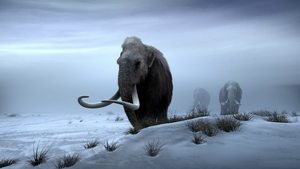
Titans of the Ice Age transports viewers to the beautiful and otherworldly frozen landscapes of North America, Europe and Asia ten thousand years before modern civilization. Dazzling computer-generated imagery brings this mysterious era to life - from saber-toothed cats and giant sloths to the iconic mammoths, giants both feared and hunted by prehistoric humans.
2013
Woolly Mammoth: Secrets from the Ice
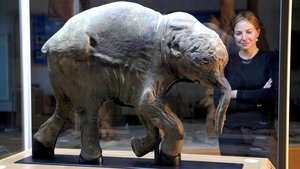
Woolly Mammoth: Secrets from the Ice is a documentary presented by English anatomist Dr. Alice Roberts that reveals some of the secrets of one of the most widely known extinct animals ever. Humans have been transfixed by the Wolly Mammoth since the end of the last ice age when there were still herds of them roaming the continents of Asia and Europe. Despite many people knowing about the great Woolly Mammoth until recently very little was known about them despite ancient humans living along side them for so long; few documented accounts exist.
2012
Ice Age Death Trap
In a race against developers in the Rocky Mountains, paleontologists uncover a unique fossil site packed with astonishingly well-preserved bones of mammoths, mastodons, and other giant extinct beasts. The discovery opens a highly focused window on the vanished world of the Ice Age in North America.
2012
The Neanderthals’ Dark Secret
49,000 year old Neanderthal bones have been discovered by chance in a remote, mountainous region of Northern Spain. The bones may help solve the biggest Neanderthal puzzle of all – why we are here today and Neanderthals are not. ‘The Neanderthals’ dark Secret’ revolves around ongoing investigations deep inside the forbidding subterranean cave system called El Sidrón. Here, Palaeontologist Antonio Rosas and Archaeologist Marco de la Rasilla are in their 11th year of excavation. Bones from at least 12 people and 400 stone tool fragments have been recovered. We’ll bring these people back from the past. Our haunting, hologram-like Neanderthal characters, will communicate to the scientists of today, as they unlock the secrets of El Sidrón. Many mysteries surround the site, foremost, how the bones and tools came to be here in the first place. The remains aren’t weathered nor do they show signs of scavenging from large animals.
2012

Ao: The Last Hunter
When his clan, including his wife and baby girl Néa, are massacred, Ao, a desperate Neandertal man, decides to leave the North country where he has been living for the South where he was born. His aim is to join his twin brother, from whom he was separated when he was nine. On his long and adventurous way home, he meets Aki, a Homo Sapiens woman...
2010
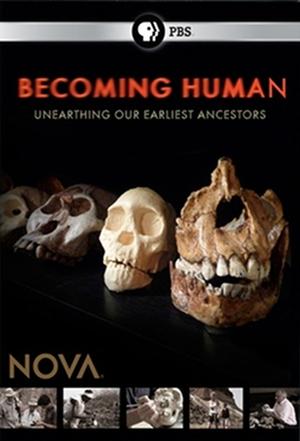
Becoming Human
NOVA's groundbreaking investigation explores how new discoveries are transforming views of our earliest ancestors. Becoming Human explores the origins of us -where modern humans and our capacities for art, invention, and survival came from, and how our social history led to 3-5% of our genetic heritage being Neanderthal. Featuring interviews with world-renowned scientists, footage shot in the trenches as fossils were unearthed, and stunning computer-generated animation, Becoming Human brings early hominids to life, examining how they lived and how we became the creative and adaptable modern humans of today. In gripping forensic detail, we meet: Selam, the amazingly complete remains of a 3 million year-old child, packed with clues to why we split from the apes, came down from the trees, and started walking upright; Turkana Boy -a tantalizing fossil of Homo erectus, the first ancestor to leave Africa and colonize the globe. What led to this first great African exodus?
2009

Mysteries from Beyond Earth
Narrator Lawrence Dobkin examines unusual paranormal activities and conspiracy theories in several eerie segments. Subjects include flying saucers and alien encounters, the disappearance of Atlantis, the Bermuda Triangle and the origins of Bigfoot, telekinesis, witchcraft, and the unusual notion that human evolution and technology might have been moved forward with assistance from intelligent extraterrestrial beings.
1975

Footprints in Stone
A key piece of the Paluxy Human Track narrative that swept the country's creation-evolution dialogue in the 1970s and 1980s and cemented the claims that dinosaur and human track ways were preserved in the Paluxy River in the public sphere. Originally release in January 1973, the film was considered lost media by the 1980's but a 16mm cut of the film resurfaced in 2023.
1973
Vývoj člověka IV.
1957
Vývoj člověka II.
1954
Vývoj člověka I.
1953