Watch Way Beyond (2022) Online Free
The Future Circular Collider is the machine of the future. Thanks to it, we will finally be able to go back in time to the origin of our universe. But which way do we go to set up the largest scientific instrument of all time? Between metaphysics and underground tunnels, a story of the preparations or how men are ready to move mountains for more knowledge.
More Like This
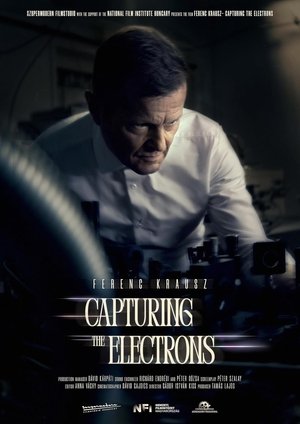
Capturing the Electrons
Capturing the Electrons documents the life and career of Nobel Prize-winning Hungarian physicist Ferenc Krausz. His research team has generated and measured the first attosecond light pulse and used it for capturing electrons' motion inside atoms, marking the birth of attophysics. In 2023, jointly with Pierre Agostini and Anne L'Huillier, he was awarded the Nobel Prize in Physics.
2024

Die rätselhafte Krankheit – Leben mit ME/CFS
ME/CFS is a devastating disease that affects around 300,000 people in Germany alone. There has been little help for sufferers to date. Many doctors are not familiar with the clinical picture and treat it incorrectly. However, something has been happening recently, partly due to the coronavirus pandemic: because the late effects of Covid-19 correspond to the typical symptoms of ME/CFS...
2021
The Secret Science of Pop
Evolutionary biologist Professor Armand Leroi believes data science can transform the pop world. He gathers a team of scientists and researchers to analyse over 50 years of UK chart music. Can algorithms find the secret to pop success? When the results are in, Armand teams up with hit producer Trevor Horn. Using machine-learning techniques, Armand and Trevor try to take a song by unsigned artist Nike Jemiyo and turn it into a potential chart-topper.
2017
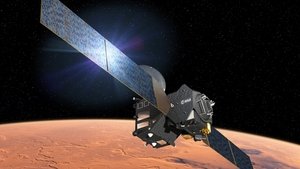
Exomars: The Hunt for Life
Did Mars ever have life on it? To answer this question, Europe and Russia have launched a unique and ambitious 2-stage project: ExoMars 2016-2018. This documentary is a thrilling look behind the scenes of a magnificent human and scientific adventure. We will uncover the most fascinating aspects of this mission and the search for signs of life on Mars.
2016
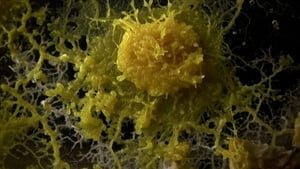
The Creeping Garden
An award-winning feature-length creative documentary exploring the extraordinary world of the plasmodial slime mould through the eyes of the fringe scientists, mycologists and artists. In recent years this curious organism has become the focus of much research in such areas as biological-inspired design, emergence theory, unconventional computing and robot engineering.
2014
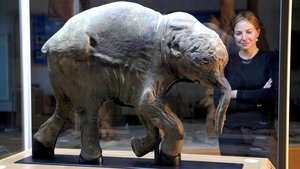
Woolly Mammoth: Secrets from the Ice
Woolly Mammoth: Secrets from the Ice is a documentary presented by English anatomist Dr. Alice Roberts that reveals some of the secrets of one of the most widely known extinct animals ever. Humans have been transfixed by the Wolly Mammoth since the end of the last ice age when there were still herds of them roaming the continents of Asia and Europe. Despite many people knowing about the great Woolly Mammoth until recently very little was known about them despite ancient humans living along side them for so long; few documented accounts exist.
2012
Something From Nothing: A Conversation with Richard Dawkins and Lawrence Krauss
Join critically-acclaimed author and evolutionary biologist Richard Dawkins and world-renowned theoretical physicist and author Lawrence Krauss as they discuss biology, cosmology, religion, and a host of other topics.
2012
Cloudspotting
This 90-minute documentary brings to life Gavin Pretor-Pinney’s international bestseller, “The Cloudspotter’s Guide”, which draws on science, meteorology and mythology for a magical journey through the world of clouds. It is no dry treatise on the science of nephology but a playful trip through the varied beauty and distinctive personalities of the ten principal cloud types From the ethereal cirrus to the terrifying cumulonimbus, the film tells the story of the short but eventful life of clouds and their importance to our planet. Find out how immense quantities of water can stay up in the sky for so long and how lightning and thunder are created.
2010
Le Big bang, mes ancêtres et moi
2009

The Botany of Desire
Featuring Michael Pollan and based on his best-selling book, this special takes viewers on an exploration of the human relationship with the plant world — seen from the plants' point of view. Narrated by Frances McDormand, the program shows how four familiar species — the apple, the tulip, marijuana and the potato — evolved to satisfy our yearnings for sweetness, beauty, intoxication.
2009
IMAX: Sun 3D / Mars 3D
The universe, endless expanse. In this galactic double feature you will experience a breath-taking insight into our solar system. Up close, made for IMAX® Theaters and of course in 3D!
2007
DNA: Secret of Photo 51
On April 25, 1953, James Watson and Francis Crick published their groundbreaking discovery of the double helix structure of DNA. But their crucial breakthrough depended on the pioneering work of another biologist, Rosalind Franklin. 50 years later, NOVA investigates the shocking truth behind one of the greatest scientific discoveries and presents a moving portrait of a brilliant woman in an era of male-dominated science.
2007
An Inconvenient Truth
A documentary on Al Gore's campaign to make the issue of global warming a recognized problem worldwide.
2006

Jack Parsons: Jet Propelled Antichrist
Jack Parsons: Jet Propelled Antichrist is a story about one of the fathers of modern rocketry and a founder of the Jet Propulsion Laboratory (JPL) which as part of NASA still leads the way in the development of rockets and the exploration of space. He was also an occultist, a sorcerer and a magus. The infamous magician Aleister Crowley the self-proclaimed Great Beast called him son. He called himself ‘The Antichrist’ and was repeatedly investigated by the FBI. At the age of 38 Parsons died in a mysterious explosion that made headlines around the US. Officially it was a tragic scientific accident — other interpretations of the event persist to this day.
2006
Unlocking the Mystery of Life
Unlocking the Mystery of Life represents a unique programming opportunity for local stations. Its broadcast release coincides with the 50th anniversary of one of the greatest scientific breakthroughs in history-James Watson and Francis Crick's discovery that the DNA molecule carries hereditary information in the form of a code that many scientists have likened to computer software or a written language. This discovery (announced on April 25,1953) sparked a scientific revolution. But it also left a fundamental question unanswered. Where did the information in DNA come from? How did the software in the cell arise? Unlocking the Mystery of Life explores these questions through the stories of a growing number of scientists who no longer believe that natural selection or chemistry, alone, can explain life's origin. Instead, they think that the microscopic world of the cell provides evidence of purpose and design in nature.
2003
Mastodon in your Backyard
A documentary about the 1999 discovery of a Mastodon skeleton in a Hyde Park backyard.
2001
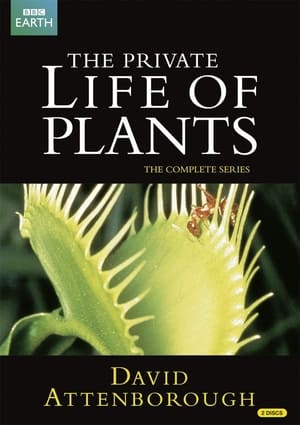
The Private Life of Plants
David Attenborough takes us on a guided tour through the secret world of plants, to see things no unaided eye could witness. Each episode in this six-part series focuses on one of the critical stages through which every plant must pass if it is to survive:- travelling, growing, and flowering; struggling with one another; creating alliances with other organisms both plant and animal; and evolving complex ways of surviving in the earth's most ferociously hostile environments.
1995
A Brief History of Time
This shows physicist Stephen Hawking's life as he deals with the ALS that renders him immobile and unable to speak without the use of a computer. Hawking's friends, family, classmates, and peers are interviewed not only about his theories but the man himself.
1991
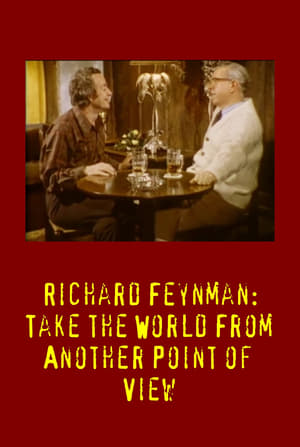
Take the World From Another Point of View
In 1973 Yorkshire public television made a short film of the Nobel laureate while he was there. The resulting film, Take the World from Another Point of View, was broadcast in America as part of the PBS Nova series. The documentary features a fascinating interview, but what sets it apart from other films on Feynman is the inclusion of a lively conversation he had with the eminent British astrophysicist Fred Hoyle.
1973
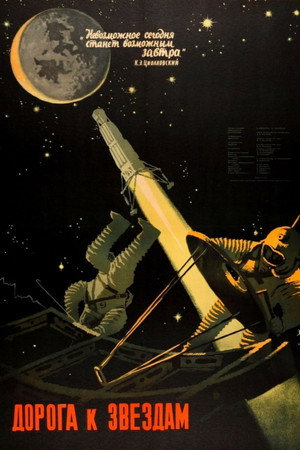
Road to the Stars
This film consists of three parts. The first dramatizes the life of the founder of Soviet astronautics, Konstantin Tsiolkovsky; the second describes the development of rocket technology; and the third visualizes the future with enactments of the first manned spaceflight, spacewalk, space station construction and humans on the moon.
1957