Watch The Private Life of Plants (1995) Online Free
David Attenborough takes us on a guided tour through the secret world of plants, to see things no unaided eye could witness. Each episode in this six-part series focuses on one of the critical stages through which every plant must pass if it is to survive:- travelling, growing, and flowering; struggling with one another; creating alliances with other organisms both plant and animal; and evolving complex ways of surviving in the earth's most ferociously hostile environments.
Cast
David Attenborough
More Like This
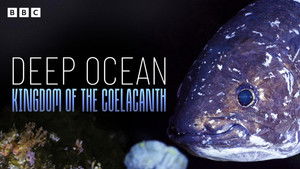
Deep Ocean: Kingdom of the Coelacanth
David Attenborough looks into the ocean's depths to discuss the coelacanth, a primeval fish hidden for 400 million years. Its mysterious movements reveal vital clues about life's journey from sea to land, as well as secrets of evolution and survival.
2026
Aap tot Aap
2025
La Voz de la Barranca
2025
Otters of Yellowstone
A look at the world of the semi-aquatic river otter, with insight into its ability to thrive during the harsh winter season in Yellowstone National Park.
2024
American Grail: A Quest for the Ivory-Billed Woodpecker
The siren call of the ivory-billed woodpecker lures a New York based tantra and sex educator into the swamps of the American South on a 17-year journey to prove the iconic bird still exists. Along the way, he finds a tendril of hope in the face of climate change.
2024

Multiplied
Chris Worthington sets out to document what the future of evangelism looks like. He invites you to get stranded in a West African dust storm, get shot at on the way to a 400,000 person Gospel event, and ultimately discover that it’s no longer about a select few famous evangelists, but about an entire generation of people just like YOU.
2024
Le monde extraordinaire des champignons
2023
Im Wald der wilden Bienen
2022
Madagascar: Africa's Galapagos
This film reveals some of Madagascar's secretive and rarely filmed inhabitants, from the apex predator, the fossa, to the aye aye – possibly the weirdest creature on earth.
2019
Disparitions autour du Kanga Pan
2019
Semences : les gardiens de la biodiversité
2014
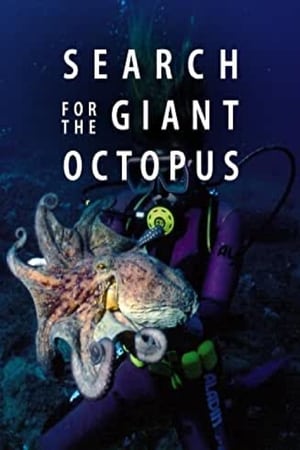
Search for the Giant Octopus
The waters of the North Pacific around Canada's Vancouver Island are a strange and little known world. The water is incredibly clean, the location is isolated and huge thermal vents heat the otherwise cold surrounding these factors combined have led to animals and plants that can grow to huge proportions. Humpback whales, orcas, wolf eels and bald eagles all thrive here. Our team of experts go in search of the elusive Pacific Giant Octopus. Growing up to 7.5 meters across with the power to kill sharks, it is a formidable creature, but also intelligent and incredibly shy. The dive team invites us into an alien world, where persistence is rewarded with encounters with three of these magnificent creatures.
2009

Eigentlich wollte ich Förster werden - Bernd aus Golzow
Bernhard Oestreich, called Bernd, son of one of the leaders of the Golzow LPG, did not stay in the countryside, but also turned down the opportunity to graduate from high school in order to study. He should have become a professional soldier. Married with two daughters, Bernd went into big industry, became a laborer and is still as needed today as a foreman at Raffinerie AG Schwedt (Oder) as he once was at VEB Petrolchemisches Kombinat in the days of the GDR. Much has changed in his life, but what has remained is the work in three shifts.
2003
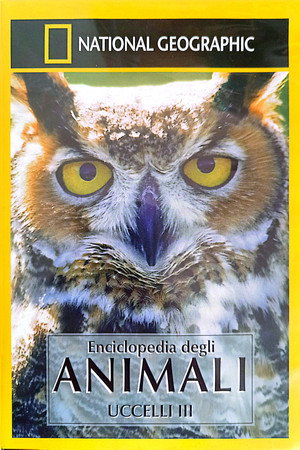
Owls: Silent Hunters
National Geographic Explorer takes an up close look at owls. It follows nature expert Fergus Beeley as he looks into why owls make such ideal nocturnal birds of prey. He also examines the fossil records to reveal that owls have been polishing their predatory skills for over 40 million years.
2001
Anaconda: Giant Snake of the Amazon
No animal in the Amazon is more feared and more respected than the 'spirit of the river' - The Anaconda
1999
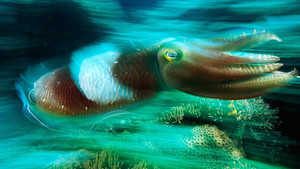
Cuttlefish: Kings of Camouflage
Join NOVA on a voyage beneath the waves, where you'll discover a bizarre, alien-like creature like no other. It's an animal with eight sucker-covered arms growing out of its head, three hearts pumping its blue-green blood, and a doughnut-shaped brain. It has the ability to change its color and shape to blend in with seaweed and rocks, and it has a knack for switching on electrifying light shows that dazzle its prey. Perhaps most surprising of all, this animal is quite intelligent, with a highly complex brain. In this program, underwater cameras capture the extraordinary powers of the cuttlefish.
1997
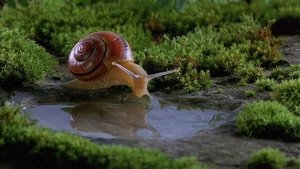
Microcosmos
A documentary of insect life in meadows and ponds, using incredible close-ups, slow motion, and time-lapse photography. It includes bees collecting nectar, ladybugs eating mites, snails mating, spiders wrapping their catch, a scarab beetle relentlessly pushing its ball of dung uphill, endless lines of caterpillars, an underwater spider creating an air bubble to live in, and a mosquito hatching.
1996
Auf den Spuren der wilden Otter
Short film about otters
1986
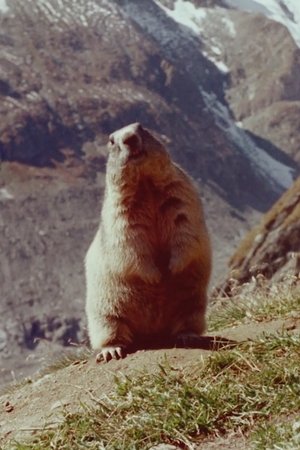
Marmot
A wildlife documentary about marmot.
1966
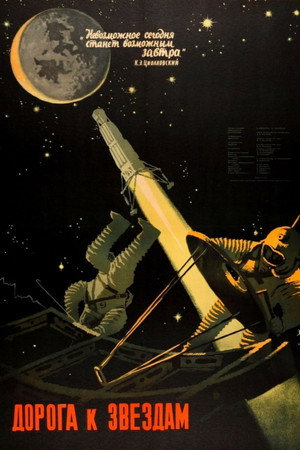
Road to the Stars
This film consists of three parts. The first dramatizes the life of the founder of Soviet astronautics, Konstantin Tsiolkovsky; the second describes the development of rocket technology; and the third visualizes the future with enactments of the first manned spaceflight, spacewalk, space station construction and humans on the moon.
1957