Watch Vadātājs (2013) Online Free
'Vadātājs' is an ancient Latvian mythological creature that leads people to Nowhere. As Latvia has been declared the most superstitious country in the EU, it is important to understand – what do we believe in? Three young filmmakers – a director, cinematographer and sound girl – question if Latvia is a lost country and if a Vadātājs has achieved enormous power by leading Latvian society into confusion. A search for a contemporary Vadātājs*, and the understanding of the origins of confusion within people in the 21st century.
More Like This
In the Middle
A story of a Latvian family making tentative plans to return to Latvia. Ģirts, a doctor working in Denmark for nine years, receives an invitation to set up a professional practice back in Latvia – a welcome opportunity, as he would like to look after his parents better. But things aren't as simple as that, and his family is divided over the issue.
2020
Mr Black Stork
Māris Strazds (also known as "Mr Black Stork") is a man who's been studying black storks and their behaviour for forty years. His love for and relationship with these beautiful birds is longer than the relationship with his wife. Having spent more than half of his life following black storks, Māris is aware that due to deforestation the number of these birds in Latvia is rapidly approaching zero.
2020
Wordsmiths
Vārdotājas (Wordsmiths) traces the recent rise of women's stand-up comedy in Latvia, but it is by no means just for laughs. Feelings of discomfort, shame, shock, are just some of the subjects tackled.
2019
The Priest
"If a person doesn't go to church anymore, then the church should go to them," says Rinalds, a calm, smiling, young man with a good sense of humor. He is a priest from a small village in Latgale, Latvia's easternmost and poorest region, and the documentary Prīsters (The Priest) follows the routines of his daily life, his thoughts of life and religion and why he chose this path for himself.
2019
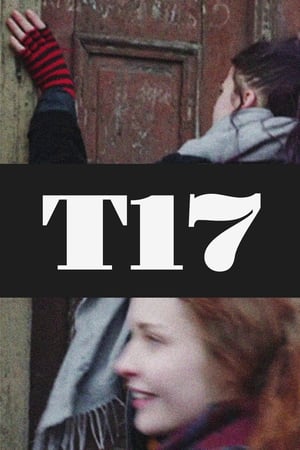
Brīva vieta - Lastādija
Director Aija Bley's "Brīva Vieta - T17" captures the unique testimony of the modern era of Riga - the life of "antisquoters". The film tells about the daily life and dreams of the youth community and a mute fish, the so-called commune T17. The community lives in a non-landscaped building, so its occupation is a real challenge. The house is located under the paspārns of the association " Free Riga ", whose movement is based on a responsible attitude towards nature and the careful use of resources. Here, the community is motivated by the conviction that so few resources in everyday life should be consumed in the urban environment. The film follows the everyday life of the community members, who use their lifestyle to use the resources of nature, material, culture and time.
2019
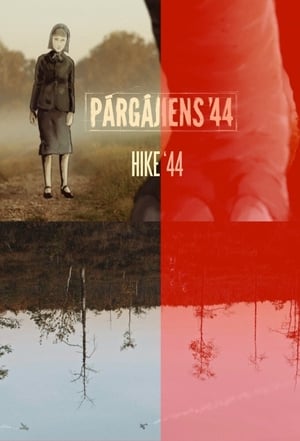
Hike '44
“Hike '44" is a personal story by director Lauris Abele and cinematographer Marcis Abele about how to maintain humanity when the world falls apart. The protagonist of the film, Melita Abele (89), retraces her refugee path from 1944, when, at the age of 14, she had to leave her home at the beginning of winter. Asking strangers for shelter, spend nights in the woods until she found refuge and warm hearts. Through the use of animation, the viewer will be guided through Melita's memories on a journey through recent and present-day Latvia until a series of events brings Melita to what she has been trying to accomplish for 75 years.
2019
To Be Beautiful
The documentary explores issues of beauty and acceptance in a culture increasingly saturated with idealised and unattainable ideals of femininity. It is a story about the world of young girls in today's Latvia, based on conversations about girls' attitudes towards the world and their place in it.
2019
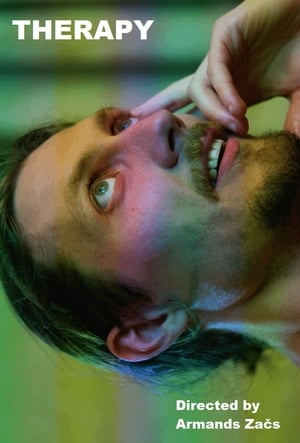
Therapy
The film follows a thirty-year-old man’s efforts to introduce radical changes in his own life: to start visiting a therapist and preparing for the demolition of his bragging childhood home. Story chronicles the troubled relationship between Mārtiņš and his mother, just as he is about to tear down his childhood home.
2018
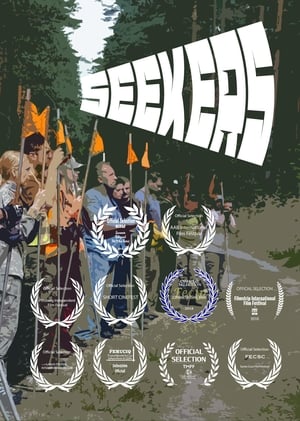
Seekers
This film probes the activities of the bezvests.lv NGO that looks for missing persons and instructs others on how to find them. Since they started in 2009, they’ve helped find more than 90 people who had gone missing. It follows volunteers during training and on a search mission – theirs is a nerve-wracking task as in many cases they only locate the expired body of the missing person.
2017
If Trees Could Talk
Deniss is a Russian-speaking young man working at a fast food chain and spending his days in a small, gloomy apartment where all the things still remind him of his dead grandmother. Once a week he takes the stage, becoming a stand-up comedian. His jokes come from his life, which might be called dull as well as bleak, and, as he puts it, his ‘uninteresting biography’.
2016
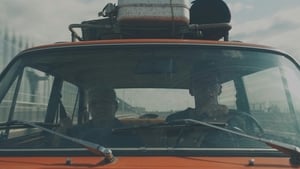
Grandfather's Father
In this film a young man and his curmudgeonly grandfather are going 1,800 km to northern Russia in an old Zhiguli car, hoping to find the grave of their great-grandfather, who was deported. The grandfather Andris is sceptic over the lofty quest, initiated by his grand-son, as it’s not known what awaits them at their destination. Andris thinks they won’t find anything and will come back to Latvia without ever learning what happened to his father. However ever-optimistic Kārlis wants to use the journey not only to find answers about the past but also become closer to his grandfather who raised him. They both lost their parents as children.
2016

Possessed by Djinn
Sparked by the true story of Aya, a four-year-old Jordanian girl killed by her father because he believed her to be possessed, filmmaker Dalia Al Kury launches a fascinating investigation into a controversial and little-known aspect of Islamic culture: belief in djinn. The djinn are believed to be supernatural creatures that occupy a parallel world to ours and their emergence is associated with sexuality, political unrest, poverty and mental illness. The taboo subject of demonic possession remains broadly unresolved in the hearts and minds of some Muslims due to its complex and uncomfortable nature. Using a subjective, “undercover” style, Al Kury journeys into the obscure world of exorcists and the possessed, confronting their traditions and rituals. It makes for a telling ghost story that bares the filmmaker’s and her society’s subconscious underbelly.
2015
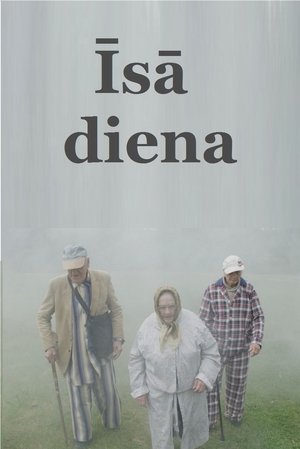
Short Day
An ordinary old folks’ home on the Latvian border – one of many, where our parents, grand-parents and other relatives spend their old age. Theirs is the generation whose prime years co-existed with the Soviet Union, and who were promised: work, give all you can, and we’ll take care when you’re old. The system changed and the reality is different. How to live in this reality, accept the current rules, or live in the past and have regrets. We will touch upon their world, and the dreams and hopes of Vilnis, Imants, Alberts and Elizabete.
2014
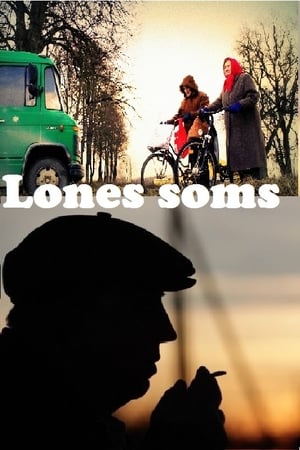
Lone Man
Viktors is an entrepreneur with a unique offer – he has built a bar, bakery, spa, hotel and an auto-shop in a former “sovkhoz” cafeteria in the village of Lone. Viktors understands life, and that his words carry weight – almost 500 village inhabitants are now employed. Lone is a lively place both day and night, full of youths and many other businesses. Viktors is very proud.
2014
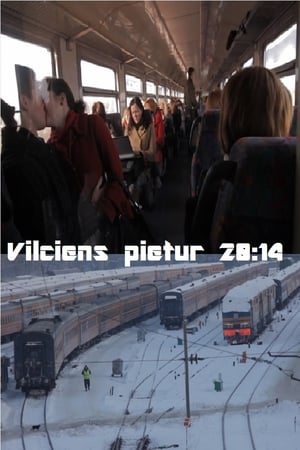
The Train Stops at 20:14
A story about a train as it reflects our path of life. On it, like in life, people experience friendship and love, and sometimes feel lonely. On board, the announcement over the PA system outlines the rules, and then a reminder that the train won’t be stopping. Do we hurtle through life without making any stops? What are we thinking? We all know that the moment will come when our train pulls to a stop, but not how and when, and what happens afterwards.
2014
The Curse of Poltergeist
Exploring the popular film series and several tragedies amongst the cast members.
2002

The Fairy Faith
Walker takes us on a personal journey into a world of myth and imagination that he learned from his grandmother. He travels from the Moors of Devon and the Highlands of Scotland to the brooding Celtic landscapes of Ireland and the intimate hills of Cape Breton, in his search of this potent “otherworld” of the imagination.
2000
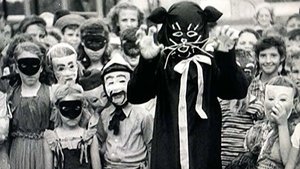
Black Cats and Broomsticks
Superstitions are examined in the context of mid-20th century America. Walking under ladders, spilt salt, stepping on cracks, haunted houses, voodoo dolls, and such are used to illustrate the widespread belief in the supernatural.
1955

Häxan
Grave robbing, torture, possessed nuns, and a satanic Sabbath: Benjamin Christensen's legendary film uses a series of dramatic vignettes to explore the scientific hypothesis that the witches of the Middle Ages suffered the same hysteria as turn-of-the-century psychiatric patients. But the film itself is far from serious-- instead it's a witches' brew of the scary, gross, and darkly humorous.
1922
Job 1:21
The film follows a group of former female inmates who stage a play condemning the country’s prison system. At its center is Nathalie, who fights for the release of her sister Aline, held in prolonged pretrial detention – a widespread practice in Haiti.