Watch Urlaub im Dritten Reich - Kraft durch Freude (2001) Online Free
The National Socialist community "Kraft durch Freude" was a political organization with the task of organizing, monitoring and standardizing the leisure time of the German population. It is known today mainly as a vacation organization that practically brought mass tourism to Germany for the first time. The documentary shows private footage of travelers, film sequences from the Ministry of Propaganda as well as material from Eva Braun's film archive and thus provides a comprehensive insight into how vacations were organized in the Third Reich.
Cast
Robert Ley, Adolf Hitler, Eva Braun, Hermann Göring, Joseph Goebbels, Tullio Cianetti
More Like This

Erna, Helmut and the Nazis
Germany, 1929. Helmut Machemer and Erna Schwalbe fall madly in love and marry in 1932. Everything indicates that a bright future awaits them; but then, in 1933, Adolf Hitler and the Nazi Party rise to power and their lives are suddenly put in danger because of Erna's Jewish ancestry.
2021
100 Years of the UFA
The intricate history of UFA, a film production company founded in 1917 that has survived the Weimar Republic, the Nazi regime, the Adenauer era and the many and tumultuous events of contemporary Germany, and has always been the epicenter of the German film industry.
2017

Hitlers Menschenhändler: Juden als Austauschware
The SS chief Heinrich Himmler wanted to exchange Jews against so-called German Reich abroad, against arms sales or for cash - with the express approval of Hitler.
2011
Cruising Do's and Don'ts
Tips for what to expect when taking a vacation aboard a cruise ship, and how to make the most of the trip.
2007
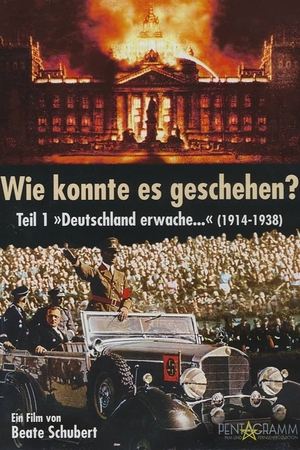
Wie konnte es geschehen? - Teil 1: "Deutschland erwache..." (1914 - 1938)
In 1945, 160 German cities lay in ruins and the loss of millions of lives, billions in material assets and countless cultural treasures was mourned throughout Europe... With the question “How could it happen?”, the film goes back to the year 1914, when the “primal catastrophe of the 20th century” took its course with the First World War.
2006
Paragraph 175
During the Nazi regime, there was widespread persecution of homosexual men, which started in 1871 with the Paragraph 175 of the German Penal Code. Thousands were murdered in concentration camps. This powerful and disturbing documentary, narrated by Rupert Everett, presents for the first time the largely untold testimonies of some of those who survived.
2000
Die Reichsautobahn - Strassen des Führers
They were not only the largest construction project of the Nazi era, but above all the most popular: 80 years ago, work began on the Reichsautobahnen, whose myth still resonates today.
2000
Berliner Zeitzeugen aus dem antifaschistischen Widerstand
Heinz Schröder discusses his 1930s SPD membership. Gertrud Keen addresses her opposition to politics. Wolfgang Szepansky recalls his imprisonment at Sachsenhausen, a concentration camp.
1993
Überleben im Terror - Ernst Federns Geschichte
In 1938, the Jew and political activist Ernst Federn was arrested by the Nazis in Vienna, taken to Dachau concentration camp and later to Buchenwald. He was imprisoned there for seven years - and survived. In the documentary, Ernst Federn, who emigrated to the USA after the war, talks about the terror he experienced.
1992
The Architecture of Doom
Featuring never-before-seen film footage of Adolf Hitler and the Nazi regime, The Architecture of Doom captures the inner workings of the Third Reich and illuminates the Nazi aesthetic in art, architecture and popular culture. From Nazi party rallies to the final days inside Hitler's bunker, this sensational film shows how Adolf Hitler rose from being a failed artist to creating a world of ponderous kitsch and horrifying terror. Hitler worshipped ancient Rome and Greece, and dreamed of a new Golden Age of classical art and monumental architecture, populated by beautiful, patriotic Aryans. Degenerated artists and inferior races had no place in his lurid fantasy. As this riveting film shows, the Nazis went from banning the art of modernists like Picasso to forced euthanasia of the retarded and sick, and finally to the persecution of homosexuals and the extermination of the Jews.
1989
Evangelische Kirche im Widerstand - Gegen den Nationalsozialismus in Bayern
After a brief overview of the situation of the Protestant Church in the German Reich and in Bavaria in the first months of 1933, contemporary witnesses report on the Protestant Church's fight against the oppression.
1988
Vernichtung durch Arbeit - KZ-Häftlinge: Sklaven für die deutsche Industrie
1986
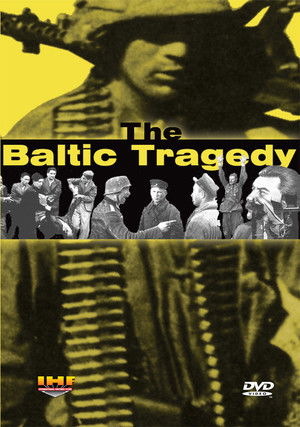
The Baltic Tragedy
Special care has been taken by International Historic Films to assemble this monumental documentary, which tells the story of what is left for a people after its land has been ravaged by war. Situated between the powerful antagonists Germany and the Soviet Union, the Baltic nations of Latvia, Lithuania, and Estonia bore witness to some of the most ferocious land battles of the Second World War.
1985
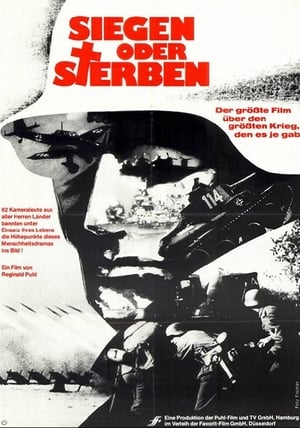
Siegen oder sterben
The impact of new documents from the international conflict that shook the world is enormous. Never-before-seen footage has emerged for the first time from previously secret archives. The murderous encirclement battles in Russia, the Battle of Britain, and the heroic deeds of countless lone fighters in Potsdam complete the circle of horror, from the Polish campaign to the harrowing images of refugee treks in the winter of 1944/45.
1976
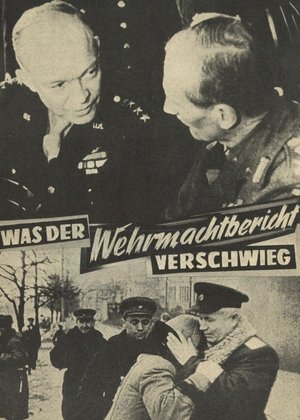
Was der Wehrmachtsbericht verschwieg
1963

Mein Kampf
Using exclusively archival footage, Erwin Leiser traces the rise and collapse of the Third Reich, from Adolf Hitler’s early years to the devastation of Europe and his suicide in 1945. The film draws heavily on material produced and preserved by the Nazi propaganda apparatus to confront the mechanisms, imagery, and consequences of totalitarian power.
1960
Hitler an der Macht
Short film about Hitler's rise to power in 1933
1960
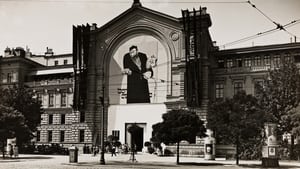
The Eternal Jew
A Nazi propaganda film made to promote anti-Semitism among the German people. Newly-shot footage of Jewish neighborhoods in recently-conquered Poland is combined with preexisting film clips and stills to defame the religion and advance Hitler's slurs that its adherents were plotting to undermine European civilization.
1940
An Bord eines Panzerschiffes
A warship is displayed
1939

Triumph of the Will
A showcase of German chancellor and Nazi Party leader Adolf Hitler at the 1934 Nuremberg Rally.
1935