Watch Überleben im Terror - Ernst Federns Geschichte (1992) Online Free
In 1938, the Jew and political activist Ernst Federn was arrested by the Nazis in Vienna, taken to Dachau concentration camp and later to Buchenwald. He was imprisoned there for seven years - and survived. In the documentary, Ernst Federn, who emigrated to the USA after the war, talks about the terror he experienced.
Cast
Ernst Federn
More Like This
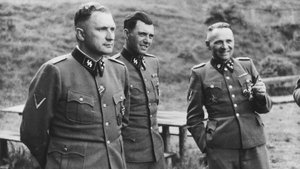
Bullets And Blueberries
The Holocaust began with the indiscriminate mass shootings by the Einsatzgruppen in the bloodlands of Eastern Europe and was perfected in the gas chambers at Auschwitz. “Bullets And Blueberries” explores the motives, methods and madness of the perpetrators, using never-before-seen images captured by the killers themselves — images that fully capture the banality of evil.
2025
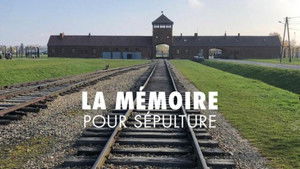
Memory For Burial
Surviving against all odds. In 1940, Benjamin Orenstein, just a teenager, was sent to his first concentration camp in Poland. It was the beginning of a journey that would mark him for life. After years of silence, he now bears witness to one of the darkest chapters in history.
2025
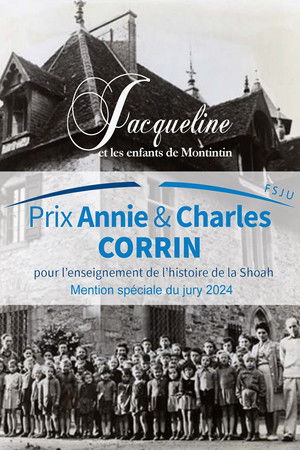
Jacqueline et les enfants de Montintin
2023
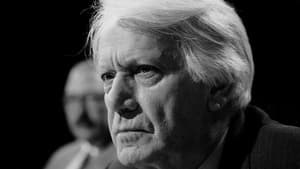
The Many Lives of Jorge Semprún
The incredible life of Jorge Semprún (1923-2011): son of a republican intellectual; exiled in the early days of the Spanish Civil War; survivor of the Buchenwald concentration camp during World War II; clandestine communist in Spain during Franco's dictatorship; controversial socialist politician; acclaimed writer, screenwriter and filmmaker.
2023

Miss Holocaust Survivor
Documentary about an annual beauty contest held in Haifa, Israel, in which only women who survived the Holocaust - and are therefore between 77 and 95 years old - are allowed to take part.
2023

Andor
Andor Stern is the only Brazilian survivor of the Holocaust. In this documentary, he goes back in his memories to relive the deportation to Auschwitz at age 16, and the daily conquest of a free life.
2022
A Hole In The Head
A pig farm in Lety, South Bohemia would make an ideal monument to collaboration and indifference, says writer and journalist Markus Pape. Most of those appearing in this documentary filmed in Slovakia, the Czech Republic, Poland, France, Germany and Croatia have personal experience of the indifference to the genocide of the Roma. Many of them experienced the Holocaust as children, and their distorted memories have earned them distrust and ridicule. Continuing racism and anti-Roma sentiment is illustrated among other matters by how contemporary society looks after the locations where the murders occurred. However, this documentary film essay focuses mainly on the survivors, who share with viewers their indelible traumas, their "hole in the head".
2017
Heaven in Auschwitz
A documentary film that tells the fascinating and incredible story of 13 Jewish survivors of the Holocaust in former Czechoslovakia, during the II World War. These men and women, that back then were children, found a legendary Jewish-German character named Fredy Hirsch, who changed their lives forever. The work describes the terrible living conditions in Terezin Ghetto and; on the other hand, the approach to culture and art behind the walls of the concentration camp. Up to this moment, everything develops as a known story, but by the end of 1943 there is an unexpected turn when these children are deported together with their families to the extermination camp in Auschwitz-Birkenau. And there, in the middle of hell, they lived in.
2016

Nazi Death Camp: The Great Escape
The secret Nazi death camp at Sobibor was created solely for the mass extermination of Jews. But on the 14th October 1943, in one of the biggest and most successful prison revolts of WWII, the inmates fought back.
2014
Misa's Fugue
The true story of one boy's journey as a victim of Nazi oppression. While exposed to some of the most horrific events of the Holocaust, Misa was able to endure the atrocities of genocide through his love of art and music.
2012
Reichsbahn unterm Hakenkreuz
The German railroad has been in operation since 1835, but the darkest chapter in German railroad history is often forgotten. Extensive original film material from the Nazi era shows the dubious role played by the Deutsche Reichsbahn during the Second World War and how little resistance there was among the railroad workers.
2010
Secret Lives: Hidden Children and Their Rescuers During WWII
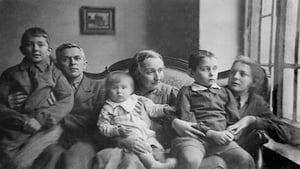
Through interviews we meet some of the people who risked their lives to hide Jewish children during World War II and how this experience has continued to affect the survivors.
2002
Paragraph 175
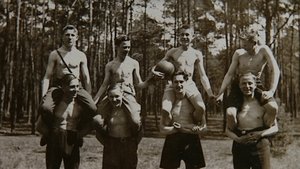
During the Nazi regime, there was widespread persecution of homosexual men, which started in 1871 with the Paragraph 175 of the German Penal Code. Thousands were murdered in concentration camps. This powerful and disturbing documentary, narrated by Rupert Everett, presents for the first time the largely untold testimonies of some of those who survived.
2000
Die Reichsautobahn - Strassen des Führers
They were not only the largest construction project of the Nazi era, but above all the most popular: 80 years ago, work began on the Reichsautobahnen, whose myth still resonates today.
2000
Liebe Perla
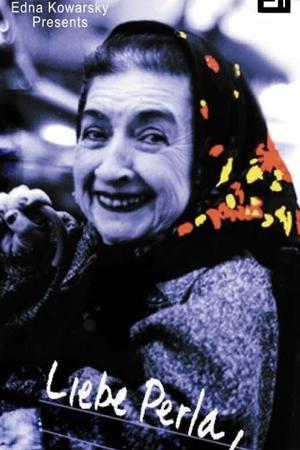
Researcher Hannelore Witkovsky searches for the notorious Nazi war criminal Dr. Joseph Mengele's lost film about his experiments on a family of little people in Auschwitz including Holocaust survivor Perla Ubitsch, whom she befriends.
1998
Berliner Zeitzeugen aus dem antifaschistischen Widerstand
Heinz Schröder discusses his 1930s SPD membership. Gertrud Keen addresses her opposition to politics. Wolfgang Szepansky recalls his imprisonment at Sachsenhausen, a concentration camp.
1993
Evangelische Kirche im Widerstand - Gegen den Nationalsozialismus in Bayern
After a brief overview of the situation of the Protestant Church in the German Reich and in Bavaria in the first months of 1933, contemporary witnesses report on the Protestant Church's fight against the oppression.
1988
Vernichtung durch Arbeit - KZ-Häftlinge: Sklaven für die deutsche Industrie
1986
Siegen oder sterben
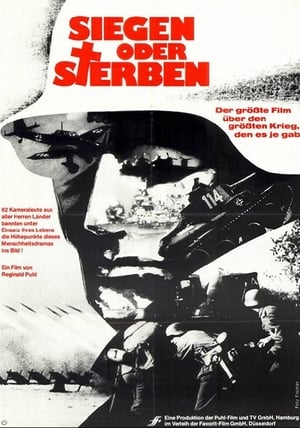
The impact of new documents from the international conflict that shook the world is enormous. Never-before-seen footage has emerged for the first time from previously secret archives. The murderous encirclement battles in Russia, the Battle of Britain, and the heroic deeds of countless lone fighters in Potsdam complete the circle of horror, from the Polish campaign to the harrowing images of refugee treks in the winter of 1944/45.
1976

Triumph of the Will
A showcase of German chancellor and Nazi Party leader Adolf Hitler at the 1934 Nuremberg Rally.
1935