Watch Traces: People of the Peacock (2016) Online Free
Filmmaker Binevsa Bêrîvan travels to Armenia to capture the daily life, customs, and history of the country's Yazidi Kurdish community.
Cast
Jiyan Aslan
More Like This
When the Water Stops Flowing
Jonathan Stavleu explores, in a stream-of-consciousness video essay, the relationship people have with water and what happens when access to it is taken away. For this work, he examines anecdotal histories he has heard from Estonians, as well as stories from his own family history in the Netherlands, weaving them together into a journal-like narrative.
2026
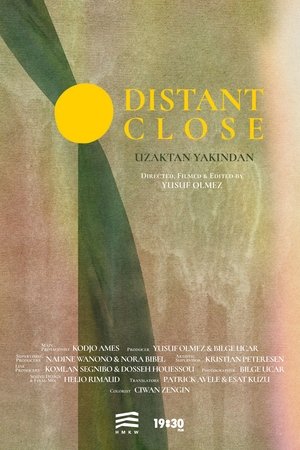
Distant Close
What is the role of an ethnographic filmmaker as an outsider and student of a culture? Is it about representing, demonstrating, and reflecting or exposing, participating, and transposing? Although these are not binary terms of the historic discussions in anthropology, they share a lot to be experimented through shared cine-anthropology and sensory multimodal ethnography.
2024
Chernobyl
With the good of the people in mind, Valery Legasov, a Soviet scientist called to the scene of the Chernobyl nuclear disaster, stands up to censorship behind the Iron Curtain.
2024
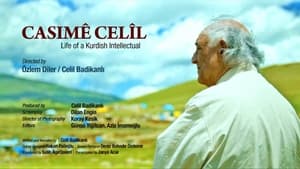
Jiyana Rewsenbireki Kurd: Casimê Celîl
Casimê Celîl was born into a Yezidi Kurdish family in 1908, in a village called Kızılkule, located in Digor, Kars. The village and family life, which he longed to remember throughout his life, ends with the massacre they endured in 1918. During his long road to Erivan, Armenia, he lost all his family members. Left all alone, Casim was placed into an orphanage and was forced to change his name. To remember who he was and where he came from, every morning he repeated the mantra “Navê min Casim e, Ez kurê Celîlim, Ez ji gundê Qizilquleyê Dîgorê me, Ez Kurdim, Kurdê Êzîdî me”, which translates to: “My name is Casim, I am the son of Celîl, I come from the village of Kızılkule in Digor, I am a Kurd, and I am Yezidi”. He clings to every piece of his culture he can find, reads, and saves whatever Kurdish literature or art he comes across. As the year’s pass, Casim finds himself with an impressive collection of Kurdish culture and history.
2021
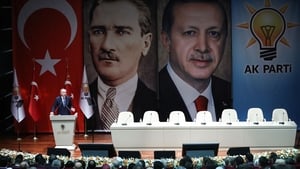
From Atatürk to Erdoğan: Building a Nation
Turkey's history has been shaped by two major political figures: Mustafa Kemal (1881-1934), known as Atatürk, the Father of the Turks, founder of the modern state, and the current president Recep Tayyıp Erdoğan, who apparently wants Turkey to regain the political and military pre-eminence it had as an empire under the Ottoman dynasty.
2019

Bamboo Theatre
This film is a portrait of unique cultural space for Spirits, Gods and People. While permanent theatres are commonly built in most cosmopolitan modern cities, Hong Kong preserves a unique theatrical architecture, a Chinese tradition that has lasted more than a century - Bamboo Theatre.
2019
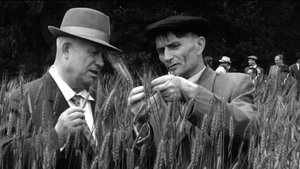
The Scientist, The Imposter and Stalin: How to Feed the People
The documentary tells two very different human fates in the 1920s Soviet Union. Nikolai Vavilov was a botanical genius, Trofim Lyssenko was an agronomist who made great promises and fake inventions. Each of them tried to solve the country's nutritional problem, but only one succeeded.
2018

Architects of Denial
Though both the historical and modern-day persecution of Armenians and other Christians is relatively uncovered in the mainstream media and not on the radar of many average Americans, it is a subject that has gotten far more attention in recent years.
2017
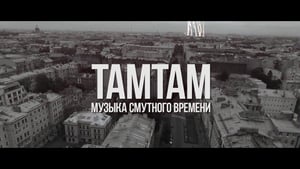
TaMtAm - Music of the time of troubles
Documentary film about the first St. Petersburg music club TaMtAm. It existed since 1991 upon 1996 and was held by Vsevolod Gakkel, ex-cellist of "Аквариум". The concept was modelled on cult NY club CBGB-OMFUG. Despite its controversial history this is the place where a new generation of Russian punk music was discovered.
2017
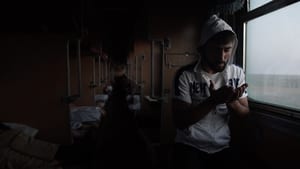
Not My Job
The documentary follows the life of Farroukh, a young Tajik immigrant who lives in Moscow outskirts with his family and does odd jobs in dreams of becoming an actor.
2015
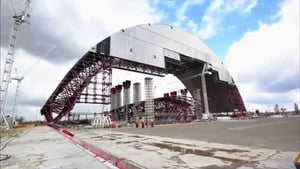
Chernobyl 30 Years On: Nuclear Heritage
Thirty years after the Chernobyl disaster, which occurred on the night of April 26, 1986, its causes and consequences are examined. In addition, a report on efforts to strengthen the structures covering the core of the nuclear plant in order to better protect the population and the environment is offered.
2015

In the Frozen Tomb of Mongolia
2014
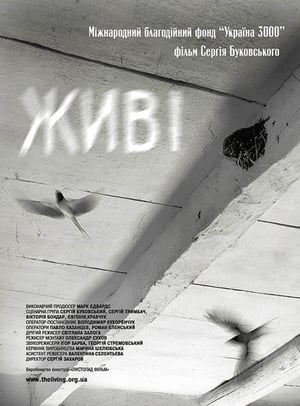
The Living
Tells the story of the tragic events in Ukraine in 1932-33, the genocidal Great Famine or the Holodomor, and one Welshman's attempts to tell the world what was happening.
2009
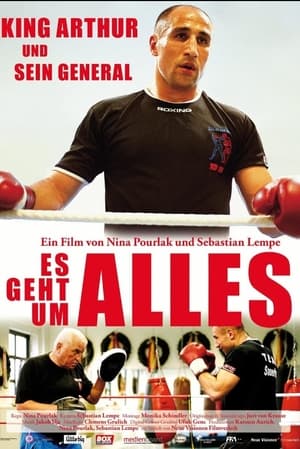
Es geht um Alles
2008
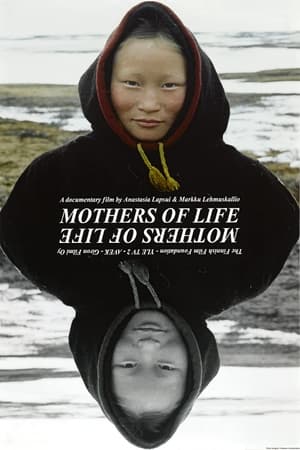
Mothers of Life
A documentary on the experiences of the Nubetya Yaptiks nomadic family in the Yamal Peninsula, Eastern Siberia, from 1992 to 2001.
2002
Leyla Zana, le cri au-delà de la voix étouffée
Leyla Zana, the first woman Kurdish MP to be elected to the Turkish Parliament in 1992, was impisoned in 1994 for 15 years for speaking in Kurdish in the Parliament. Kudret Gunes' personal look at the life of Zana takes her to her birth-place, friends and exiled husband.
2002
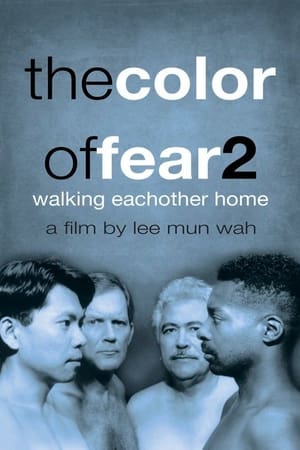
The Color of Fear 2: Walking Each Other Home
In THE COLOR OF FEAR, eight American men participated in emotionally charged discussions of racism. In this sequel, we hear and see more from those discussions, in which the men talk about about how racism has affected their lives in the United States. We also learn more about the relationships between them, and about their reactions during some of the most intense moments of that discussion.
1997
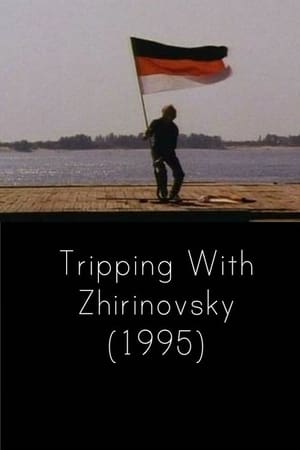
Tripping with Zhirinovsky
A candid, fly-on-the-wall BBC television documentary portrait of Russian Nationalist politician, Vladimir Zhirinovsky. The film shows the leader on a cruise surrounded by two hundred supporters getting plenty of media attention in New York. We are left with the nagging question: to what extent is Zhirinovsky really dangerous? To take that further, to what extent are populist politicians truly dangerous?
1995
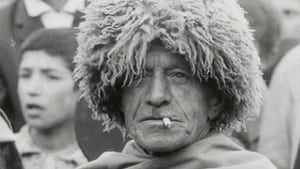
The Seasons
The last collaboration of Artavazd Peleshian and cinematographer Mikhail Vartanov is a film-essay about Armenia's shepherds, about the contradiction and the harmony between man and nature, scored to Vivaldi's Four Seasons.
1975
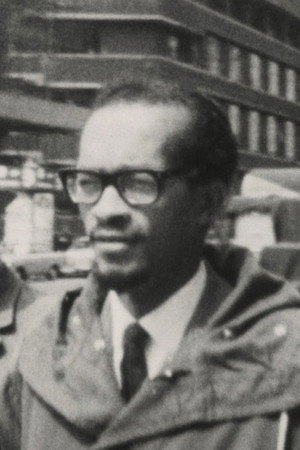
Megalopolis I
First film by Pim de la Parra, about a young Surinamese man in Amsterdam who delivers a “monologue interior” about his dissatisfaction with society and his position as an outsider.
1963