Watch Thomas Hirschhorn – Gramsci Monument (2015) Online Free
Loading Cinehub...
Thomas Hirschhorn, one of the few Swiss artists of world renown, often touches on social wounds with his provocative works. In 2013, Hirschhorn built a monument for Italian philosopher and communist Antonio Gramsci in a public housing project in the Bronx. The contentious artist collaborated with neighborhood residents whose everyday life is impacted by poverty, unemployment and crime. Conflicts and misunderstandings are bound to arise as Hirschhorn’s absolute devotion to art is confronted with the resident’s lack of prospects and fatalistic outlooks. The «Gramsci Monument» becomes a summer-long experiment where diverse worlds collide: blacks and whites, the art elite and street kids, party people and poets, politicians and philosophers. A nuanced film about art, politics and passion.
Cast
Thomas Hirschhorn
More Like This
102 Years in the Heart of Europe: A Portrait of Ernst Jünger
102 Years in the Heart of Europe: A Portrait of Ernst Jünger (Swedish: 102 år i hjärtat av Europa) is a Swedish documentary film from 1998 directed by Jesper Wachtmeister. It consists of an interview by the journalist Björn Cederberg with the German writer, philosopher and war veteran Ernst Jünger (1895-1998). Jünger talks about his life, his authorship, his interests and ideas. The actor Mikael Persbrandt reads passages from some of Jünger's works, such as Storm of Steel, The Worker, On the Marble Cliffs and The Glass Bees.
1998
Pagan Invasion, Vol. 12: Religion vs Christianity
A look at Christianity vs. Religion.

Marcel Duchamp: The Art of the Possible
A remarkable walk through the life and work of the French artist Marcel Duchamp (1887-1968), one of the most important creators of the 20th century, revolutionary of arts, aesthetics and pop culture.
2020

ABEPSS 70 anos
2017

The Paris Opera
A behind-the-scenes look at the of how the Paris Opera is run under the direction of Stephane Lissner.
2017
In the same boat
A documentary about the technological progress responsibility in employment destruction, analyzed by philosopher Zygmunt Bauman and others.
2016
Journey to the Safest Place on Earth
Over 350,000 tons of highly radioactive waste and spent fuel rods are in temporary storage on site at nuclear power complexes and at intermediate storage sites all over the world. More than 10,000 additional tons join them every year. It is the most dangerous waste man has ever produced. Waste that requires storage in a safe final repository for hundreds of thousands of years. Out of reach of humanity and other living creatures. The question is, where? Together with Swiss-British nuclear physicist Charles McCombie, who has been searching for a safe final storage site for highly radioactive nuclear waste for thirty-five years, director Edgar Hagen investigates the limitations and contradictions involved in this project of global significance. Supporters and opponents of nuclear energy struggle for solutions whilst dogmatic worldviews are assailed by doubt
2013
Special Flight
Switzerland still carries out special flights, where passengers, dressed in diapers and helmets, are chained to their seats for 40 hours at worst. They are accompanied by police officers and immigration officials. The passengers are flown to their native countries, where they haven't set foot in in up to twenty years, and where their lives might be in danger. Children, wives and work are left behind in Switzerland. Near Geneva, in Frambois prison, live 25 illegal immigrants waiting for deportation. They are offered an opportunity to say goodbye to their families and return to their native countries on a regular flight, escorted by plain-clothes police officers. If they refuse this offer, the special flight is arranged fast and unexpectedly. The stories behind the locked cells are truly heartbreaking.
2011
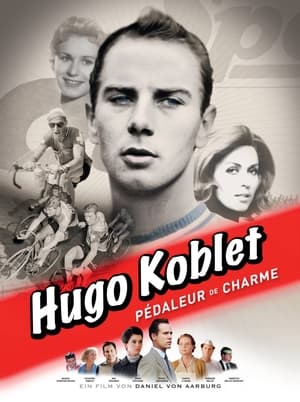
Hugo Koblet - The Charming Cyclist
Zurich-born Hugo Koblet was the first international cycling star of the post-war period. He was a stylist on the bicycle and in life, and a huge heartthrob. Koblet had a meteoric rise and won the Giro d'Italia in 1950. Once he had reached the zenith of his career, Koblet was put under pressure by overly ambitious officials and ended up ruining his health with drugs. In 1954, he married a well-known model and they became a celebrity dream couple. After his athletic career ended, Koblet began to lose his footing. Threatened by bankruptcy, he crashed his Alfa into a tree.
2010
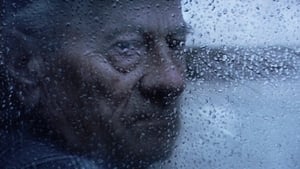
The Sound of Insects: Record of a Mummy
The incredible story of how the mummified corpse of a 40-year-old man was discovered by a hunter in one of the most remote parts of the country. The dead man's detailed notes reveal that he actually committed suicide through self-imposed starvation only the summer before. Liechti's film is a stunning rapprochement of a fictional text, which itself is based upon a true event: a cinematic manifesto for life, challenged by the main character's radical renunciation of life itself.
2009
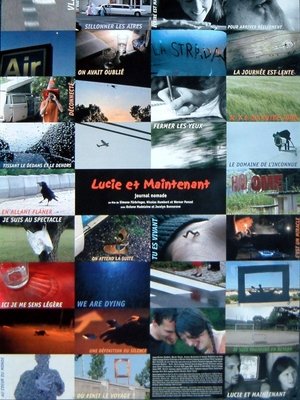
Lucie et Maintenant
In May of 1982 Julio Cortázar, the Argentinean writer and his companion in life, Carol Dunlop set out in their VW bus on a journey along the highway from Paris to Marseille that, for each of them, was to be their final one. Twenty-five years later, Océane Madelaine and Jocelyn Bonnerave set out to undertake the journey again.
2007

Exit: The Right to Die
Switzerland is presently the only country in the world where suicide assistance is legal. Exit: The Right to Die profiles that nation's EXIT organization, which for over twenty years has provided volunteers who counsel and accompany the terminally-ill and severely handicapped towards a death of their choice.
2006
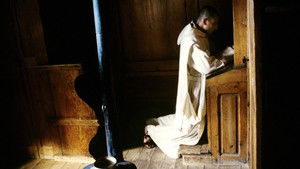
Into Great Silence
An intimate portrayal of the everyday lives of Carthusian monks of the Grande Chartreuse, high in the French Alps (Chartreuse Mountains). The idea for the film was proposed to the monks in 1984, but the Carthusians said they wanted time to think about it. The Carthusians finally contacted Gröning 16 years later to say they were now willing to permit Gröning to shoot the movie, if he was still interested.
2005
Xiara's Song
Xiara Trujillo is a precocious seven-year-old who moved from the Bronx to Maryland with her mom, Aracelli Guzman, four years ago. Though she seems happy hanging out and playing with her pal Melissa, Xiara becomes defensive and emotional when talking about her father, Harold Linares. As we see and learn, Harold is in jail serving a ten-year sentence for weapons possession; Xiara seems to blame his incarceration on her mother, whom she says "kept calling the police." Xiara, who has always been extremely close to her father, acts out with her mother.
2005

Remue-ménage
2002
Rafael França: obra como testamento
2001

Picture of Light
A documentary of an expedition to Churchill, Manitoba to film the Northern Lights.
1994
Lord of the Dance/Destroyer of Illusion
The documentary focuses on the annual Mani Rimdu festival of Tibet and Nepal, an event which encapsulates the Himalayan Buddhist experience.
1985
The Spectre of Marxism
The impact of Marx on the 20th century has been all-pervasive and world-wide. This program looks at the man, at the roots of his philosophy, at the causes and explanations of his philosophical development, and at its most direct outcome: the failed Soviet Union.
1983
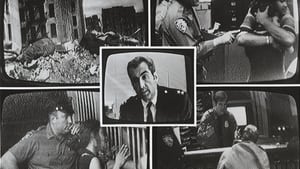
The Police Tapes
Filmmakers Alan and Susan Raymond spent three months in 1976 riding along with patrol officers in the 44th Precinct of the South Bronx, which had the highest crime rate in New York City at that time.
1977